
Kronborg Slot and the stage-like fortress above the Øresund
Published on 08/26/2026 at 15:57 | Editorial responsibility: Rafael Müller, Editor-in-Chief AD HOC NEWS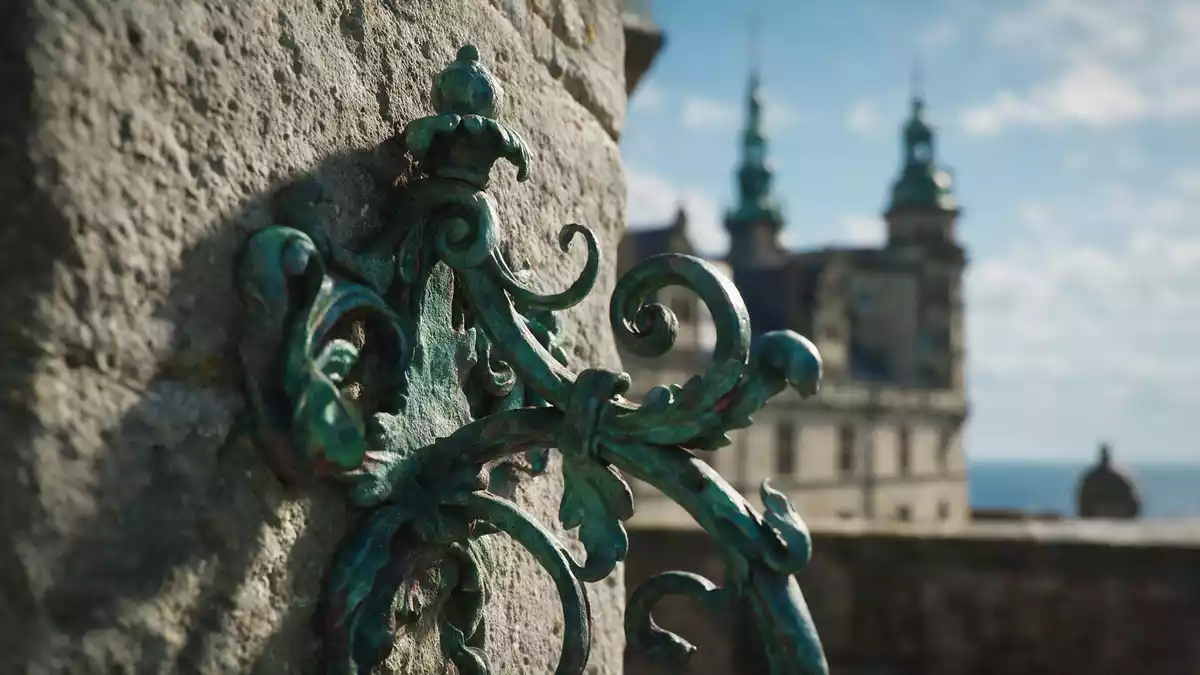
Kronborg Slot stands on a low headland at Helsingör in Denmark, where a broad Renaissance castle meets a ring of fortifications and the narrow waters of the Øresund. Completed in the late sixteenth century under King Frederick II, it later gained renewed life when William Shakespeare set “Hamlet” in Elsinore, fixing this coastal fortress in the imagination of theatre audiences far beyond Scandinavia.The royal castle of Kronborg at Helsingör has been recognised as a UNESCO World Heritage Site since 2000.
A Renaissance castle ringed by bastions
The core of Kronborg Slot is a sandstone-clad Renaissance palace, laid out around a central courtyard and crowned with towers and spires that mark its skyline above the harbour.Kronborg is described as a castle and historical stronghold in Helsingør, combining richly decorated residential wings with heavy defensive structures. Work on this palace began in 1574, when Frederick II transformed an earlier fortified site into a residence that reflected the tastes and ambitions of late sixteenth-century Denmark.The current castle dates from the 1570s, and its outer works were reinforced in the seventeenth century as artillery and military architecture evolved.
Seen from the water, the castle rises behind a wide moat and angular earth ramparts that frame the palace like a stone stage set. The four wings enclose a paved courtyard, where façades in pale stone contrast with copper-coloured roofs and the tall central tower. Cannon positions line the seaward side, recalling the period when the Danish crown controlled passage through the Øresund and levied tolls on ships bound for or from the Baltic Sea. Standing on the ramparts, Helsingör’s harbour and the Swedish coastline across the strait form a constant backdrop to the architecture.
Hamlet’s Elsinore and a layered history
Kronborg Slot owes much of its international fame to literature. In the early seventeenth century, William Shakespeare chose Elsinore as the setting for “Hamlet”, and the castle at Helsingör has long been identified with that stage world.The association between Kronborg Castle and Shakespeare's Hamlet has given the fortress a dual identity as both historical stronghold and theatrical backdrop. Performances of the play have been staged within the walls over generations, with actors using the courtyard, the ramparts and the great halls as scenes that echo the text’s references to battlements, guards and royal apartments.
Beyond Shakespeare, the castle reflects several centuries of Danish and Scandinavian history. In the sixteenth and seventeenth centuries it formed part of a wider network of fortifications that secured control of the Øresund and anchored the power of the Danish monarchy in northern Europe.The site played a key role in the history of northern Europe from the sixteenth to the eighteenth centuries, and its strategic position north of Helsingör is still evident in the way the fortress commands the shipping lane. Later uses introduced new layers, including military functions and, in more recent decades, museum spaces that interpret maritime history and the castle’s own story.
Stone, sea and the view towards Sweden
The relationship between Kronborg Slot and its landscape is as striking as its architecture. The castle stands at the edge of the Øresund, the narrow stretch of water separating Denmark and Sweden, with the town of Helsingör unfolding behind it.Kronborg Castle is described as standing at a strategically vital point overlooking the Øresund, and that geography is immediately legible in the long views along the coast. From the outer ramparts, the sea wall runs alongside the fortress and a line of cannons points towards the shipping lane, underlining the former toll station that once controlled access to the Baltic.
Within the walls, stone passages, vaulted halls and casemates contrast with open courtyards and terraces exposed to the wind from the strait. The fortified perimeter creates a broad platform from which the coastline of Sweden is visible on clear days, and the low profile of the surrounding outworks means the castle itself remains the dominant structure on the headland. These physical relationships between stone, water and horizon give Kronborg Slot a particular character among European coastal castles, where maritime traffic remains part of the daily scene around the old stronghold.
Visiting Kronborg Slot: what travellers from Western Europe should know
- Kronborg Slot stands at the entrance to Helsingör harbour in north-eastern Denmark, facing the Øresund and the Swedish town of Helsingborg across the water. Trains run to Helsingör from Copenhagen, and the castle is a short walk from the town’s central station.
- The approach to the castle involves crossing bridges over moats and walking across cobbled surfaces within the outer fortifications. Inside the walls, staircases, uneven paving and the length of the ramparts mean that a visit involves a fair amount of walking.
- Helsingör lies in Denmark, where the official language is Danish and the currency is the Danish krone. Entry requirements depend on your nationality; UK travellers can check the FCDO travel advice at gov.uk/foreign-travel-advice, Irish travellers the Department of Foreign Affairs at ireland.ie.
- The castle sits on low ground at sea level beside the Øresund, and the exposed headland can be windy in all seasons. The waterfront setting offers open views along the Danish coast and towards Sweden.
Searching for Kronborg Slot on social platforms
These links open searches for Kronborg Slot on each platform.
Frequently asked questions about Kronborg Slot
Where is Kronborg Slot located?
Kronborg Slot stands at the entrance to Helsingör harbour in north-eastern Denmark, on a headland projecting into the Øresund opposite the Swedish coast.
What should visitors expect inside the castle?
Visitors encounter a mixture of Renaissance palace rooms, vaulted halls, casemates and broad ramparts, with long views over Helsingör, the harbour and the waters of the Øresund.
What makes Kronborg Slot distinctive among European castles?
Kronborg Slot combines a richly decorated Renaissance palace and extensive fortifications with a literary identity as the Elsinore of Shakespeare’s “Hamlet”, all set directly beside the Øresund.


