
Kronborg Slot and the Renaissance fortress at Helsingör
Published on 09/15/2026 at 16:36 | Editorial responsibility: Rafael Müller, Editor-in-Chief AD HOC NEWS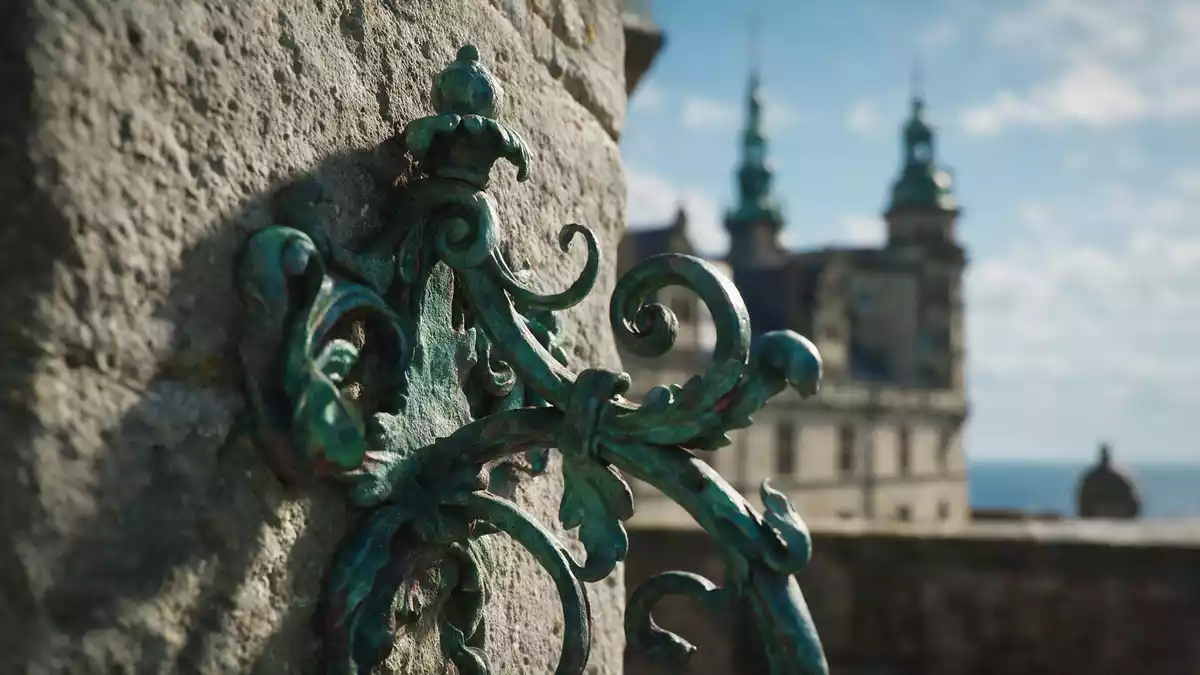
Kronborg Slot rises at Helsingör as a Renaissance fortress of brick, copper roofs and towers. Its name is tied to Shakespeare’s Elsinore, and the castle belongs to the UNESCO World Heritage List.
Kronborg Slot beside the Sound
The castle stands on the shore at the narrow entrance to the Sound, where water separates Denmark and Sweden. That setting gives the fortress an uncompromising outline, with long ramparts and a compact mass of stonework and masonry. The UNESCO listing places Kronborg Castle in Helsingör on the island of Zealand and identifies it as a landmark of outstanding cultural valueUNESCO World Heritage List.
The present castle grew from a royal stronghold and took on its Renaissance form under Frederik II in the late sixteenth century. That period remains visible in the symmetry of the main ranges, the decorated roofs and the formal courtyards that define the planRenaissance form.
The castle of Elsinore in literature
Kronborg Slot is inseparable from Hamlet, where Shakespeare set the action at Elsinore. The link gave the castle a second identity beyond Danish history, and that literary association remains part of how the place is read by visitors and travellersShakespeare’s Elsinore.
The association with Hamlet sits easily beside the military character of the building. Kronborg keeps the look of a stronghold, with bastions, high walls and a disciplined horizon line that still reads as defensive architecture rather than palace display. The same brick surfaces and roof silhouettes give the castle a severe elegance that suits both its strategic past and its literary fame.
Royal history in stone and brick
The castle’s story reaches back to Erik of Pomerania and the medieval fort called Krogen. Frederick II then transformed the site into a grander Renaissance residence, and Christian IV later rebuilt it after the fire of 1629. Those names matter because they mark the stages that gave Kronborg its present character, from fortified outpost to royal showpiece and then to a rebuilt monumentErik of Pomerania.
The result is a building that carries several periods at once. Visitors meet a fortress shaped by royal power, war damage and reconstruction, with Renaissance decoration set against the practical bulk of a military post. The UNESCO listing, granted in 2000, confirms that the site is valued for both architecture and historical roleinscribed in 2000.
Visiting Kronborg Slot: what travellers from Western Europe should know
- Kronborg Slot stands in Helsingör, north of the town centre, beside the Sound. Trains from Copenhagen reach Helsingör station, and the castle is reached from the waterfront area.
- The approach crosses a fortified site with masonry walls, courtyards and ramparts. Parts of the complex have a military scale, so the terrain feels large and ordered rather than domestic.
- The castle sits on Zealand, near the waterline where Denmark faces Sweden across the Sound. The coastal position is part of the experience even before the buildings come into view.
- The official language is Danish and the currency is the Danish krone.
Searching for Kronborg Slot on social platforms
These links open searches for Kronborg Slot on each platform.
Frequently asked questions about Kronborg Slot
Where is Kronborg Slot?
It stands in Helsingör, on the north-eastern edge of Zealand in Denmark. The castle faces the Sound, the narrow waterway between Denmark and Sweden.
What does a visit feel like?
The site reads as a large fortified ensemble with courtyards, walls and formal ranges. It combines royal architecture, maritime setting and literary association in one place.
What makes Kronborg Slot distinctive?
Its blend of Renaissance palace and stronghold, together with its link to Hamlet, sets it apart. The UNESCO designation adds formal recognition to that combination of architecture and history.


