
Kopalnia Soli Wieliczka and its underground world of salt art
Published on 09/10/2026 at 16:06 | Editorial responsibility: Rafael Müller, Editor-in-Chief AD HOC NEWS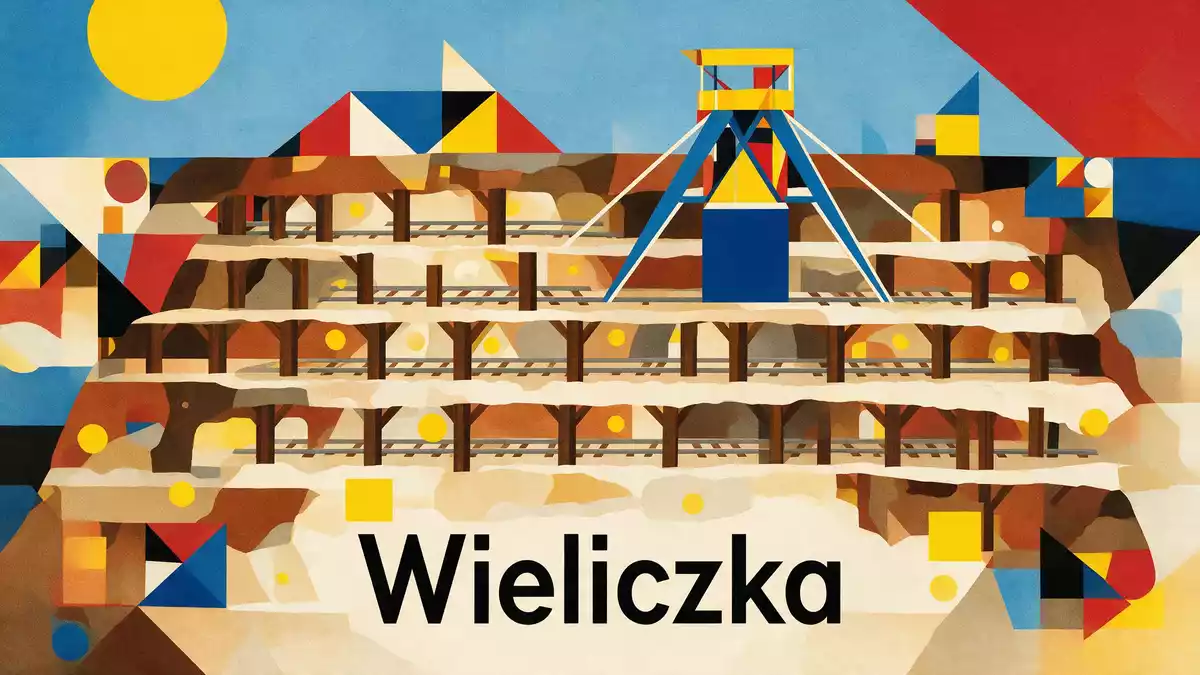
Kopalnia Soli Wieliczka in southern Poland is an underground salt mine where centuries of extraction have left a multi-level world of chambers, chapels and sculptures carved directly into rock salt. Its workings date back to the thirteenth century, and the site is inscribed on the UNESCO World Heritage List as part of the Wieliczka and Bochnia Royal Salt Mines.
An industrial salt mine turned subterranean landscape
The story of Kopalnia Soli Wieliczka begins with the discovery of rock salt in the thirteenth century on a deposit that also extends under nearby Bochnia. From that period shafts and galleries were driven into the salt, turning the deposit into one of Europe’s earliest large-scale industrial operations in the medieval era.Wieliczka and Bochnia Royal Salt Mines Over generations miners expanded the workings into a network of corridors and chambers at different levels, leaving behind voids where blocks of salt were removed and providing the framework for the underground spaces visitors see today.rock salt was first discovered
Salt production at Wieliczka continued in various forms until the late twentieth century, when industrial mining ended and the focus shifted fully to heritage and tourism. The mine had already been recognised as a Polish historic monument and listed by UNESCO in 1978 among the first group of twelve sites worldwide on the World Heritage List.listed as a World Heritage site in 1978 Today Kopalnia Soli Wieliczka is presented as an underground landscape shaped by human labour, where geology and history meet in a sequence of excavated halls, timbered passages and saline lakes.
Salt chapels, carvings and the Chapel of St Kinga
As mining progressed, the miners at Wieliczka carved places of worship into the salt, creating chapels whose walls, altars and reliefs are made from the same material they extracted. The most renowned of these is the Chapel of St Kinga, a large underground church situated around 101 m (331 ft) below the surface, with a length of about 54 m (177 ft), a width of roughly 18 m (59 ft) and a height of around 12 m (39 ft).Chapel of St Kinga dimensions Its interior includes a salt-carved altar, reliefs and chandeliers which turn the grey-green salt into a setting that resembles a stone church, yet reveals crystalline surfaces in the details.
Elsewhere in Kopalnia Soli Wieliczka, chambers carry sculptures ranging from religious figures to scenes associated with local legends. In some halls miners carved groups of figures illustrating the story of Saint Kinga’s ring and its link to the discovery of salt, while other spaces contain more recent carvings, including representations of Polish historical figures. These works sit within excavated rooms and along passage walls, showing how the mine’s industrial fabric became a canvas for art in salt. One of the chapels on the tourist routes, dedicated to St Antoine, has been used for worship since the seventeenth century, marking a long-standing devotional presence within the mine.St Antoine’s Chapel
Kopalnia Soli Wieliczka in its regional setting
Kopalnia Soli Wieliczka lies beneath the town of Wieliczka in the Lesser Poland region, south-east of Kraków, on a rock salt deposit shared with the Bochnia mine.Wieliczka in Lesser Poland The main access for visitors uses the Dani?owicz Shaft on Dani?owicza Street, where the surface buildings form a forecourt to the underground tours.Dani?owicz Shaft address From there guided routes lead down staircases into the mine, descending through successive levels that show different phases of excavation.
The mine’s World Heritage status reflects its role as one of the oldest documented centres of salt manufacture in Europe, and the continuity of its workings from the Middle Ages into the late twentieth century.one of the oldest documented salt sites In 2013 the UNESCO entry was extended to include Bochnia and the ?upny Castle at Wieliczka, presenting the salt mines and their administrative seat together as the Wieliczka and Bochnia Royal Salt Mines.extension of the inscription For visitors from Western Europe the location near Kraków makes Kopalnia Soli Wieliczka a straightforward addition to a wider journey through southern Poland’s historical sites.
Visiting Kopalnia Soli Wieliczka: what travellers from Western Europe should know
- Kopalnia Soli Wieliczka lies in the town of Wieliczka in southern Poland, south-east of Kraków, with visitor access concentrated around the Dani?owicz Shaft on Dani?owicza Street.
- The standard tourist routes involve descending and climbing staircases inside the mine, including long flights of wooden steps and extended sections of walking through underground corridors.
- Wieliczka is reached by road and rail connections from Kraków; the salt mine sits close to the junction with the A4 motorway, so road access from the city and airport is direct.
- The official language is Polish and the currency is the Polish z?oty.
- Entry requirements depend on your nationality; UK travellers can check the FCDO travel advice at gov.uk/foreign-travel-advice, Irish travellers the Department of Foreign Affairs at ireland.ie.
Searching for Kopalnia Soli Wieliczka on social platforms
These links open searches for Kopalnia Soli Wieliczka on each platform.
Frequently asked questions about Kopalnia Soli Wieliczka
Where is Kopalnia Soli Wieliczka located?
Kopalnia Soli Wieliczka lies beneath the town of Wieliczka in the Lesser Poland region of southern Poland, south-east of the city of Kraków.
What can visitors expect on a visit to the mine?
Visitors follow guided routes through excavated corridors and chambers, descend staircases to lower levels and see underground chapels, salt sculptures and saline lakes within the mine.
What makes Kopalnia Soli Wieliczka distinctive among salt mines?
The mine combines a long history of salt extraction dating back to the thirteenth century with extensive underground chapels, especially the large Chapel of St Kinga, carved entirely from rock salt.


