
Kopalnia Soli Wieliczka: an underground city of salt near Kraków
Published on 09/05/2026 at 20:40 | Editorial responsibility: Rafael Müller, Editor-in-Chief AD HOC NEWS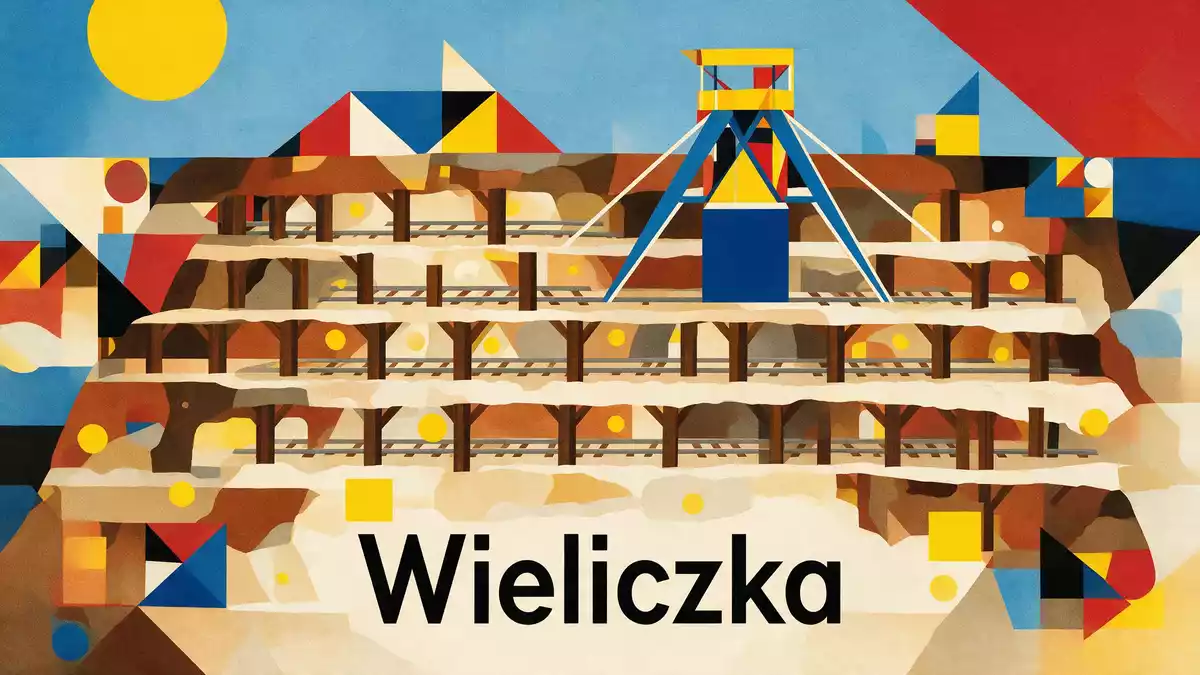
Kopalnia Soli Wieliczka, known in English as the Wieliczka Salt Mine, lies beneath the town of Wieliczka just south-east of Kraków and extends as a multi-level underground world carved entirely in salt. Its galleries, chambers and chapels grew over centuries of extraction, leaving a vast man-made landscape that feels like a hidden city beneath southern Poland.
A medieval industry turned subterranean labyrinth
Salt has been worked at Wieliczka since at least the medieval period, with organised rock salt mining documented from the thirteenth century and continuing until industrial exploitation ceased in 1996.rock salt was first discovered in Wieliczka in the 13th century Over that span, miners created a complex of tunnels and chambers that now form one of the most extensive historic mining landscapes in Europe. The deposit beneath the town stretches for several kilometres on an east–west line, with workings reaching a depth of around 327 m (1,073 ft) below the surface.Mining exploitation of the deposit was commenced on level I (57 m under ground level), finally reaching level IX (327 m in depth)
At its fullest extent, the mine comprised thousands of chambers connected by hundreds of kilometres of drifts across nine worked levels, reflecting the long evolution from simple shafts to a major early industrial complex.Kopalnia le?y pod miastem na dziewi?ciu poziomach The heyday of the Cracow Saltworks in the sixteenth and seventeenth centuries saw Wieliczka become a significant source of revenue for the Polish crown, and over successive eras the infrastructure expanded with new shafts, underground rail equipment and technical installations, turning the mine into a self-contained world below ground.Mining was increased to an industrialised scale during the 16th to 18th century
Salt chapels, sculptures and underground lakes
Centuries of work left more than utilitarian caverns: miners shaped the rock into chapels, altars, statues and decorative reliefs, all carved from salt, creating a distinctive artistic tradition beneath the town.The miners constructed miles of galleries decorated with works of art, underground chapels and statues sculpted in the salt Many chambers preserve timber frameworks and mining equipment alongside this sculpture, so a walk through the mine alternates between workspaces and places of worship, each cut into the pale rock. In some areas, underground lakes collect brine, reflecting carvings and vaults above and emphasising how closely geology and human activity are woven together here.
The best-known artistic ensemble lies in the deep levels, where a large chapel space carries salt reliefs and chandeliers, showing how religious life flourished in parallel with labour under difficult conditions.The Wieliczka Salt Mine Elsewhere, smaller devotional spaces punctuate the routes, and passages open suddenly into wide caverns where extraction left towering walls. The contrasting scales—from narrow corridors to sizeable halls—give the mine the character of an underground city laid out over many storeys.
From working mine to protected heritage
Although Wieliczka’s deposit had been exploited since medieval times, the industrial phase of rock salt extraction drew to a close in the second half of the twentieth century, with rock salt mining stopping in 1964 and exploitation ceasing entirely in 1996.In 1964, extraction of rock salt came to a halt in Wieliczka, whereas on June 30, 1996, exploitation of the deposit was ceased entirely The mine took on a new role as a site for tourism, museum exhibitions and health-related stays, using the existing chambers and infrastructure rather than new excavation.Obecnie malownicze wyrobiska kopalni s? u?ytkowane do celów turystycznych, muzealnych i leczniczych
The significance of Kopalnia Soli Wieliczka has been recognised through formal protection as a Polish Historic Monument and as part of the UNESCO World Heritage site “Wieliczka and Bochnia Royal Salt Mines”, which links Wieliczka with the nearby Bochnia mine and the saltworks castle above ground.The Wieliczka Salt Mine is now an official Polish Historic Monument and a UNESCO World Heritage SiteWieliczka and Bochnia Royal Salt Mines This status places the mine among the early industrial complexes recognised as globally significant, reflecting not only its age but also the scale and completeness of its underground landscape.
Visiting Kopalnia Soli Wieliczka: what travellers from Western Europe should know
- Kopalnia Soli Wieliczka lies beneath the town of Wieliczka in Lesser Poland, reached by road and rail from nearby Kraków, with visitor access via surface facilities in the town.
- Visits involve descending to several underground levels by staircases or lift and walking along mining galleries, so expect stretches of steps and uneven rock floors inside the historic workings.
- The mine lies in Poland, where the official language is Polish and the currency is the Polish z?oty.
Searching for Kopalnia Soli Wieliczka on social platforms
These links open searches for Kopalnia Soli Wieliczka on each platform.
Frequently asked questions about Kopalnia Soli Wieliczka
Where is Kopalnia Soli Wieliczka located?
Kopalnia Soli Wieliczka is an underground salt mine beneath the town of Wieliczka in Lesser Poland, close to Kraków in southern Poland.
What can visitors expect inside the mine?
Visitors follow marked routes through mining galleries, chapels carved in salt, large extraction chambers and underground lakes, experiencing several levels of the historic workings.
What makes Kopalnia Soli Wieliczka distinctive among industrial heritage sites?
The mine combines a vast multi-level network of historic workings with artistic salt chapels and sculptures, and it holds formal recognition as both a Polish Historic Monument and a UNESCO World Heritage site.


