
Kom Ombo Temple and the architecture of two gods
Published on 09/23/2026 at 04:19 | Editorial responsibility: Rafael Müller, Editor-in-Chief AD HOC NEWS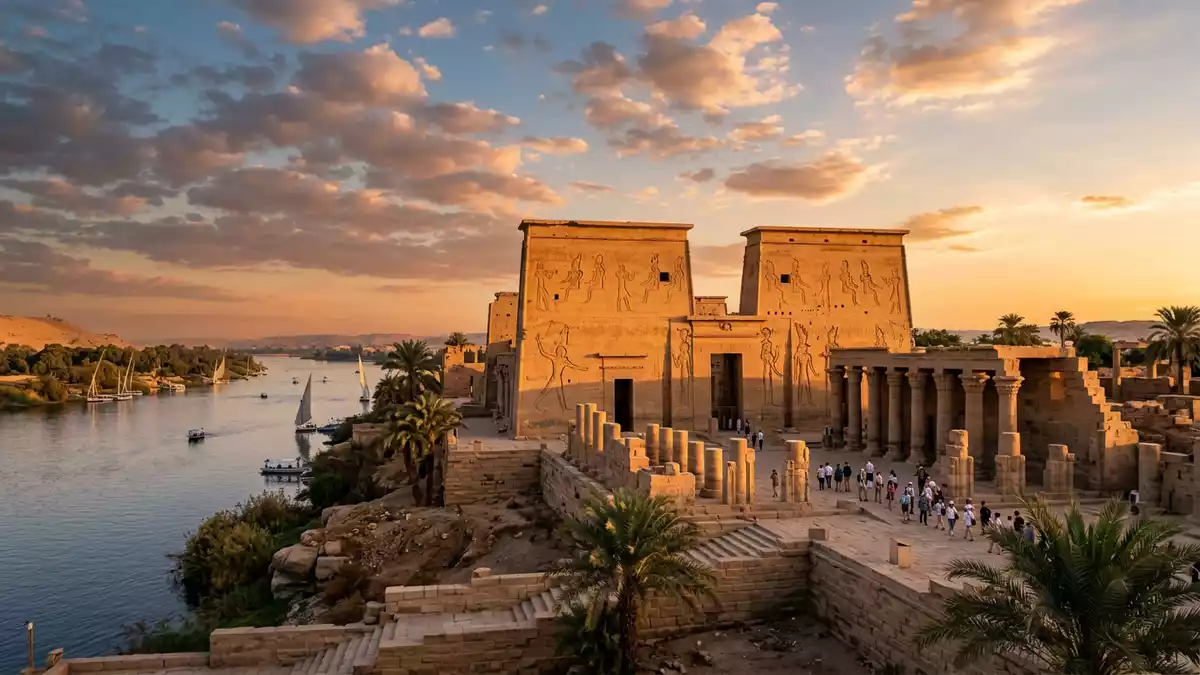
Kom Ombo Temple rises beside the Nile at Kom Ombo in Upper Egypt as a sanctuary divided between two gods. Its paired entrances, halls, passages and sanctuaries create a visible architectural dialogue between Sobek, the crocodile god, and Haroeris, or Horus the Elder.
Kom Ombo Temple as a double sanctuary
The temple’s defining feature is its doubled plan. Two parallel axes pass through the columned halls and end at separate sanctuaries, with the southern axis assigned to Sobek and the northern axis to Haroeris. The arrangement gives the surviving complex a strong sense of order without reducing it to one central cult.
The walls, gateways and columns carry reliefs of gods, rulers and ritual scenes. Ptolemy VI Philometor is the earliest royal name recorded in the visible temple, while the Egyptian monument record places the present structure within the Graeco-Roman Period.
Ptolemaic stonework beside the Nile
The present temple belongs chiefly to the Ptolemaic period, with construction beginning under Ptolemy VI Philometor in the second century BC. Work continued under later Ptolemaic rulers, and the surviving complex includes additions from Roman Egypt.
Most of the decoration was completed under Ptolemy XII Neos Dionysos, who ruled from 80 to 51 BC. Roman work appears in parts of the outer areas and decoration, linking the sanctuary’s Egyptian religious imagery with the political world of a later Mediterranean empire.
Kom Ombo’s location is equally legible in its remains. The temple stands on the east bank of the Nile, between Aswan and Edfu, with the river forming a close geographical companion to the archaeological site. The town’s ancient name was Nubt, associated with gold, while the present name combines Arabic and ancient Egyptian elements.
Sobek, Horus and the surviving reliefs
Sobek gives Kom Ombo its most recognisable religious identity. The crocodile god was connected with the Nile, fertility and royal power, while Haroeris represents Horus the Elder in a distinct local form. Their shared sanctuary preserves two divine traditions within one monumental plan.
Reliefs show rulers presenting offerings and standing before the gods. Carved figures, hieroglyphs and columns retain traces of the temple’s ritual language, even where sections of the walls have disappeared. The paired sanctuaries make the religious division visible in the stone itself.
A separate Crocodile Museum stands beside the temple and presents the local association with Sobek through crocodile remains and related objects. The museum and temple form a closely connected cultural site beside the river, joining archaeological architecture with the animal symbolism of the cult.
Visiting Kom Ombo Temple: what travellers from Western Europe should know
- Kom Ombo Temple is on the east bank of the Nile in the town of Kom Ombo, between Aswan and Edfu. The site is reached by road and forms part of Nile travel routes through Upper Egypt.
- The temple stands on an archaeological terrace above the river. Stone paving, thresholds and uneven surviving masonry make sturdy footwear useful for moving across the complex.
- The Crocodile Museum is next to the temple. Its displays add a separate indoor setting for the crocodile imagery associated with Sobek.
- The official language is Arabic and the national currency is the Egyptian pound.
- Entry requirements depend on your nationality; UK travellers can check the FCDO travel advice at gov.uk/foreign-travel-advice, Irish travellers the Department of Foreign Affairs at ireland.ie.
Searching for Kom Ombo Temple on social platforms
These links open searches for Kom Ombo Temple on each platform.
Frequently asked questions about Kom Ombo Temple
Where is Kom Ombo Temple?
Kom Ombo Temple stands in the town of Kom Ombo on the east bank of the Nile in Upper Egypt, between Aswan and Edfu.
What can visitors expect at the temple?
Visitors encounter paired axes, columned halls, separate sanctuaries, carved reliefs and views towards the Nile. The neighbouring Crocodile Museum adds objects connected with Sobek.
What makes Kom Ombo Temple distinctive?
Its plan is divided between Sobek and Haroeris. Two parallel passages run through the temple and terminate in sanctuaries dedicated to the two gods.


