
Kolner Dom and its soaring Gothic towers over Köln
Published on 08/26/2026 at 20:43 | Editorial responsibility: Rafael Müller, Editor-in-Chief AD HOC NEWS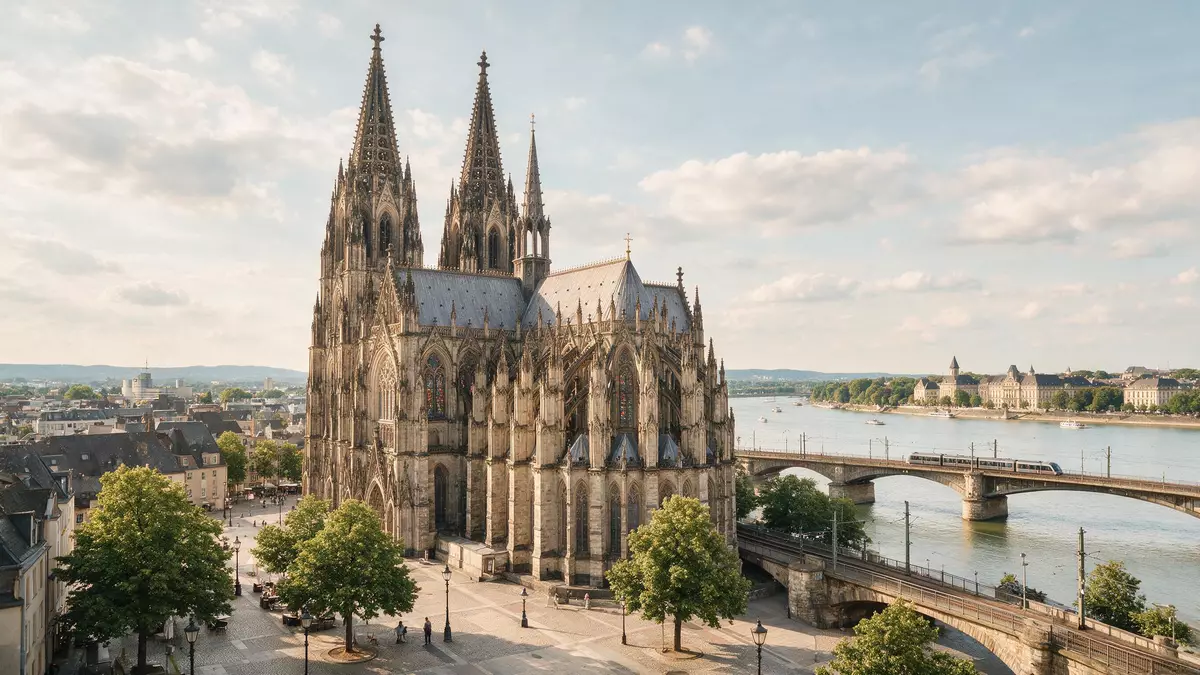
Kolner Dom, known in English as Cologne Cathedral, dominates the centre of Köln with vast Gothic stonework and twin towers that were finally completed in 1880. Construction began in 1248 and stretched across centuries, giving the cathedral a layered yet remarkably consistent High Gothic character.
A Gothic giant shaped over six centuries
Kolner Dom is the Roman Catholic cathedral church of St Peter and St Mary and the seat of the Archbishop of Cologne, rising above the Rhine-side city in western Germany. Construction began on 15 August 1248, when Archbishop Konrad von Hochstaden laid the foundation stone for a new Gothic cathedral designed by master builder Gerhard von Rile.Construction began on 15 August 1248 The project drew on the High Gothic models of northern France, and Kolner Dom was planned with a Latin cross ground plan and a soaring choir.
Work on the medieval structure slowed and eventually halted in the sixteenth century, leaving an unfinished shell with a completed choir and lower walls. In the nineteenth century, enthusiasm for medieval architecture and support from the Prussian court led to the resumption of building work under architect Ernst Friedrich Zwirner, who followed surviving medieval plans and drawings.Construction resumed in the nineteenth century The cathedral was completed in 1880, more than 600 years after the foundation stone was laid, and consecrated later that year.
Twin towers and a dense stone skin
The most striking feature of Kolner Dom is its pair of west towers, which rise to around 157 m (515 ft) and carry a lacework of pinnacles and traceried openings on their upper stages.The towers rise to about 157 m For several years after completion in 1880 these towers made Kolner Dom the tallest building in the world, and they still give the cathedral a powerful vertical presence in the Köln skyline.
The exterior is a dense skin of dark stone, carved with buttresses, statues and canopies that express the Gothic structure. Flying buttresses brace the high nave and choir, and the west front forms one of the largest Gothic façades in Europe, stacked with sculpted figures of saints and bishops.The exterior is a dense Gothic stone skin Inside, the plan follows a Latin cross with a long nave flanked by side aisles and a deep, raised choir. Slender clustered columns carry ribbed vaults high above the stone floor, while stained-glass windows bring coloured light into the interior.
A World Heritage shrine of the Three Kings
Kolner Dom has a central role in Christian pilgrimage in western Europe because it houses the shrine of the Three Kings, a large gilded reliquary said to contain the relics of the Magi. The remains of the Three Kings were brought to Cologne from Milan in 1164 by Archbishop Rainald von Dassel, decades before work began on the present Gothic cathedral, and the need to honour these relics shaped the importance of the site.The shrine of the Three Kings has made Cologne a major pilgrimage centre The shrine stands behind the high altar, surrounded by the choir’s tall arcades and stained glass.
In 1996 Kolner Dom was inscribed on the UNESCO World Heritage List as a masterpiece of Gothic architecture and a symbol of enduring faith.The cathedral joined the UNESCO World Heritage List in 1996 The listing recognises both its medieval design and its nineteenth-century completion, carried out with close adherence to the original plans. Visitors encounter not only a towering stone church but also a record of architectural continuity stretching from the thirteenth century to the age of industrialisation.
Visiting Kolner Dom: what travellers from Western Europe should know
- Kolner Dom stands in the centre of Köln on the north side of the main station, a short walk from the Rhine and the Hohenzollern Bridge.
- The interior is reached by broad entrances from the cathedral square, while a separate route climbs the south tower on a narrow spiral staircase with hundreds of steps.
- The cathedral sits at lowland altitude beside the Rhine and is surrounded by paved squares and streets, so approaches from the station and riverfront are on level ground.
- The official language is German and the currency is the euro.
Searching for Kolner Dom on social platforms
These links open searches for Kolner Dom on each platform.
Frequently asked questions about Kolner Dom
Where is Kolner Dom located?
Kolner Dom stands beside the main railway station in central Köln, in western Germany, close to the Rhine riverfront.
What should visitors expect inside Kolner Dom?
Visitors encounter a vast Gothic interior with stone columns, ribbed vaults, stained-glass windows and the gilded shrine of the Three Kings behind the high altar.
What makes Kolner Dom distinctive among European cathedrals?
Its combination of towering twin Gothic spires around 157 m high, a construction history from 1248 to 1880 and UNESCO World Heritage status gives Kolner Dom a distinctive presence.


