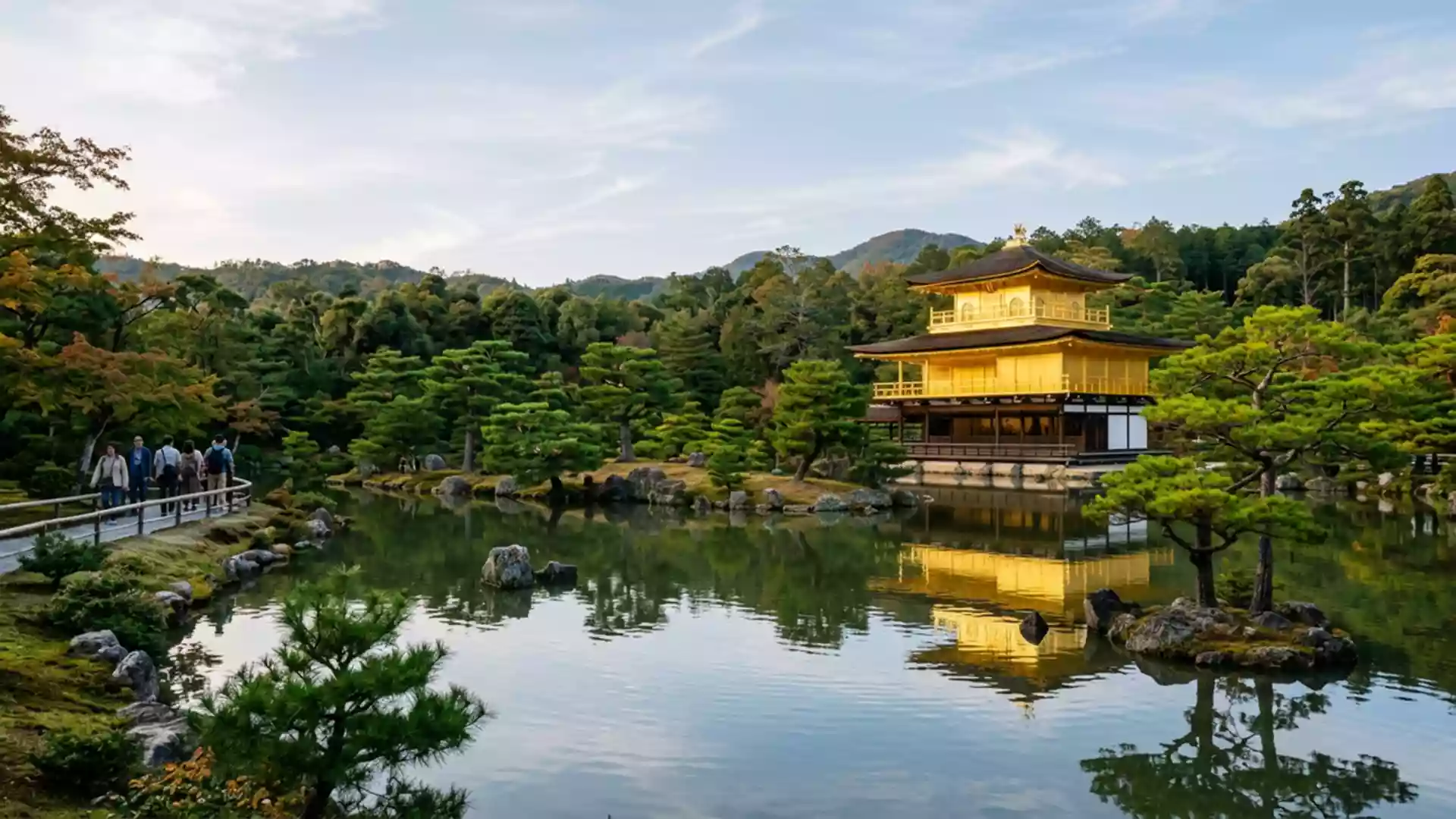
Kinkaku-ji’s golden pavilion reflected in a Kyoto garden
Published on 09/04/2026 at 15:34 | Editorial responsibility: Rafael Müller, Editor-in-Chief AD HOC NEWS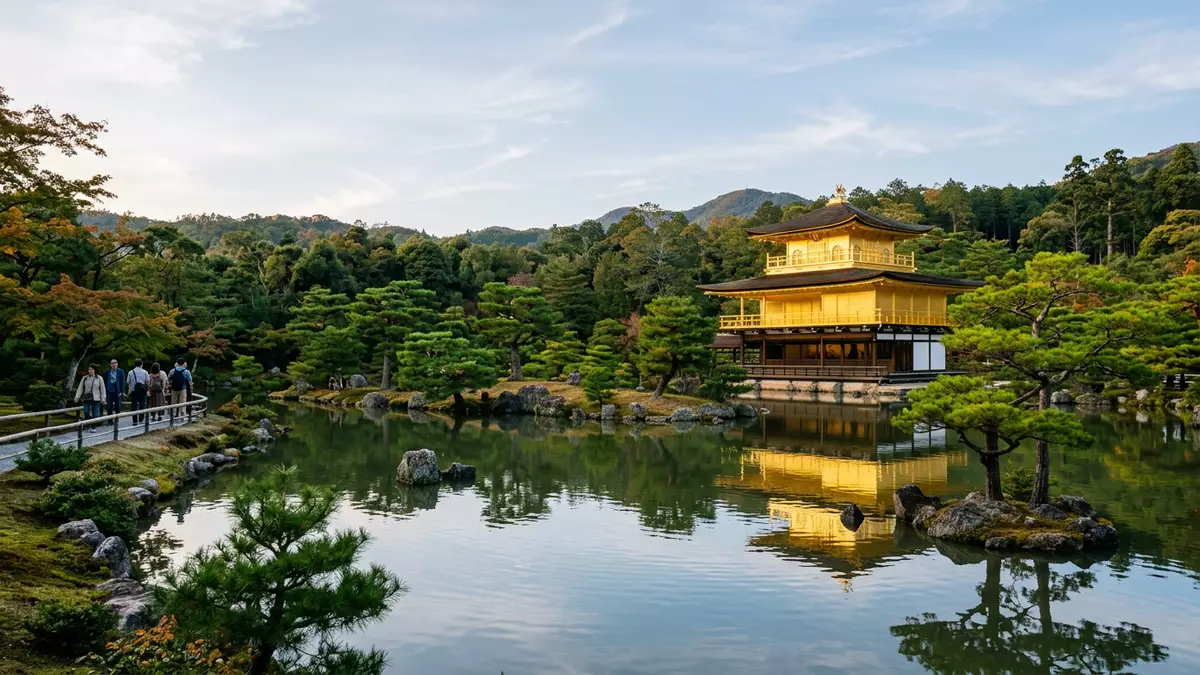
Kinkaku-ji in Kyoto is a Zen Buddhist temple where a gold-covered pavilion rises above a garden pond, bringing architecture, water and carefully composed landscape into a single view. Set in the Kitayama district in the north-west of the city, the temple complex is officially known as Rokuon-ji and forms part of the Rinzai Zen network centred on Shokoku-ji.
A temple built for a shogun, standing in a garden
The origins of Kinkaku-ji lie in the late fourteenth century, when the military ruler Ashikaga Yoshimitsu established a villa in the hills of north-west Kyoto that later became the core of the temple.Ashikaga Yoshimitsu lived from 1358 to 1408 and held the office of shogun during the Muromachi period, when Kyoto served as the political centre of Japan.Muromachi period shogun After his death, the residence was converted into a temple in line with his wishes, and the complex took on the name Rokuon-ji from his posthumous title.
The pavilion that visitors associate most closely with Kinkaku-ji occupies a terrace beside a pond that dominates the foreground of the garden. It stands within landscaped grounds that blend planted trees, shaped islands and stones placed to suggest miniature mountain forms.landscaped grounds Around the garden, wooded slopes frame the site, emphasising that this temple sits at the foot of the Kitayama hills rather than in the dense urban fabric of central Kyoto.Kitayama hills district
The Golden Pavilion and its layered architecture
The building known as the Golden Pavilion is a three-storey structure that combines different Japanese architectural styles within a single volume.three-storey pavilion The ground level follows the shinden style associated with aristocratic residences of the Heian period, expressed in its relatively open arrangement and relationship to the surrounding garden.shinden style ground floor Above it, the second storey reflects buke style, recalling warrior-class dwellings, while the upper level takes on the form of a Zen Buddhist hall influenced by Chinese temple architecture.
Gold leaf covers the upper levels of the pavilion, giving the building its familiar gleam and the temple its popular name as the “Temple of the Golden Pavilion”.gold leaf on upper floors The ground floor retains a natural wood finish, creating a visual contrast between its darker surfaces and the luminous upper tiers.natural wood ground floor A phoenix stands at the apex of the roof, a detail that reinforces the building’s function as a reliquary hall for sacred Buddhist relics and ties the architecture to wider East Asian symbolism.phoenix on the roof
Water, reflection and movement through the grounds
The garden pond in front of the Golden Pavilion is a defining element of Kinkaku-ji. The building stands close enough to the water’s edge for its gold-covered upper levels to be reflected when the surface is calm, so that visitors see the pavilion doubled in the pond below. Small islands and stone groupings punctuate the water, arranged to form compositions that echo landscapes on a smaller scale.
A path leads visitors from the entrance through the garden, offering changing angles on the pavilion and the water. While the main view is from across the pond, the route continues past other structures within the temple precincts, including halls and smaller shrines that form part of the wider Rokuon-ji complex.Rokuon-ji complex The planting mixes evergreen trees with seasonal vegetation, and the site’s position on slightly rising ground gives glimpses of the surrounding city beyond the temple boundary.
Visiting Kinkaku-ji: what travellers from Western Europe should know
- Kinkaku-ji stands in Kinkakuji-cho in Kyoto’s Kita Ward, in the Kitayama district north-west of the central railway station; city buses link the area with other parts of Kyoto.
- The temple grounds include a garden pond, stepped paths and some sections with uneven surfaces; walking shoes with good grip help on the inclines and stone paving.
- The temple lies within Kyoto City in Japan; the official language is Japanese and the currency is the Japanese yen.
- Entry requirements depend on your nationality; UK travellers can check the FCDO travel advice at gov.uk/foreign-travel-advice, Irish travellers the Department of Foreign Affairs at ireland.ie.
Searching for Kinkaku-ji on social platforms
These links open searches for Kinkaku-ji on each platform.
Frequently asked questions about Kinkaku-ji
Where is Kinkaku-ji located within Kyoto?
Kinkaku-ji stands in Kinkakuji-cho in Kyoto’s Kita Ward, in the Kitayama district in the north-west of the city, at the foot of wooded hills.
What should visitors expect when they enter the temple grounds?
Visitors follow a set route through landscaped gardens, viewing the Golden Pavilion beside its pond and passing other halls and shrines within the Rokuon-ji precincts.
What makes Kinkaku-ji distinctive among Kyoto’s temples?
Kinkaku-ji is distinguished by its gold-covered upper floors, layered architectural styles within one pavilion and the way that building is reflected in the garden pond.