
Kinkaku-ji and the Golden Pavilion over the mirror pond
Published on 09/07/2026 at 20:20 | Editorial responsibility: Rafael Müller, Editor-in-Chief AD HOC NEWS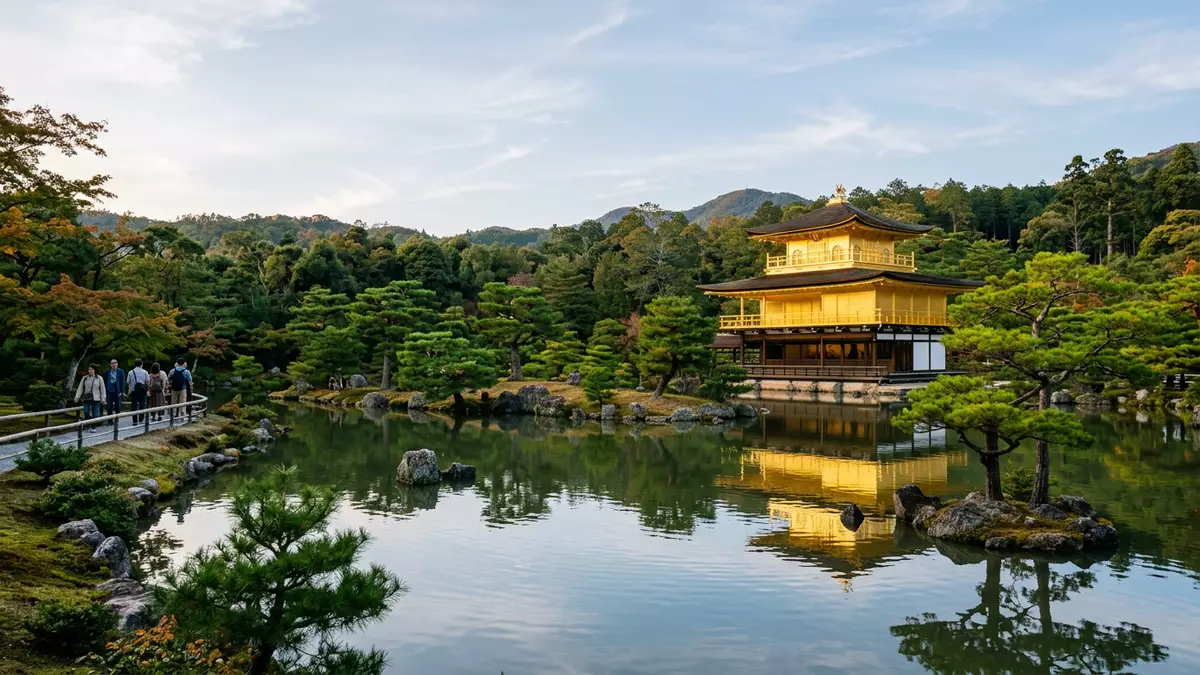
Kinkaku-ji in Kyoto is a Zen Buddhist temple whose Golden Pavilion rises directly beside a reflective pond, a carefully composed scene that has defined the site since the late fourteenth century.First built in 1397, the pavilion has gained its name from the gold leaf that covers its upper tiers and catches the light above the water.
A Muromachi-era villa turned Zen temple
The story of Kinkaku-ji begins with aristocratic land on Kyoto’s northern edge, where the Saionji family maintained a villa in the thirteenth century.Saionji Kintsune’s villa stood here before the grounds passed to shogunal hands in the late 1300s. In 1397 Ashikaga Yoshimitsu, the third Ashikaga shogun, acquired the property and created an elaborate retirement residence known as Kitayama-dono, a palace complex that mirrored the tastes of the Muromachi period.Yoshimitsu transformed the villa into Kinkaku-ji, embedding the pavilion, hall and gardens in Kyoto’s northern hills.
After Yoshimitsu’s death in 1408, the estate changed role. In accordance with his wishes, his successor Ashikaga Yoshimochi converted the residence into a Rinzai Zen temple, adopting the formal name Rokuon-ji while the shimmering pavilion ensured that the shorter name Kinkaku-ji remained more widely used.The grounds became a Zen Buddhist temple and the palace landscape took on a religious function. The temple stands today as one expression of Kitayama culture, the blend of aristocratic, warrior and Chinese-influenced aesthetics that marked the Muromachi era.
The Golden Pavilion: three storeys, three styles
The Golden Pavilion itself is a three-storey structure set at the edge of the pond, and each level reflects a different architectural tradition drawn from Japanese courtly and religious life. At the ground level the building follows the shinden style, which echoes Heian-period aristocratic residences with their natural wood pillars and white plaster walls facing the water.The first floor is built in the shinden style, giving this lowest storey a calmer, less adorned appearance than those above.
The second storey adopts buke, or bukke-zukuri, forms associated with samurai residences from the Kamakura period, turning the middle level into a tribute to warrior architecture suspended above the pond.The second tier follows bukke samurai style. The top storey draws on Chinese-influenced Zen hall design, completing the vertical sequence with a space used as a Buddhist reliquary hall. The upper two levels are covered in gold leaf, so that the pavilion’s surfaces shine against the backdrop of pine trees and sky, while a phoenix statue crowns the roof and reinforces the building’s symbolic character.
Gardens, water and reflection
Beyond the pavilion itself, Kinkaku-ji is composed as a landscape of paths, water and planting, intended to be experienced in motion as visitors follow a set route around the grounds. The main pond, often described as mirror-like, sits in front of the Golden Pavilion and holds small islands, stones and carefully placed trees that appear in different alignments as one walks along the shoreline.The garden composition integrates pond, islands and pavilion, with the gilded building positioned to reflect in the water under favourable conditions.
The wider temple grounds include further garden elements, such as secondary ponds, stone groupings and a sequence of outlook points where the pavilion comes into view between branches or across the water. The path passes vantage points that show the layered structure of the building, its different styles, and its relationship to the surrounding hillside. Although the current pavilion is a reconstruction completed in the mid-twentieth century following a fire, it continues the earlier design and maintains the gold leaf cladding and tiered rooflines described in historical sources.The present structure was rebuilt in 1955, preserving the familiar appearance of Kinkaku-ji above the pond.
Visiting Kinkaku-ji: what travellers from Western Europe should know
- Kinkaku-ji stands in the northern part of Kyoto, and city buses and taxis run from central districts towards the temple area.
- The standard visit follows a one-way path around the grounds, including sections on compact gravel and a series of steps between viewpoints.
- The temple complex is surrounded by wooded hills, and from certain points within the garden the Golden Pavilion can be seen framed by trees and reflected in the main pond.
- The official language is Japanese and the currency is the Japanese yen.
- Entry requirements depend on your nationality; UK travellers can check the FCDO travel advice at gov.uk/foreign-travel-advice, Irish travellers the Department of Foreign Affairs at ireland.ie.
Searching for Kinkaku-ji on social platforms
These links open searches for Kinkaku-ji on each platform.
Frequently asked questions about Kinkaku-ji
Where is Kinkaku-ji located?
Kinkaku-ji is located in the northern part of Kyoto in Japan, in a temple precinct reached by city transport from central Kyoto districts.
What should visitors expect on a visit to Kinkaku-ji?
Visitors follow a set route through landscaped gardens, viewing the Golden Pavilion beside the pond from several vantage points and passing other temple buildings and garden features.
What makes Kinkaku-ji distinctive among Kyoto’s temples?
The combination of a three-storey pavilion clad in gold leaf, its reflection in the main pond and its origins as Ashikaga Yoshimitsu’s Muromachi-period villa gives Kinkaku-ji a distinctive character.


