
Kinkaku-ji and its golden reflections in Kyoto
Published on 08/22/2026 at 12:04 | Editorial responsibility: Rafael Müller, Editor-in-Chief AD HOC NEWS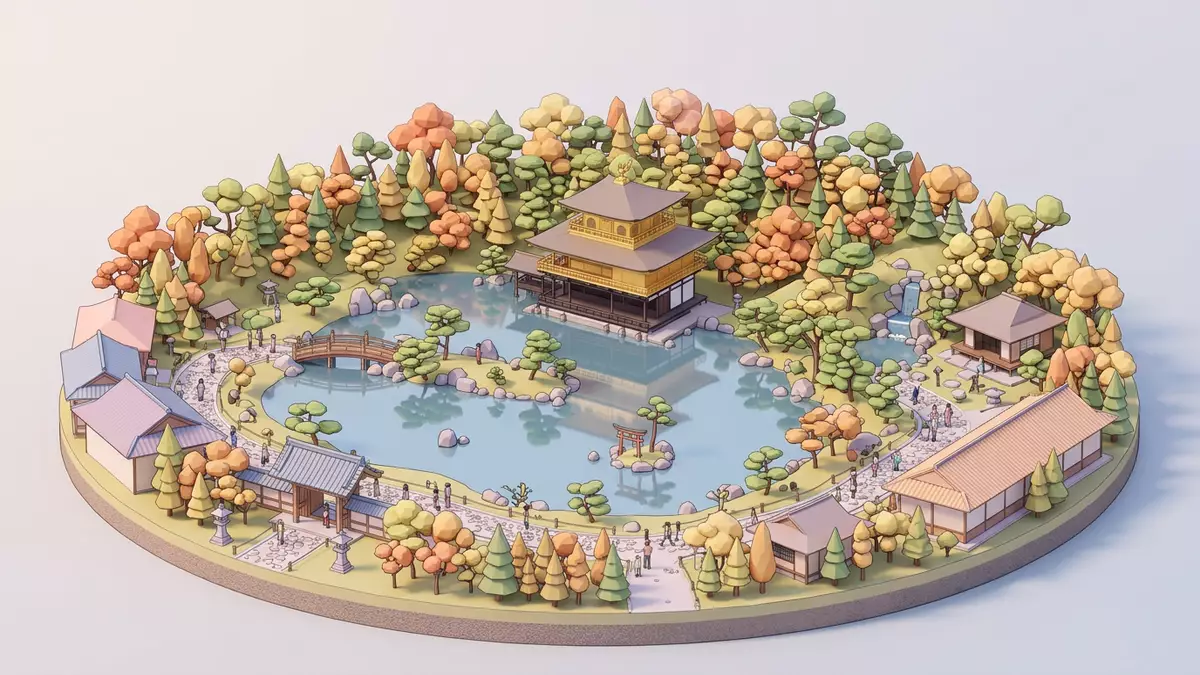
Kinkaku-ji, also known as the Golden Pavilion, rises over a reflective pond in northern Kyoto and brings together gilded architecture with a carefully composed temple garden. The Zen Buddhist complex, officially named Rokuon-ji, was shaped in the late fourteenth century and later rebuilt in the twentieth century, giving visitors a layered encounter with Japanese architecture and landscape design.
A golden pavilion beside the mirror pond
The centrepiece of Kinkaku-ji is a three-storey pavilion whose upper levels are covered in gold leaf and set just above the waterline of a pond. The structure stands within the grounds of the Rinzai Zen temple Rokuon-ji, a branch of Shokoku-ji in Kyoto’s Kita ward, and carries the popular name Kinkaku-ji from its glittering exterior.Rokuon-ji as the official name The shimmering facade is echoed in the still water below, so the pavilion appears doubled by its own reflection on calm days.
The current pavilion dates to 1955, when it was reconstructed after an earlier building on the site was destroyed in 1950.Reconstruction date of 1955 The original Golden Pavilion was completed in 1397 under the patronage of Ashikaga Yoshimitsu, the third shogun of the Ashikaga shogunate, and formed part of his retirement villa before becoming a temple.Completion in 1397 under Ashikaga Yoshimitsu The present building follows the historic design, with each storey expressing a different architectural idiom rooted in medieval Japanese practice.
From shogun villa to Zen temple complex
Kinkaku-ji’s history ties it closely to late medieval Kyoto and the Ashikaga rulers. Ashikaga Yoshimitsu, who held power in the late fourteenth century, had the pavilion built as part of his retirement residence on the northern edge of the city.Ashikaga Yoshimitsu’s retirement villa After Yoshimitsu’s death, the estate was transformed into a Zen temple associated with the Rinzai school, linking the site to one of the major currents of Japanese Buddhism.
The temple complex extends beyond the Golden Pavilion itself, with halls, pathways and smaller structures set within a landscaped precinct in Kyoto’s Kita ward.Location in Kita ward Kyoto The grounds form part of the Historic Monuments of Ancient Kyoto, a group of sites inscribed on the UNESCO World Heritage List in 1994, recognising their significance in the history of Japanese architecture and garden making.UNESCO World Heritage inscription in 1994 The combination of religious function, historical associations and preserved landscape has made the temple one of the most widely recognised landmarks of Kyoto.
Gardens, pathways and framed views
The pond in front of the Golden Pavilion, known as Kyoko-chi or Mirror Pond, is dotted with small islands and stones that draw on the traditions of Japanese strolling gardens.Description of Mirror Pond and garden The water’s edge is planted with trees and shrubs arranged to create layered views, so that the pavilion can be seen both directly and as part of a wider garden composition.
Visitors follow a set route that curves around the pond and climbs gently through the grounds, giving changing perspectives on the Golden Pavilion and the surrounding planting. The path leads past viewpoints where the guilded upper storeys line up with distant hills, as well as corners where the pavilion appears behind pines or above stone arrangements, illustrating how architecture and landscape are intertwined in the design of Kinkaku-ji.
Visiting Kinkaku-ji: what travellers from Western Europe should know
- Kinkaku-ji stands in Kinkakuji-cho in Kyoto’s Kita ward in northern Kyoto. It is reached by Kyoto City buses that stop at Kinkakuji-michi, listed on route maps and timetables.
- The walking route through the temple grounds follows a prepared path that includes some steps and gentle slopes. Footwear suitable for uneven garden paths is advisable.
- The climate of Kyoto brings humid summers and cool winters, and the trees and pond around the pavilion reflect these seasonal changes in foliage and atmosphere.
- The official language is Japanese and the currency is the Japanese yen.
- Entry requirements depend on your nationality; UK travellers can check the FCDO travel advice at gov.uk/foreign-travel-advice, Irish travellers the Department of Foreign Affairs at ireland.ie.
Searching for Kinkaku-ji on social platforms
These links open searches for Kinkaku-ji on each platform.
Frequently asked questions about Kinkaku-ji
Where is Kinkaku-ji located?
Kinkaku-ji is a Zen Buddhist temple in Kyoto’s Kita ward in northern Kyoto, in an area known as Kinkakuji-cho.
What can visitors expect during a visit?
Visitors walk along a set path around the Mirror Pond and through the garden, viewing the Golden Pavilion from different angles rather than entering the building itself.
What makes Kinkaku-ji distinctive among Kyoto’s temples?
Kinkaku-ji is distinguished by its gold-covered upper storeys reflected in the pond below and by its origin as Ashikaga Yoshimitsu’s fourteenth-century villa turned Zen temple.


