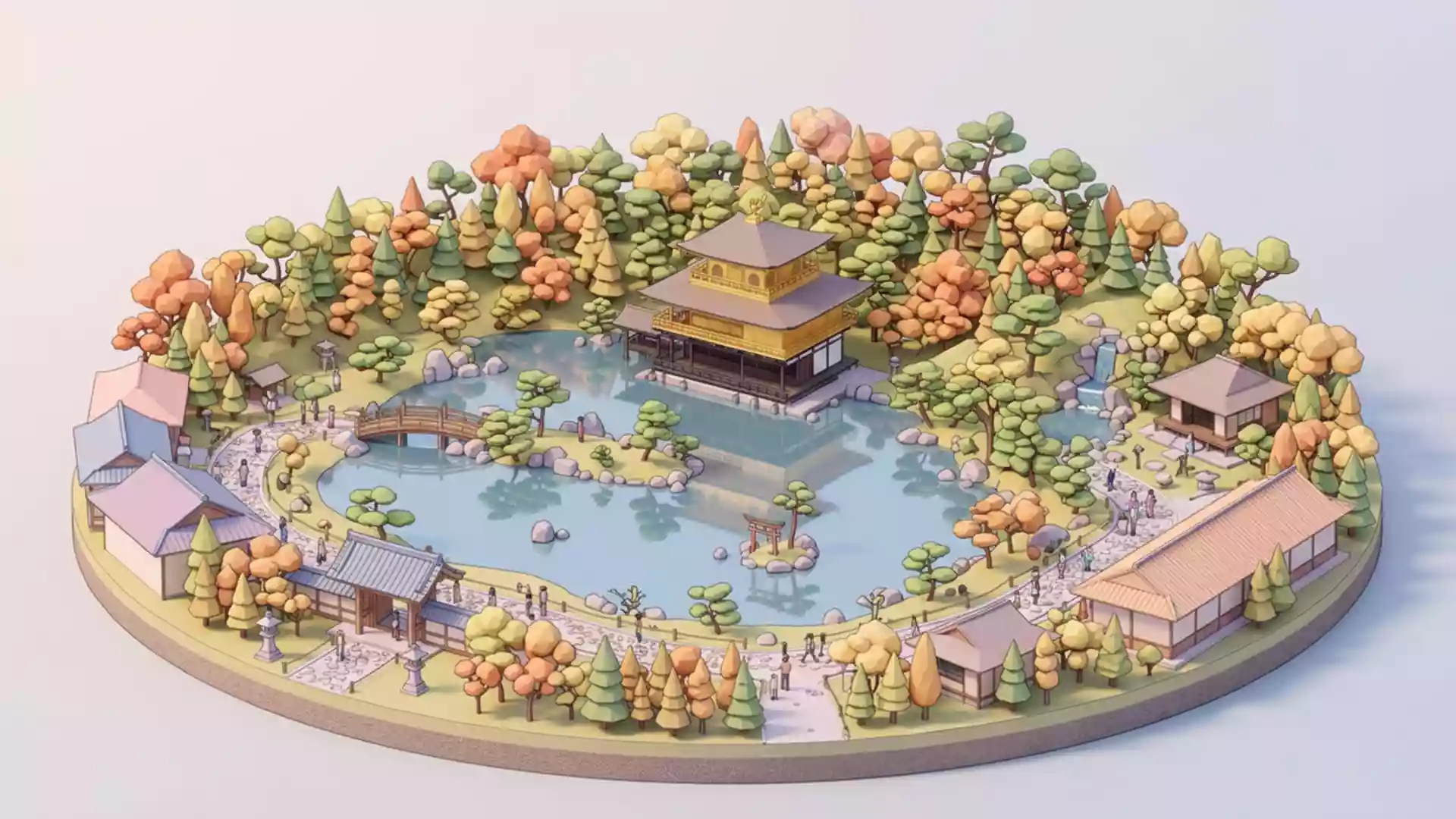
Kinkaku-ji and its golden reflection in Kyoto
Published on 09/03/2026 at 09:00 | Editorial responsibility: Rafael Müller, Editor-in-Chief AD HOC NEWS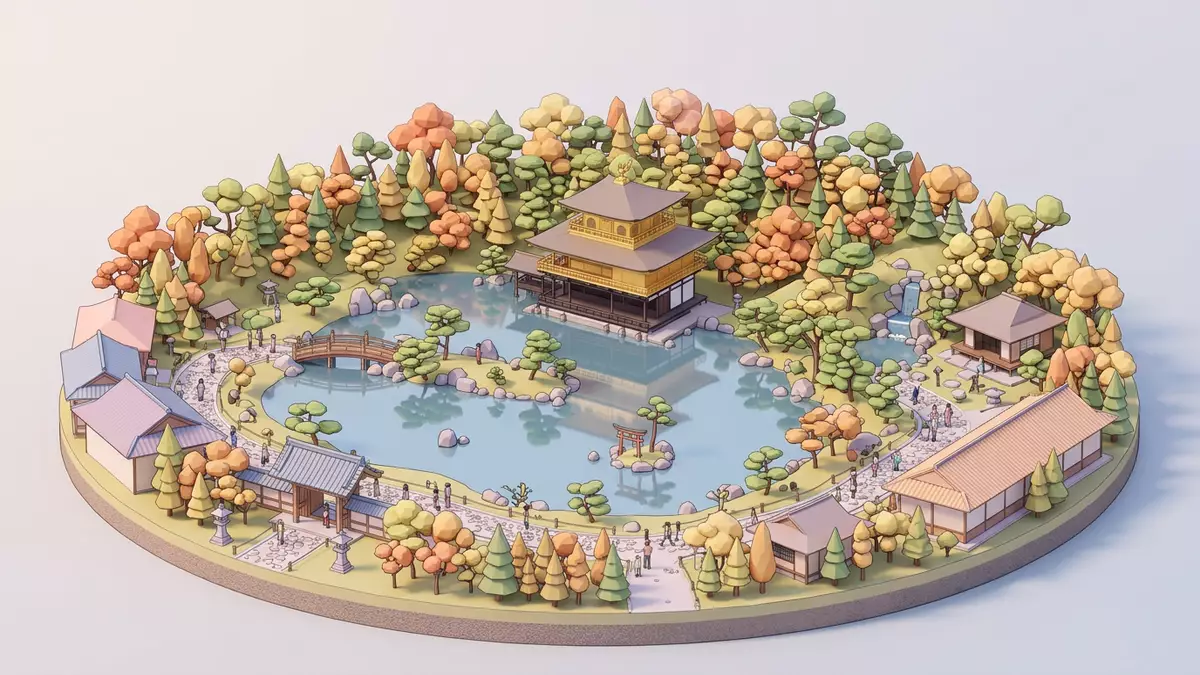
Kinkaku-ji, officially known as Rokuon-ji, is a Zen Buddhist temple in Kyoto where a gold-covered pavilion stands beside a still pond, doubled each day in its own reflection.Zen Buddhist temple Built in the late fourteenth century under Ashikaga shogun Yoshimitsu, and rebuilt in 1955 after a devastating fire, it anchors a historic garden that has become one of the defining images of Japan.Ashikaga shogun Yoshimitsu
The Golden Pavilion and its mirrored setting
The heart of Kinkaku-ji is the Golden Pavilion, a three-storey structure covered in gold leaf on its upper levels and crowned by a gilded phoenix, set beside a garden pond known as Kyoko-chi.three-storey structure The pavilion’s gold surfaces catch the light while its timber and plaster base sits close to the water, so that the building and its setting form a single composition of architecture, water and planted shoreline.
From the main viewing area, the pavilion is seen across the pond with small islands and shoreline rocks arranged to frame the building, an arrangement drawn from Muromachi-period garden design.Muromachi-period garden design The surface of Kyoko-chi often appears like a shallow mirror, reflecting the gold pavilion, pine trees and stone groupings, while paths and viewpoints around the garden give slightly different alignments of building and reflection.
Architecture across three floors
Each floor of the Golden Pavilion follows a different architectural style, layered one above the other in a single structure.each floor of the Kinkaku-ji The ground floor is built in the shinden-zukuri style associated with aristocratic residences of the Heian period, using natural wood and white plaster with wide openings towards the pond.
The second floor adopts the bukke-zukuri style of samurai dwellings, enclosed and fully clad in gold leaf, while the uppermost level is built in a Chinese-influenced Zen style and also gilded, topped by the phoenix finial.shinden-zukuri and bukke-zukuri Together these three levels create a vertical summary of Japanese and East Asian architectural traditions, expressed through one compact pavilion.
From shogun’s villa to World Heritage temple
The site of Kinkaku-ji began as a villa of the aristocrat Saionji Kintsune before being taken over in 1397 by Ashikaga Yoshimitsu, the third shogun of the Ashikaga shogunate, who transformed it into his Kitayama villa complex.Saionji Kintsune villa After Yoshimitsu’s death in 1408, the villa was converted into a Rinzai Zen temple named Rokuon-ji, with Muso Soseki as its honorary founder, and Kinkaku-ji later became a branch temple of Shokoku-ji.branch temple of Shokoku-ji
The Golden Pavilion survived conflicts such as the fifteenth-century Onin War but was destroyed by arson in 1950; the current pavilion was reconstructed in 1955 as a near replica of the original Muromachi-period building.reconstructed in 1955 Kinkaku-ji now forms part of the Historic Monuments of Ancient Kyoto, a group of sites inscribed as a UNESCO World Heritage Site in 1994, recognising the temple’s architectural and garden setting as a key expression of Kyoto’s historic landscape.Historic Monuments of Ancient Kyoto
Visiting Kinkaku-ji: what travellers from Western Europe should know
- Kinkaku-ji stands in Kinkakuji-cho in Kita-ku in the north-western part of Kyoto, reached by local bus routes from JR Kyoto Station and other central stops.
- The visit follows a set path through the temple grounds, including gently sloping gravel paths and some short flights of steps around the pond and garden.
- The official language is Japanese and the currency is the yen.
- Entry requirements depend on your nationality; UK travellers can check the FCDO travel advice at gov.uk/foreign-travel-advice, Irish travellers the Department of Foreign Affairs at ireland.ie.
Searching for Kinkaku-ji on social platforms
These links open searches for Kinkaku-ji on each platform.
Frequently asked questions about Kinkaku-ji
Where is Kinkaku-ji located in Kyoto?
Kinkaku-ji is situated in Kinkakuji-cho in Kita-ku, in the north-western area of Kyoto, within the city’s historic temple belt.
What should visitors expect during a visit?
Visitors follow a one-way route through the temple grounds, viewing the Golden Pavilion from several points around the pond and walking through landscaped garden areas.
What makes Kinkaku-ji distinctive among Kyoto’s temples?
The combination of a gold-clad three-storey pavilion, its reflection in Kyoko-chi pond and a garden laid out in the Muromachi period gives Kinkaku-ji a strongly recognisable character.