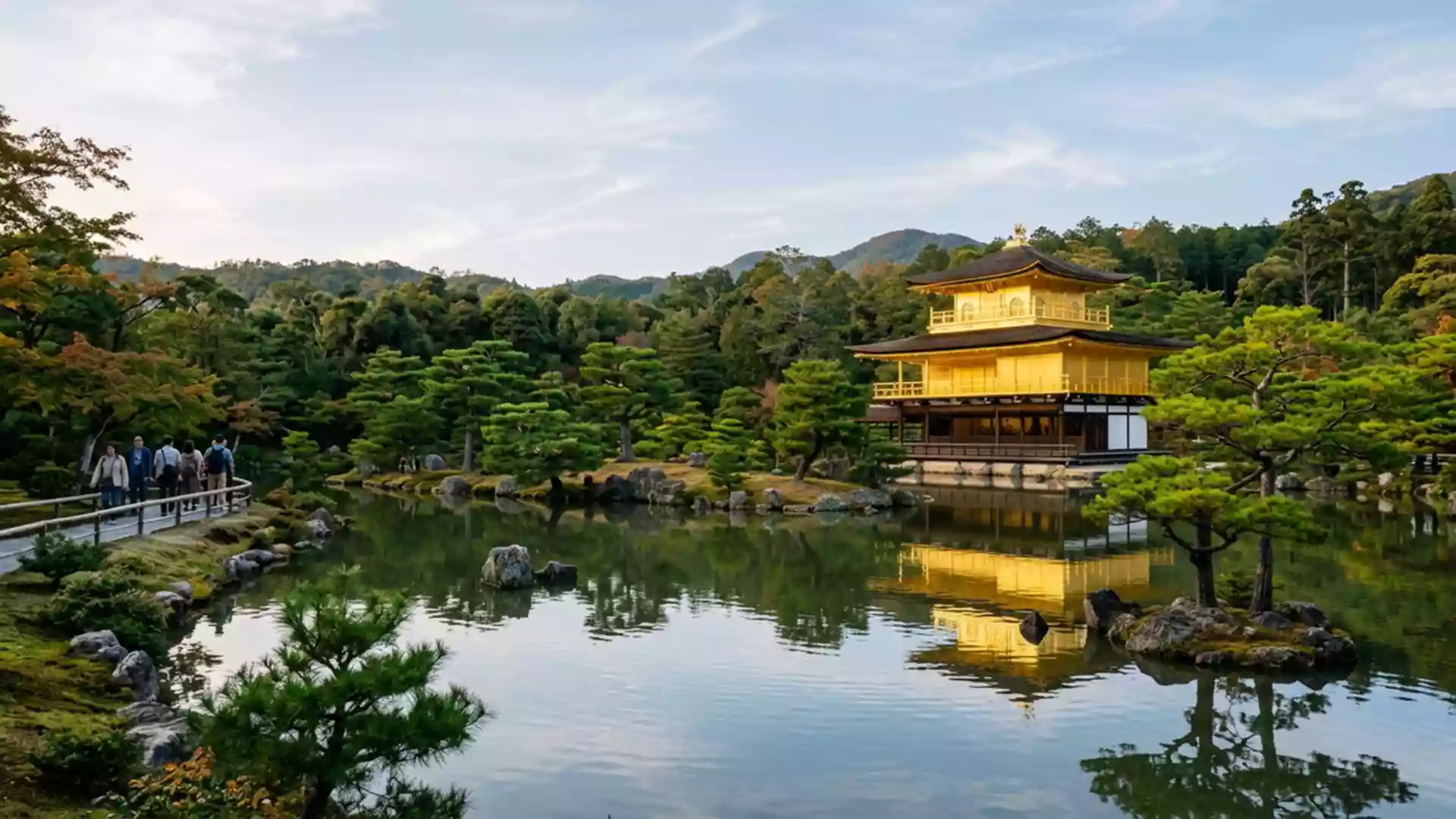
Kinkaku-ji and its golden pavilion reflected in water
Published on 09/15/2026 at 07:07 | Editorial responsibility: Rafael Müller, Editor-in-Chief AD HOC NEWS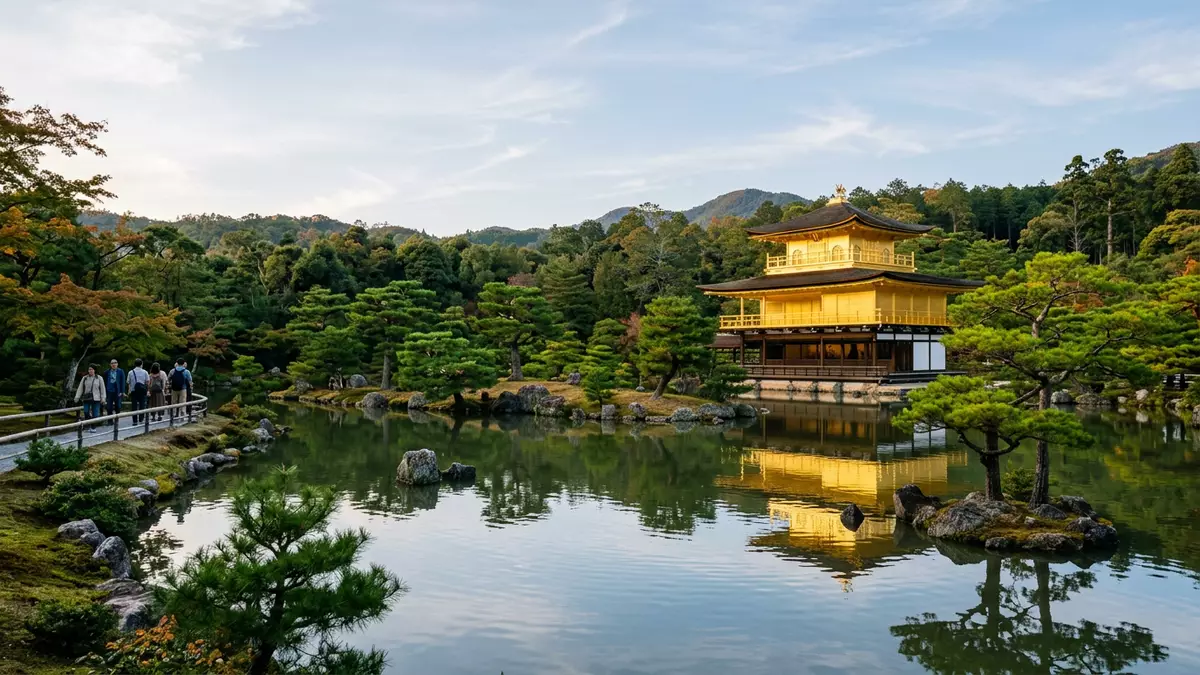
Kinkaku-ji in Kyoto, officially known as Rokuon-ji, is a Zen Buddhist temple where a golden pavilion rises above a tranquil pond, fusing medieval architecture with carefully composed gardens.
The Golden Pavilion and its Muromachi origins
The temple site originated as a villa owned by the aristocrat Saionji Kintsune during the Kamakura period, before passing into the hands of the Ashikaga shogunate.villa owned by the aristocrat Saionji Kintsune In 1397, the shogun Ashikaga Yoshimitsu established his Kitayama retreat here, a residence that would later become the core of Kinkaku-ji.first built in 1397 After Yoshimitsu’s death in 1408, the residence was converted into a Rinzai Zen temple and given the formal name Rokuon-ji, while the more evocative name Kinkaku-ji derives from its gilded pavilion.official name of this branch temple
The three-storey pavilion, Kinkaku, stands close to the water’s edge and serves as a reliquary hall for sacred Buddhist relics.pagoda made to house the sacred relics Its lower floor is built in the shinden-zukuri style associated with aristocratic residences, the middle storey follows the buke-zukuri style of warrior houses, and the upper floor adopts a Zen Buddhist form, stacking three architectural languages in one compact volume.each floor adopts a different architectural style The top two floors are clad in gold leaf, catching light above the darker base and reflecting on the surface of Kyoko-chi, the “Mirror Pond”, which occupies the foreground of most views of the pavilion.top two floors are completely covered in gold leaf
A temple of gardens, water and framed views
Kinkaku-ji lies in Kinkakuji-ch? in Kita Ward, in the north-western part of Kyoto, where low hills provide a backing to the temple gardens.1 Kinkakuji-ch?, Kita-ku, Ky?to The grounds extend across a broad area of landscaped terrain, with paths that loop around Kyoko-chi and lead through mixed planting and smaller structures.temple grounds span some 132,000 square meters Stones, clipped shrubs and trees frame views of the pavilion and pond, so that the golden surfaces appear and disappear between trunks and branches as visitors move along the route.
The Mirror Pond is dotted with islands and rock groupings, some carrying small pines that lean out over the water. From many points on the path, the pavilion, its reflection and the background of wooded slopes line up within a single view, making the relationship between building and landscape central to the experience of Kinkaku-ji. Beyond the main pond, the circuit route passes smaller garden scenes, including a stream with stepping stones, a simple teahouse structure and minor halls, before returning towards the gate. Despite the pavilion’s status as the visual focus of the site, the wider grounds express the Kitayama culture of the Muromachi period through a sequence of built and planted compositions rather than a single dominant monument.
Reconstruction, heritage status and Kyoto context
The current pavilion dates from the mid-twentieth century, when Kinkaku-ji was rebuilt as a close replica of Yoshimitsu’s original structure after a fire destroyed the earlier building in 1950.rebuilt in 1955, the current Golden Pavilion The temple had already endured damage during the fifteenth-century ?nin War, when large parts of Kyoto were devastated, and its survival in its present form reflects both continuous maintenance and periods of reconstruction.burned down numerous times throughout its history In 1994, Kinkaku-ji was inscribed as part of the Historic Monuments of Ancient Kyoto, a UNESCO World Heritage Site that also includes Kiyomizu-dera, Ginkaku-ji and other temples and shrines across the city.registered as a UNESCO World Cultural Heritage site in 1994
As well as its World Heritage status, Kinkaku-ji is designated a National Special Historic Site and a Special Place of Scenic Beauty in Japan, reflecting both its historical role in the Muromachi shogunate and its aesthetic composition of architecture, water and planting.National Special Historic Site of Japan and listed as a Special Place of Scenic Beauty The temple belongs to the Shokoku-ji branch of the Rinzai school of Zen Buddhism, linking it to other major Zen institutions in Kyoto.branch temple of the Rinzai-sect Zen temple of Shokoku-ji Within Kyoto’s wider fabric of religious sites, it offers a compact illustration of how a medieval warrior leader, Ashikaga Yoshimitsu, expressed status and taste through a residence that later became a temple, leaving a layered legacy visible in timber, gold leaf and garden design.
Visiting Kinkaku-ji: what travellers from Western Europe should know
- Kinkaku-ji stands in the north-western part of Kyoto, in Kita Ward, and is reached by city bus services that run from Kyoto Station towards Kinkakuji-mae.
- The route through the grounds follows a fixed circuit path with gentle gradients, including sections of packed earth, gravel and stone steps around the pond and through wooded areas.
- Beyond the gate area, the circuit passes viewpoints over the Mirror Pond, minor halls and garden features, so a visit involves sustained walking on outdoor paths rather than time inside the pavilion itself.
- The official language is Japanese and the currency is the yen.
Searching for Kinkaku-ji on social platforms
These links open searches for Kinkaku-ji on each platform.
Frequently asked questions about Kinkaku-ji
Where is Kinkaku-ji located within Kyoto?
Kinkaku-ji stands in Kinkakuji-ch? in Kita Ward, in the north-western part of Kyoto, backed by low hills and reached by city bus from Kyoto Station.
What should visitors expect when walking through the temple grounds?
Visitors follow a one-way circuit past the golden pavilion and Mirror Pond, continuing through garden scenes and minor structures on outdoor paths with modest gradients.
What makes Kinkaku-ji distinctive among Kyoto’s temples?
Kinkaku-ji combines a three-storey pavilion with gold-clad upper floors, layered architectural styles and a carefully planned pond garden, all rooted in Muromachi-period Kitayama culture.