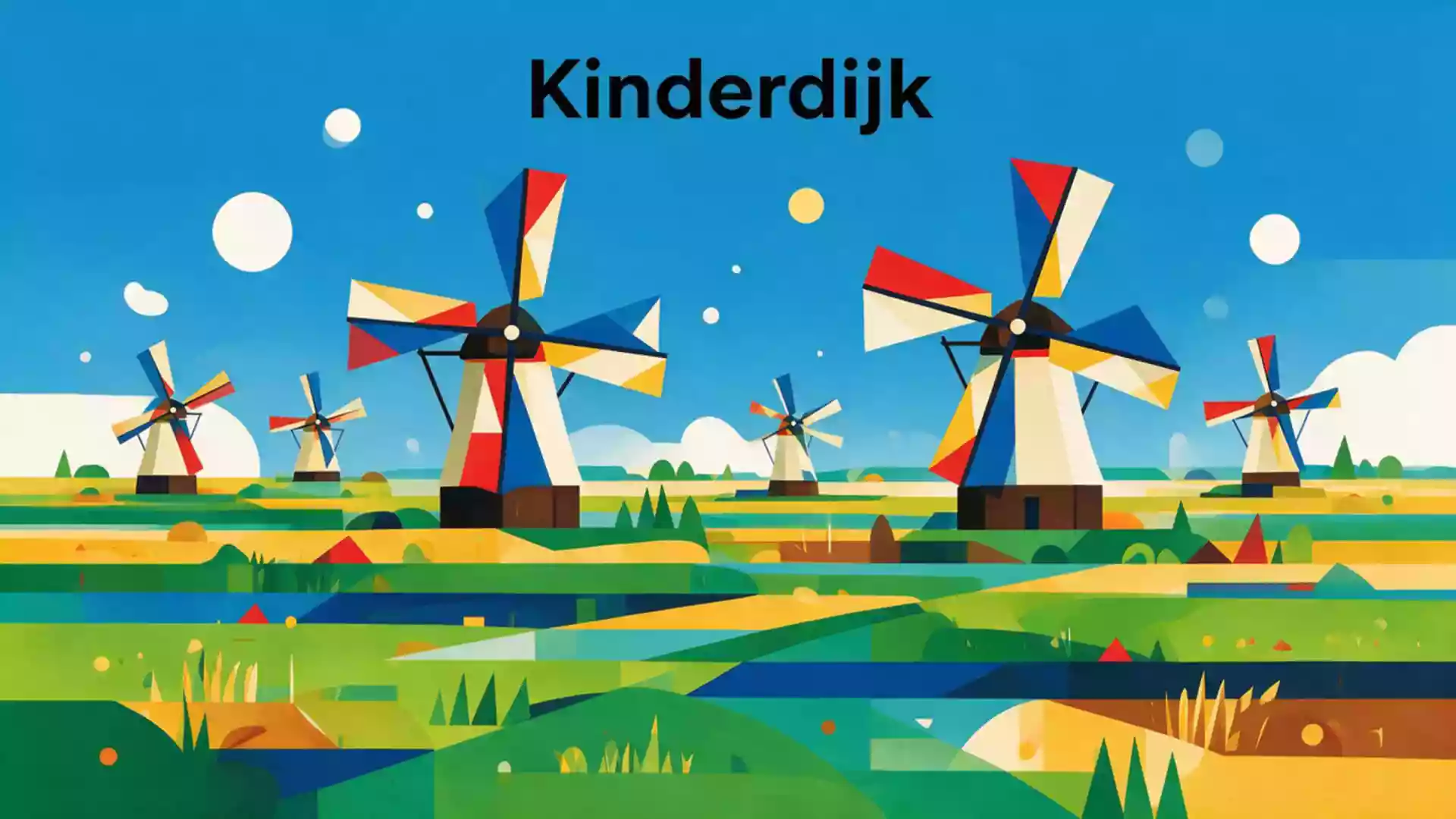
Kinderdijk’s ring of 18th-century windmills
Published on 08/08/2026 at 15:10 | Editorial responsibility: Rafael Müller, Editor-in-Chief AD HOC NEWS
Kinderdijk in the Netherlands is a landscape of windmills, canals and low-lying land shaped by water management in the 18th century. The row of mill towers, linked by ditches and embankments, gives the place a clear rhythm that is visible from the first approach.
Kinderdijk’s windmills and water landscape
The best-known sight is the line of historic windmills standing beside the water. Their brick bases, timber caps and long sails give the site a strong vertical profile against the flat polder.
These mills belong to the Dutch system of drainage and polder control. The wider setting of channels, grassy banks and open sky makes Kinderdijk feel tightly ordered without losing its rural character.
Water management in the Dutch polder
Kinderdijk reflects the long Dutch struggle to keep low land workable. The mills form part of a managed landscape where water is moved through channels and into a broader drainage network.
That function gives the place its historical weight. The scene is not only picturesque; it is also a working record of how communities in the low country organised land, labour and water around each other.
Heritage, settlement and the mill row
The site is closely associated with the 18th century and with the surviving windmills that define it today. The combination of mill architecture and open landscape has made Kinderdijk one of the clearest examples of Dutch water engineering visible in one place.
Even without entering a building, visitors read the place through its materials and layout. Brick, timber, water and grass combine into a landscape that remains legible from path level and from the canalside edges.
Visiting Kinderdijk: what travellers from Western Europe should know
- Kinderdijk is reached from Rotterdam by road and by water links in the wider South Holland area.
- Admission arrangements and opening hours are set by the site's operator and change with the season; the official website is the only binding source.
- Spring and early autumn suit a visit well, with softer light across the water and fewer hard summer contrasts.
- The paths are flat, but the setting is open and exposed, with long stretches beside water and grass.
- Dutch is the local language, and card payment is widely used in the Netherlands.
- Entry requirements depend on your nationality. UK travellers should check the FCDO travel advice at gov.uk/foreign-travel-advice; Irish travellers the Department of Foreign Affairs at ireland.ie; EU and EEA citizens their own national foreign ministry.
Searching for Kinderdijk on social platforms
These links open searches for Kinderdijk on each platform.
Frequently asked questions about Kinderdijk
Where is Kinderdijk?
Kinderdijk is in South Holland in the Netherlands, within the wider Rotterdam area. It is known for its historic windmills beside canals and polders.
What should visitors expect?
Expect a low, open landscape with paths, water and a long line of mills. The setting is spacious rather than enclosed, and the buildings are best read as part of the land around them.
What makes Kinderdijk distinctive?
The combination of 18th-century windmills and a carefully managed polder landscape gives Kinderdijk its identity. The place shows Dutch water control as a visible, walkable landscape rather than a museum room.