
Kilimanjaro above Moshi: Africa’s great free?standing volcano
Published on 09/18/2026 at 14:59 | Editorial responsibility: Rafael Müller, Editor-in-Chief AD HOC NEWS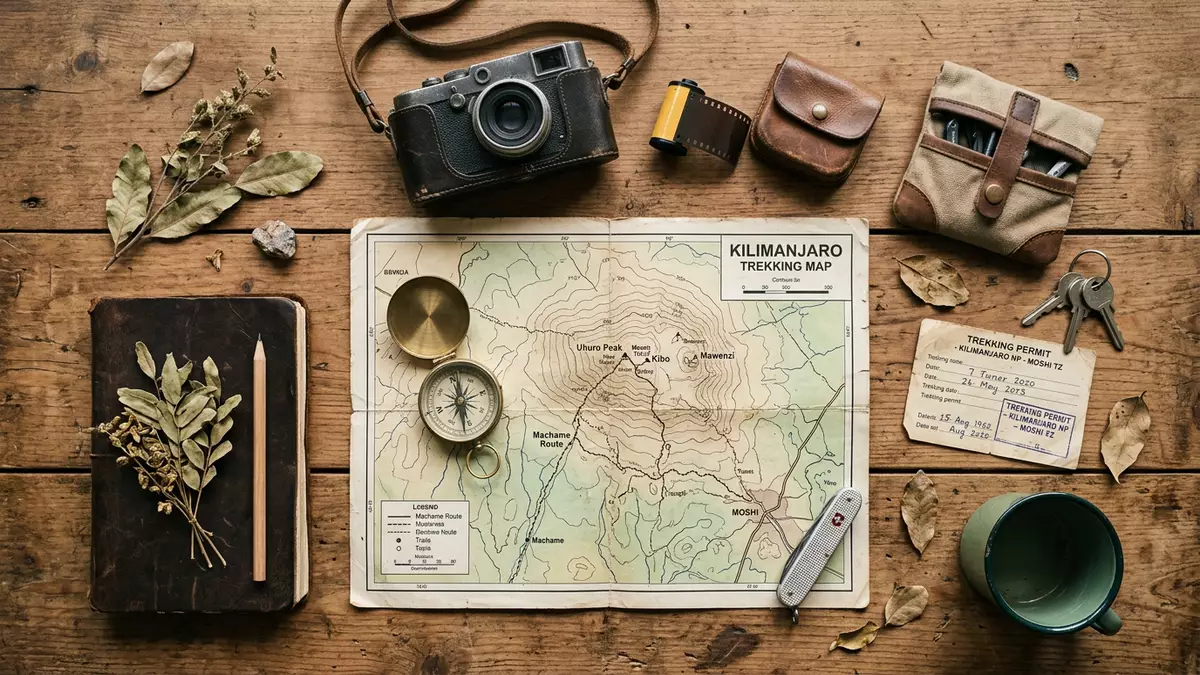
Kilimanjaro rises above Moshi in northern Tanzania as a vast freestanding volcano whose broad shoulders dominate the Kilimanjaro Region and the surrounding plains. On clear days its upper slopes and summit area form a distinct backdrop to the town below, linking Moshi directly to one of Africa’s best known mountains in everyday views of streets, markets and plantations.
A stratovolcano of three volcanic cones
Mount Kilimanjaro is a dormant stratovolcano composed of three main volcanic cones that together form a single massif. The highest cone, Kibo, carries Uhuru Peak, which reaches about 5,895 m (19,341 ft) above sea level and marks the highest point on the African continent.Uhuru Peak on Kibo Mawenzi rises to over 5,000 m (16,404 ft) and forms a jagged skyline east of the main summit area, while Shira, the oldest cone, has largely eroded into a broad plateau on the western side.three distinct volcanic peaks
The structure of the mountain reflects its volcanic origin. Layers of solidified lava, ash and fragmented rock build up thick slopes that rise from a base spanning several tens of kilometres. Geologists describe Kilimanjaro as part of a volcanic system associated with the East African Rift, with Shira the earliest cone to form and Kibo the youngest centre that now holds the summit crater.stratovolcano formed by three cones Mawenzi and Shira are regarded as extinct, while Kibo remains dormant with no eruption in recorded history.
Climate zones from cultivation to summit
Kilimanjaro’s height and isolation create a pronounced sequence of ecological zones that encircle the mountain. Lower slopes around Moshi lie within a cultivation belt, where small farms and plantations use the relatively warm and humid conditions and volcanic soils to grow crops such as coffee and bananas.cultivation zone on lower slopes Above this band sits a rainforest zone, where dense vegetation and tall trees mark the transition from settled land to the protected interior of Kilimanjaro National Park.
Higher up, the forest gives way to heath and moorland with shrubs, grasses and open views across the plains below. Closer to the summit area, an alpine desert spreads across much of the upper mountain with bare rock, volcanic scree and limited plant life, particularly on the approaches to Kibo’s crater rim. At the very top lies the summit zone, a high-altitude environment that includes the area around Uhuru Peak and the crater itself.five distinct ecological zones This layering of climates over a single mountain is one of Kilimanjaro’s defining features and shapes how travellers experience the ascent.
Moshi as gateway to Kilimanjaro
Moshi stands on the lower southern slopes of Kilimanjaro and serves as the municipal capital of the Kilimanjaro Region in northern Tanzania.municipality on the lower slopes The town’s streets and markets operate within sight of the mountain, and many local businesses are linked in some way to climbing and trekking, from guiding agencies to equipment hire and accommodation. Moshi also acts as a regional centre for coffee trading and everyday services for residents of the surrounding rural areas.capital of the Kilimanjaro region
The main approach roads from Moshi lead towards trailheads and park gates used for ascents of Kilimanjaro, and many climbing itineraries begin and end with nights in town. Travellers staying in Moshi encounter a mix of Chagga culture, Swahili influences and visiting climbers preparing for routes such as Marangu or Machame. The everyday presence of the mountain above the town gives Moshi a distinct character within Tanzania, combining the rhythms of a regional municipality with the constant flow of people heading towards Africa’s highest summit.
Visiting Kilimanjaro: what travellers from Western Europe should know
- Kilimanjaro rises in northern Tanzania just south of the Kenyan border, with Moshi on its southern lower slopes connected by road to Arusha and other regional centres.
- The ascent routes start at park gates reached by road from Moshi and nearby settlements, and approaches involve walking on volcanic terrain that becomes steeper and more rugged with altitude.
- Weather and conditions change with elevation, and the upper slopes lie at high altitude where thin air and colder temperatures can affect travellers who ascend quickly.
- The official language is Swahili and the currency is the Tanzanian shilling.
- Entry requirements depend on your nationality; UK travellers can check the FCDO travel advice at gov.uk/foreign-travel-advice, Irish travellers the Department of Foreign Affairs at ireland.ie.
Searching for Kilimanjaro on social platforms
These links open searches for Kilimanjaro on each platform.Frequently asked questions about Kilimanjaro
Where is Kilimanjaro in relation to Moshi?
Kilimanjaro stands in northern Tanzania near the Kenyan border, with Moshi situated on its lower southern slopes as the municipal capital of the Kilimanjaro Region.
What should travellers expect on a visit to Kilimanjaro?
Travellers encounter a large volcanic mountain with distinct climate zones, starting from cultivated foothills and forest and rising through open moorland to high-altitude alpine terrain near the summit.
What makes Kilimanjaro distinctive among mountains?
Kilimanjaro stands as a high free-standing stratovolcano composed of three volcanic cones, with Uhuru Peak on Kibo forming the highest point on the African continent above Moshi and the surrounding plains.


