
Kigali Genocide Memorial in the Gisozi hills
Published on 09/16/2026 at 21:45 | Editorial responsibility: Rafael Müller, Editor-in-Chief AD HOC NEWS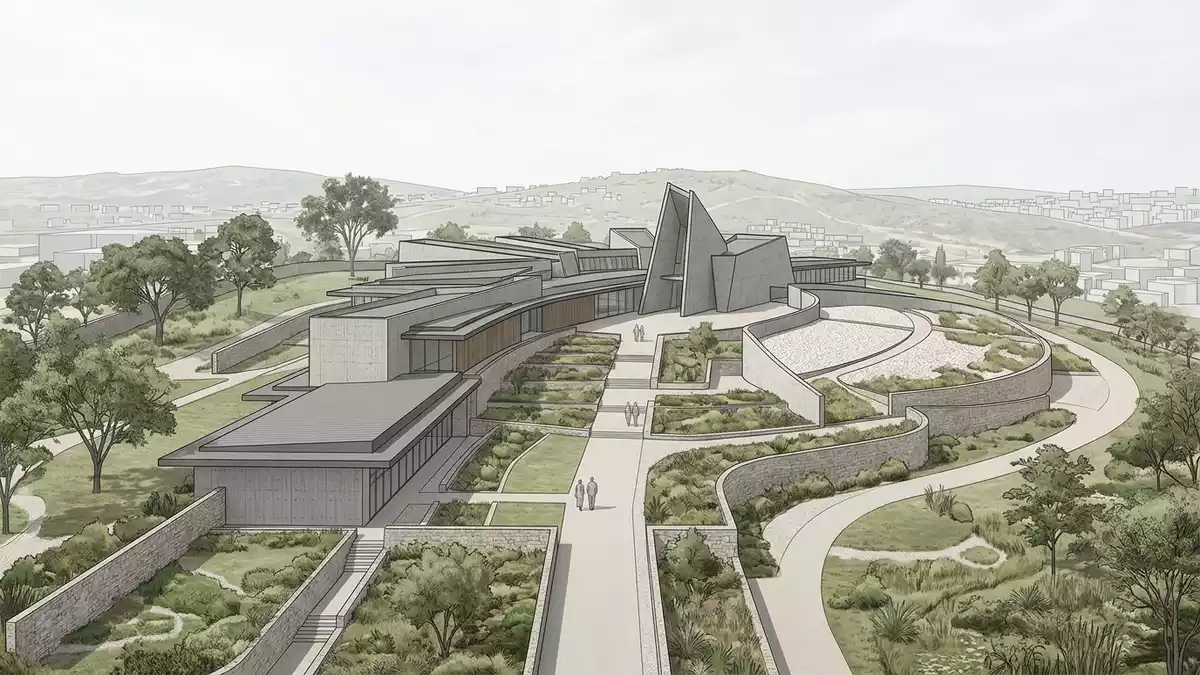
Kigali Genocide Memorial in Gisozi is a place of remembrance and learning, set among the hills of Rwanda’s capital. Opened in 2004, it combines memorial grounds, exhibition spaces and a burial site in one compact setting.
Gisozi’s memorial landscape in Kigali
The memorial sits on a hillside in Gisozi, a district just outside central Kigali. Its setting is part garden, part cemetery and part exhibition complex, with the city close by and the memorial grounds arranged across sloping terrain.
The site holds mass graves for victims of the Genocide against the Tutsi, and the memorial buildings stand beside them. The official memorial site describes it as a place of remembrance and learning, while the our story page places its opening in 2004 and links its creation to collaboration between Rwandan authorities and the Aegis Trust.
Memory, testimony and education
Inside the memorial, the emphasis is on testimony, archives and education as much as on mourning. The institution describes itself as a national and international focal point for remembrance, peace and values education, and preservation of survivor testimony and genocide artefacts.
That combination gives the place a museum character without losing the weight of its burial grounds. The memorial is also associated with the Genocide Archive of Rwanda, which extends its role beyond a single exhibition building and into documentation, teaching and preservation.
A site shaped by 1994
The memorial is tied directly to the Genocide against the Tutsi in 1994 and to the period after the killings stopped. Kigali’s authorities chose the hillside in Gisozi for mass graves, and the memorial was opened in 2004, a decade after the genocide.
That historical frame matters because the place is not only about commemoration in the abstract. It is anchored in a named event, a named district and an opening year that place the memorial within the recent history of Rwanda, while the site itself remains a visible record of loss and remembrance.
Visiting Kigali Genocide Memorial: what travellers from Western Europe should know
- The memorial is in Gisozi, just outside central Kigali. It is reached by road, and the approach rises through the hillside district.
- The grounds are on sloping terrain, so the memorial is spread across different levels. Paths, memorial spaces and the burial area sit close together.
- The memorial combines exhibitions with mass graves and survivor testimony. Respectful dress and behaviour are part of the site’s atmosphere.
- The memorial is closely tied to the history of the Genocide against the Tutsi in Rwanda. That history gives the place a solemn character that differs from an ordinary museum.
Searching for Kigali Genocide Memorial on social platforms
These links open searches for Kigali Genocide Memorial on each platform.
Frequently asked questions about Kigali Genocide Memorial
Where is Kigali Genocide Memorial?
It is in Gisozi, on a hillside just outside central Kigali. The setting places the memorial within the city, while still giving it a distinct memorial landscape.
What does a visit involve?
A visit brings together burial grounds, exhibitions and survivor testimony in one place. The experience is shaped by the memorial’s scale, its hillside setting and its association with the genocide.
What makes Kigali Genocide Memorial distinctive?
Its combination of memorial, museum and burial site gives it a layered character. The connection between the 2004 opening, the Gisozi hillside and the Genocide against the Tutsi defines the place.


