
Kigali Genocide Memorial as a hillside of remembrance and learning
Published on 09/18/2026 at 11:13 | Editorial responsibility: Rafael Müller, Editor-in-Chief AD HOC NEWS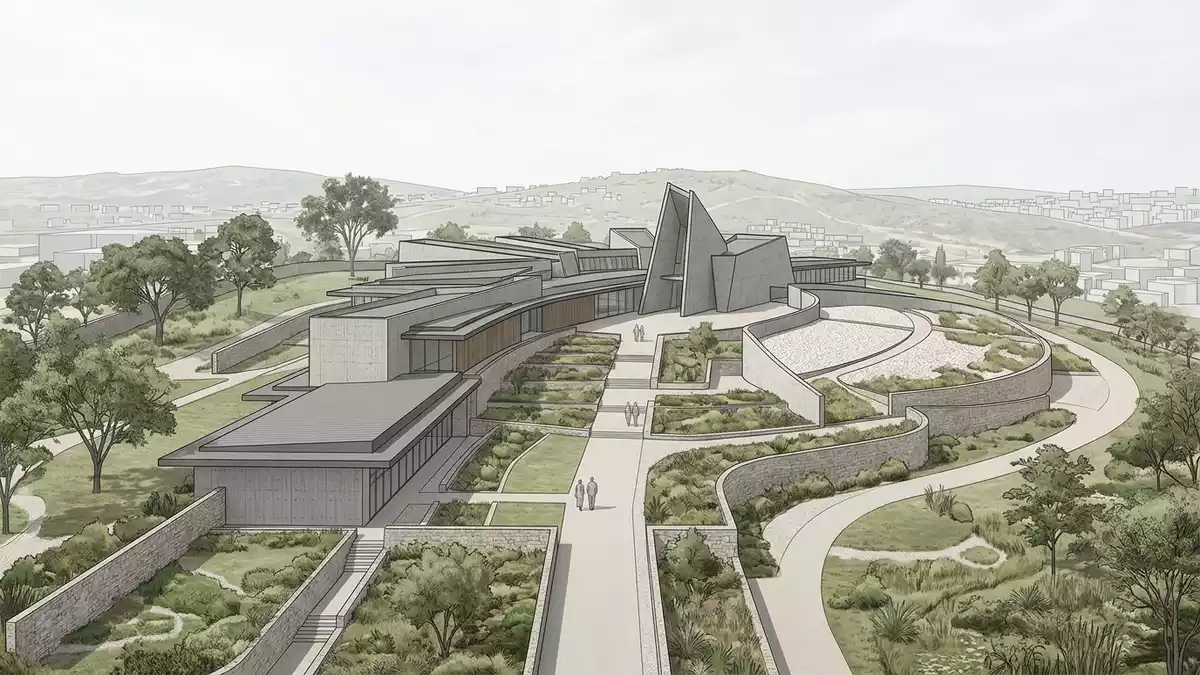
Kigali Genocide Memorial on a hillside in Gisozi above Kigali combines mass graves, exhibition halls and planted terraces in one carefully organised place of remembrance. Opened in 2004, it is the principal memorial to the Genocide against the Tutsi in Rwanda and the final resting place for well over 250,000 victims whose remains were gathered from across the capital and its surroundings.Opened in 2004 The lead experience is a physical and intellectual descent through the events of 1994, supported by architecture, landscape and a structured educational programme.
A hillside cemetery and memorial in Gisozi
Kigali Genocide Memorial occupies a slope in Gisozi, a sector of Gasabo district on the north-west side of Kigali, reached by road from the city centre. The site was chosen after the Genocide against the Tutsi as a burial ground for residents killed in and around the capital, whose remains were recovered from streets, houses, mass graves and rivers and brought together here.Final resting place for over 250,000 victims Today the memorial’s mass graves form long concrete-edged rectangles set into the slope, covered and bordered by planting rather than exposed earth.
The main pathway rises alongside these graves towards the memorial buildings. From the road entrance, visitors first encounter a forecourt and simple reception area, then the low modern structures that house the exhibition galleries and education centre. The memorial stands on KG 14 Avenue in Gisozi, a location that places it just outside central Kigali yet visually connected to the city’s hills and neighbourhoods.Location on KG 14 Avenue
Exhibition spaces and the story of 1994
Inside the memorial buildings, three permanent exhibitions form the core of the educational experience. The largest exhibition documents the 1994 Genocide against the Tutsi, presenting a historical trajectory from colonial rule through politicised identity cards, incitement and organised violence to the killings and their aftermath.Three permanent exhibitions Beside it, another exhibition places the Rwandan events in a wider context of genocidal violence around the world, tracing parallels and differences without collapsing them into a single story.
A further space, the children’s memorial, focuses specifically on young victims. Photographs, short biographies and simple objects describe individual lives cut short, emphasising everyday details such as favourite games or ambitions. These galleries sit close to the burial site, so that the movement through testimony and documentation leads back into the open air among the graves and gardens rather than ending in an enclosed room.Children’s Room and other exhibitions
Gardens of reflection and an education centre
The planted areas around the buildings are laid out as gardens of reflection rather than ornamental landscaping. Paths run between shrubs, trees and flower beds, offering spaces where visitors can sit or walk quietly after visiting the exhibitions. Benches, low walls and terraces create small outdoor rooms looking back towards the grave platforms and across to the surrounding city hills.Gardens and terraces of reflection The transition from interior display to exterior garden reinforces the memorial’s dual role as cemetery and learning centre without needing explicit guidance.
Kigali Genocide Memorial also houses the Genocide Archive of Rwanda within its complex, forming a documentation centre for evidence, testimonies and records related to the Genocide against the Tutsi.Genocide Archive of Rwanda An education centre on site hosts programmes for Rwandan school pupils and international groups, integrating peace and values education into the national curriculum. Survivors’ experiences and testimony underpin many of these activities, giving the memorial an active role in civic education in addition to its commemorative functions.
Visiting Kigali Genocide Memorial: what travellers from Western Europe should know
- Kigali Genocide Memorial stands in Gisozi in Gasabo district, north-west of central Kigali, reached by road along KG 14 Avenue from the city centre.
- The memorial complex climbs a hillside, with external paths and internal corridors; visiting the mass graves and gardens involves walking on sloping ground and paved surfaces.
- The official language is Kinyarwanda alongside French and English, and the currency is the Rwandan franc.
- Entry requirements depend on your nationality; UK travellers can check the FCDO travel advice at gov.uk/foreign-travel-advice, Irish travellers the Department of Foreign Affairs at ireland.ie.
Searching for Kigali Genocide Memorial on social platforms
These links open searches for Kigali Genocide Memorial on each platform.
Frequently asked questions about Kigali Genocide Memorial
Where is Kigali Genocide Memorial located within Kigali?
The memorial is in the Gisozi area of Gasabo district, on KG 14 Avenue above central Kigali, reached by road from the city centre.
What should visitors expect during a visit?
A visit combines indoor exhibitions on the Genocide against the Tutsi, a children’s memorial, extensive mass graves and gardens of reflection on a sloping hillside.
What makes Kigali Genocide Memorial distinctive among genocide sites?
It functions simultaneously as a major burial site for over 250,000 victims, a museum with permanent exhibitions and an education centre hosting the Genocide Archive of Rwanda.


