
Kigali Genocide Memorial and the hillside of memory
Published on 09/08/2026 at 16:52 | Editorial responsibility: Rafael Müller, Editor-in-Chief AD HOC NEWS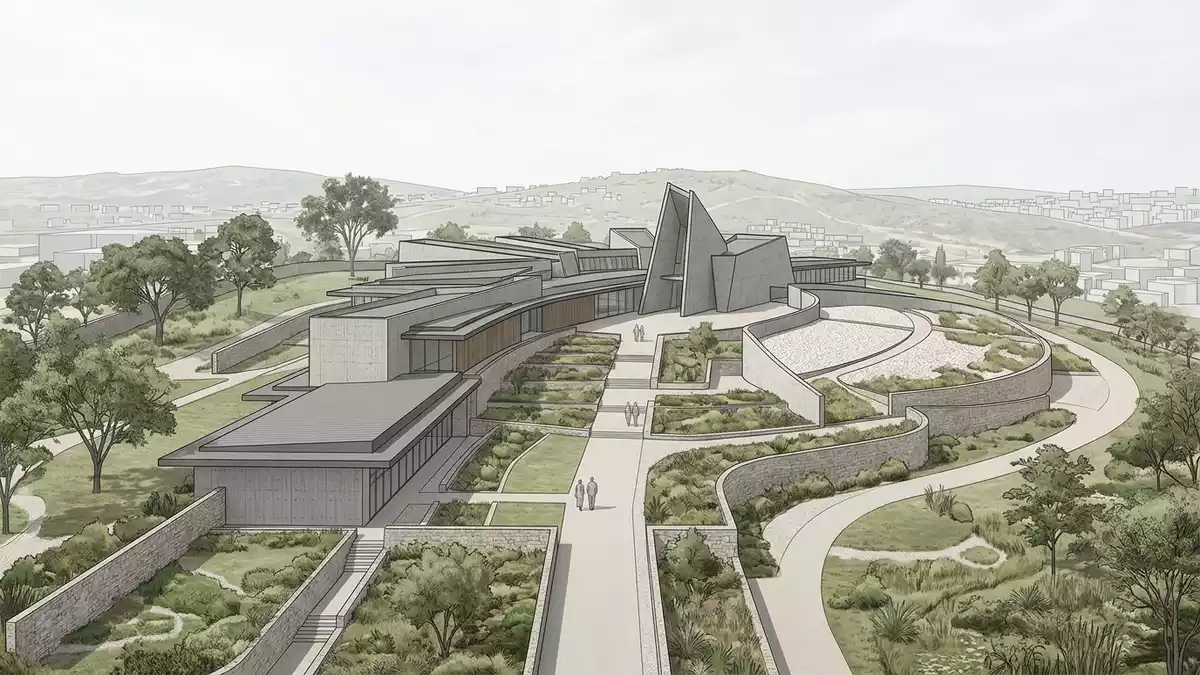
Kigali Genocide Memorial in Gisozi is a hillside place of remembrance in Kigali, centred on mass graves, exhibitions and education. It opened in 2004 and is tied to Aegis Trust and Rwandan authorities.
A hillside memorial in Gisozi
The memorial stands on a hillside in Gisozi, a part of Kigali on the city’s north-west side. The site is linked with the burial of 250,000 victims of the Genocide against the Tutsi, and that number gives the place its solemn scale.
The main building works with gardens and buried remains as one ensemble. Its story is tied to 2004, the year it opened, and to the Aegis Trust, which helped establish it with Rwandan authorities after a visit to the UK National Holocaust Centre by Kigali’s mayor and Rwanda’s minister of youth, sports and culture.
Exhibitions, archive and remembrance
Inside the memorial are three permanent exhibitions, a children’s memorial, the Genocide Archive of Rwanda and an exhibition on genocidal violence around the world. Those spaces place commemoration beside documentation, with survivor testimony and artefacts forming part of the visitor experience.
The largest exhibition documents the 1994 Genocide against the Tutsi. The memorial’s stated purpose also includes commemoration, education, prevention, documentation and survivor support, which explains why it combines burial, archive and teaching under one roof.
A place shaped by 1994
The memorial’s identity is inseparable from the aftermath of the genocide stopped by the RPF in 1994. Kigali’s authorities selected the hillside in Gisozi for mass graves, and memorial buildings were placed beside them.
That history gives the site a direct relationship between landscape and memory. The gardens, archive, exhibitions and burial grounds form a single civic and memorial setting, anchored by the year 2004 and by the events of 1994.
Visiting Kigali Genocide Memorial: what travellers from Western Europe should know
- The memorial is in Gisozi on the north-west side of Kigali. The easiest approach is by road, with car, taxi or local bus services from the city centre.
- The site sits on a hillside, so the approach rises through the district. The memorial car park is part of the arrival area, and the nearest bus stop is on KN 8 Avenue.
- The memorial combines burial grounds, exhibitions, gardens and the Genocide Archive of Rwanda. A single visit can move between outdoor remembrance and enclosed display spaces.
- English materials are part of the memorial’s educational setting, and the place works as both a burial site and a museum-like centre. That combination makes it more than a single-room memorial.
Searching for Kigali Genocide Memorial on social platforms
These links open searches for Kigali Genocide Memorial on each platform.
Frequently asked questions about Kigali Genocide Memorial
Where is Kigali Genocide Memorial?
It is in Gisozi, on the north-west side of Kigali. The memorial is reached by road from the city centre.
What should a visit include?
Expect burial grounds, permanent exhibitions, the Genocide Archive of Rwanda and gardens. The site moves between outdoor remembrance and indoor interpretation.
What makes Kigali Genocide Memorial distinctive?
Its combination of mass graves, archive, exhibitions and education makes it a layered memorial landscape. The 2004 opening and the link to the events of 1994 are central to its identity.


