
Khoja Ahmed Yasawi Keshenesi and the Timurid brick monument of Turkistan
Published on 09/16/2026 at 19:21 | Editorial responsibility: Rafael Müller, Editor-in-Chief AD HOC NEWS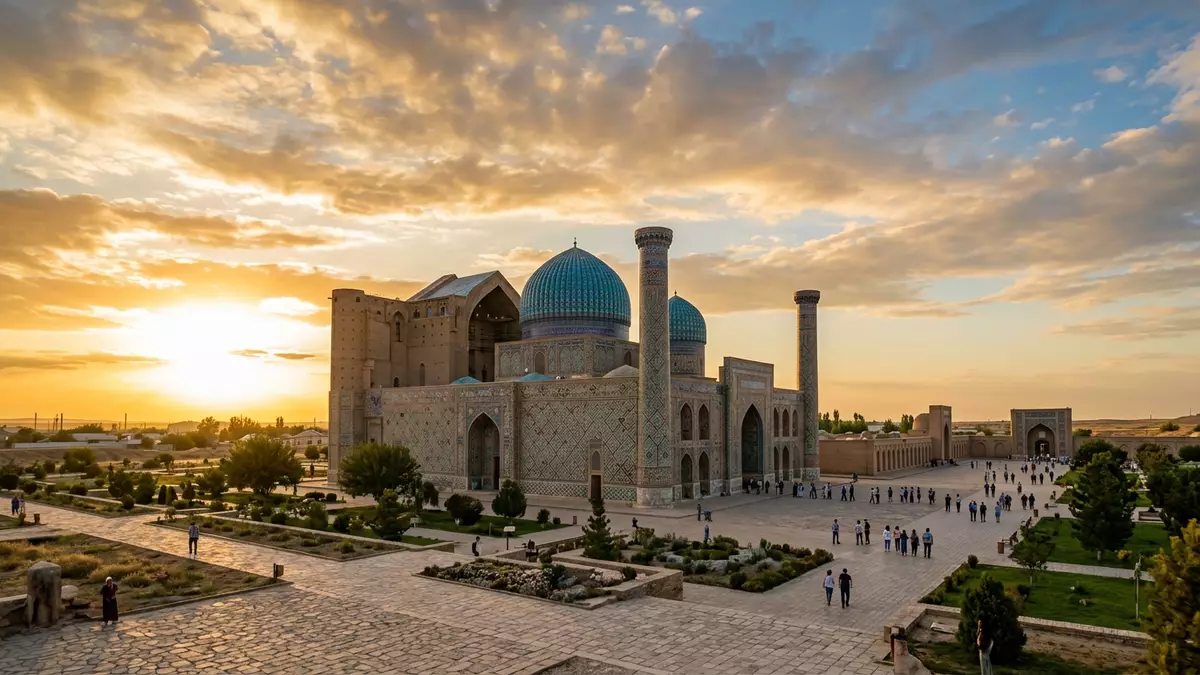
Khoja Ahmed Yasawi Keshenesi in Turkistan, Kazakhstan, is a monumental brick mausoleum and mosque complex that rises above the historic caravan town as one of the largest surviving works of Timurid architecture. Built between 1389 and 1405 under the rule of Timur, it commemorates the 12th?century Sufi master Khoja Ahmed Yasawi and preserves a striking ensemble of domes, halls and chambers within a single vast rectangular shell.
Timurid power and Sufi devotion in fired brick
The building known internationally as the Mausoleum of Khoja Ahmed Yasawi stands in the north?eastern part of Turkistan, in southern Kazakhstan, in a district long associated with pilgrimage and trade along Central Asian routes.north-eastern part of Turkistan Its core identity links two anchors of regional history: the spiritual authority of Khoja Ahmed Yasawi, a distinguished Sufi teacher of the twelfth century, and the political reach of Timur, whose late?fourteenth?century campaigns reshaped architecture across his empire.twelfth century Sufi master
The present mausoleum replaced an earlier, smaller tomb and was constructed in fired brick during Timur’s reign between 1389 and 1405, with work stopping after his death and some parts remaining unfinished.constructed between 1389 and 1405 The plan is broadly rectangular and rises to a height of around 38.7 m (127 ft), giving the outer shell a fortress?like presence against the steppe while enclosing an intricate sequence of interior volumes, from the main domed hall to subsidiary rooms used for prayer and commemoration.rectangular plan and height
A multifunctional khanaqa with domes and halls
Khoja Ahmed Yasawi Keshenesi belongs to the khanaqa type, combining the functions of mausoleum and mosque within one architecturally unified complex.multifunctional khanaqa type Fired brick is the dominant material throughout, forming thick walls, vaults and supporting structures that carry an array of domes over different sections of the building. The interior is divided into several dozen rooms, including ceremonial halls, spaces for worship and areas linked to the memory of Yasawi and his followers, reflecting the building’s role as a centre of religious life as well as a monumental tomb.
The most visually striking element is the main domed hall above the central section, which covers an extensive volume and has been measured at over 18 m (59 ft) in diameter, making it one of the largest brick domes in Central Asia.largest brick dome in Central Asia Around it, smaller domes and vaults articulate side rooms and passageways, their surfaces decorated with glazed tiles, ornamental brickwork and inscriptions that mark the Timurid taste for combining structural innovation with elaborate surface design. Persian master builders took part in the project, experimenting with spatial arrangements and structural solutions that later appeared in major buildings in Samarkand, the Timurid capital.Persian master builders experimented
UNESCO World Heritage and the city of Turkistan
In 2003 the Mausoleum of Khoja Ahmed Yasawi was inscribed on the UNESCO World Heritage List as a cultural site, recognised under criteria i, iii and iv for its architectural significance and its role in the history of Islamic religious buildings.inscribed on the UNESCO World Heritage List The monument is regarded as one of the largest and best?preserved constructions of the Timurid period, with its innovative vaulting and dome system serving as a prototype for later mosques and mausolea in Central Asia.largest and best-preserved Timurid constructions
The complex stands within the urban fabric of Turkistan, historically known as Yasi or Hazrat?e Turkestan, a town that has long been a focus for pilgrims visiting the grave of Yasawi and exploring other religious and historic sites nearby.historic names of Turkistan Visitors encounter a broad forecourt leading to the main portal, the high brick surfaces of the outer walls and the sequence of domes rising behind, all set against the wide Kazakh steppe and the surrounding streets of the city. The building’s scale, combined with its brick construction and Timurid decorative language, makes Khoja Ahmed Yasawi Keshenesi a defining landmark for Turkistan and a key reference point for understanding Central Asian Islamic architecture.
Visiting Khoja Ahmed Yasawi Keshenesi: what travellers from Western Europe should know
- Khoja Ahmed Yasawi Keshenesi stands in the north?eastern part of Turkistan in southern Kazakhstan, with road and rail connections linking the city to other regional centres.
- The complex is built on level ground, but moving through its interior involves stairways, uneven historic floors and transitions between enclosed halls and open courtyards.
- The climate of southern Kazakhstan brings hot summers and cold winters, and the exposed setting around the mausoleum means strong sun and continental seasonal contrasts are a noticeable part of a visit.
- The official language is Kazakh and the currency is the Kazakhstani tenge.
- Entry requirements depend on your nationality; UK travellers can check the FCDO travel advice at gov.uk/foreign-travel-advice, Irish travellers the Department of Foreign Affairs at ireland.ie.
Searching for Khoja Ahmed Yasawi Keshenesi on social platforms
These links open searches for Khoja Ahmed Yasawi Keshenesi on each platform.
Frequently asked questions about Khoja Ahmed Yasawi Keshenesi
Where is Khoja Ahmed Yasawi Keshenesi?
Khoja Ahmed Yasawi Keshenesi is in the city of Turkistan in southern Kazakhstan, in the north?eastern part of the urban area.
What should visitors expect on a visit?
Visitors encounter a large brick mausoleum and mosque complex with a high portal, extensive domes, historic interiors and open areas integrated into the surrounding city.
What makes Khoja Ahmed Yasawi Keshenesi distinctive?
Its Timurid?era brick construction, vast domed hall, khanaqa layout and UNESCO World Heritage status together make it a distinctive example of Central Asian Islamic architecture.


