
Keukenhof and the landscape garden around its spring bulbs
Published on 09/24/2026 at 06:21 | Editorial responsibility: Rafael Müller, Editor-in-Chief AD HOC NEWS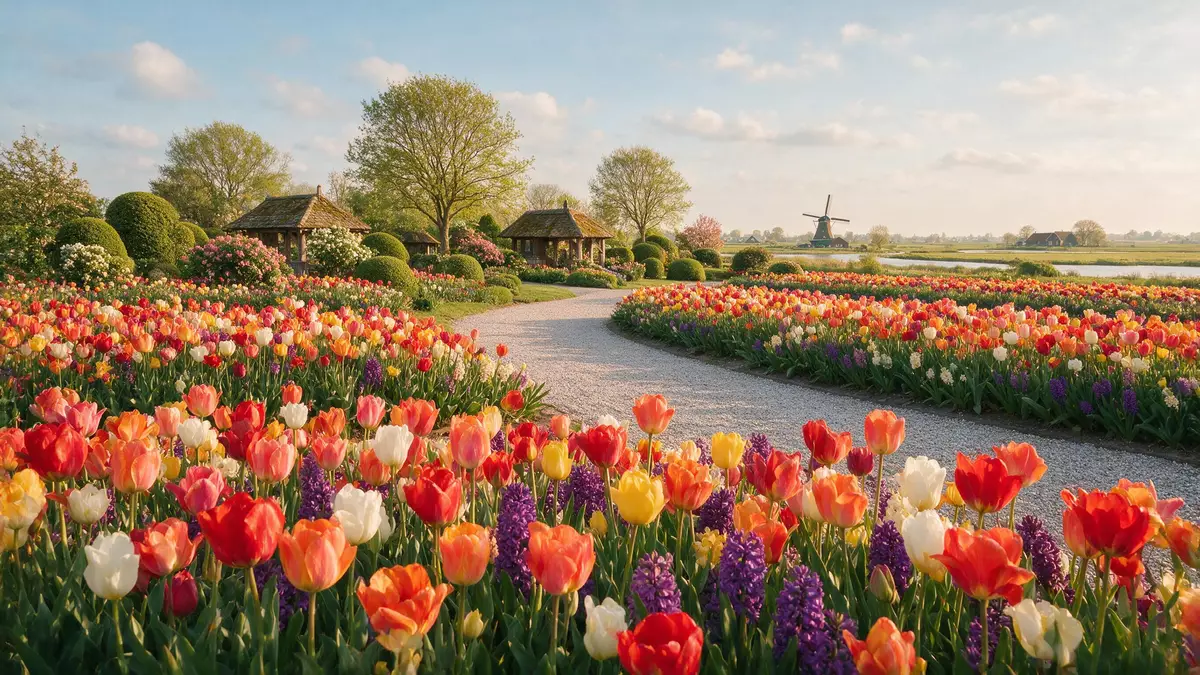
Keukenhof is a spring garden in Lisse, the Dutch bulb-growing region between Amsterdam and The Hague. Its visible character comes from the meeting of English landscape design, woodland paths, water and carefully arranged bulb beds. The garden’s public history began in 1950, after a bulb exhibition was established on the estate in 1949.
Keukenhof’s spring garden begins with an English landscape
The park covers 32 hectares and combines lawns, ponds, winding paths, mature trees and planted displays. Tulips, hyacinths, daffodils and other bulbs occupy beds distributed through the landscape, with colour appearing in broad drifts and concentrated arrangements.
The underlying park design belongs to Jan David Zocher and his son Louis Paul Zocher. Their English landscape garden treatment dates from 1857 and remains visible in the relationship between open grass, wooded areas, water and the historic estate buildings. The garden therefore presents flowering bulbs within a designed landscape, not as an isolated collection of beds. English landscape garden style
From estate history to a public bulb exhibition
The name Keukenhof refers to a kitchen garden. The estate belonged to the grounds associated with Keukenhof Castle, and its older history is connected with the cultivation of fruit, vegetables and herbs for the castle’s household.
In 1949, Dutch bulb growers and flower exporters formed the plan for an open-air spring exhibition. The first public season followed in 1950. Keukenhof has retained that exhibition character, with planted displays presenting the range, colour and forms of spring-flowering bulbs. Keukenhof’s public history
Bulbs, water and woodland across Lisse
Keukenhof’s planting is arranged across a varied estate landscape. Trees rise beside lawns and flower beds, while ponds and channels form recurring elements along the paths. The setting includes the historic castle and a range of pavilions associated with the exhibition.
The garden’s seasonal identity comes from succession. Different bulbs flower at different points in the spring, so the visual composition changes across the flowering period. Tulips provide the most recognisable displays, while daffodils, hyacinths and other bulb plants add contrasting colours and forms. the estate’s historic grounds
Visiting Keukenhof: what travellers from Western Europe should know
- Keukenhof is at Stationsweg 166A in Lisse. Public transport connections include the Keukenhof Express from Schiphol Airport and services linked with Leiden, Haarlem and Amsterdam RAI.
- The park covers 32 hectares, with paths crossing lawns, woodland, ponds and planted beds. Comfortable walking shoes suit the long outdoor circuit.
- Lisse lies in the Bollenstreek, the Dutch bulb-growing area between Amsterdam and The Hague. Flower fields surround the town beyond the garden estate.
- The official language is Dutch and the currency is the euro.
Searching for Keukenhof on social platforms
These links open searches for Keukenhof on each platform.
Frequently asked questions about Keukenhof
Where is Keukenhof?
Keukenhof is in Lisse, in the Netherlands’ Bollenstreek. The address is Stationsweg 166A, near the bulb fields between Amsterdam and The Hague.
What can visitors expect at Keukenhof?
The estate contains lawns, woodland, ponds, pavilions and extensive beds of spring-flowering bulbs. Tulips, hyacinths and daffodils appear within the English landscape garden.
What makes Keukenhof distinctive?
Its public identity combines a 1949 bulb exhibition with the 1857 landscape design of Jan David Zocher and Louis Paul Zocher. Flower displays therefore occupy a historic park rather than a single formal border.


