
Kerala Backwaters around Alappuzha: canals, lakes and houseboats
Published on 08/28/2026 at 19:52 | Editorial responsibility: Rafael Müller, Editor-in-Chief AD HOC NEWS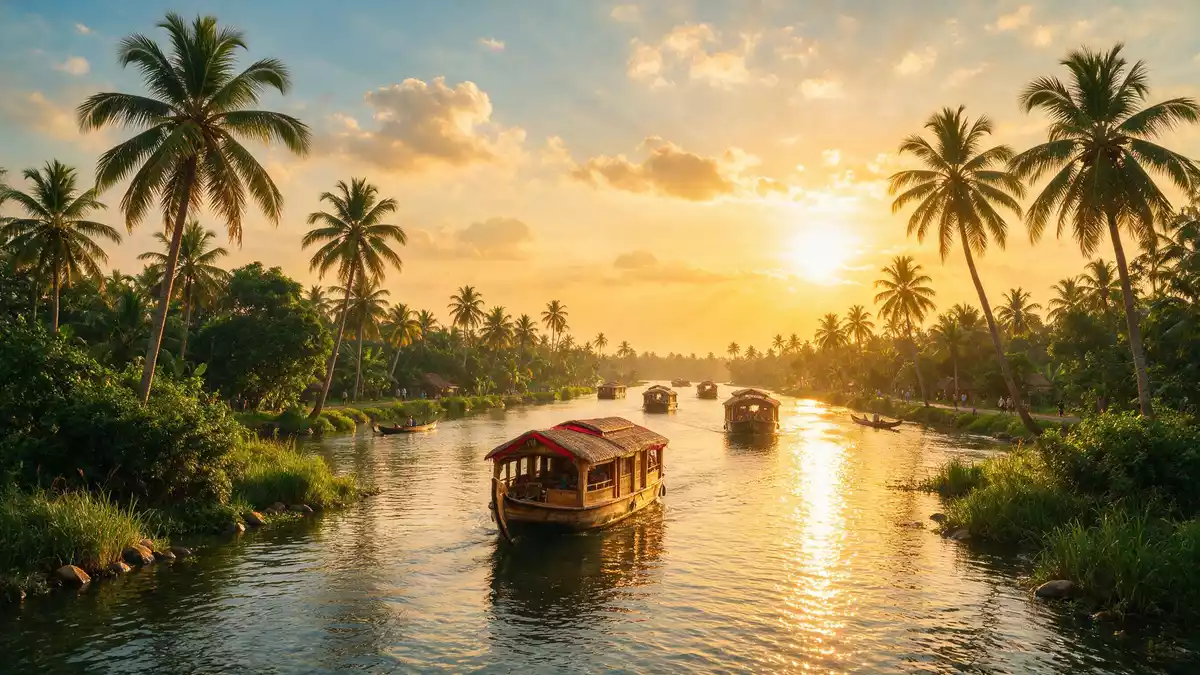
Kerala Backwaters near Alappuzha in India form an intricate waterworld where canals, lagoons and lakes wind between villages, paddy fields and stands of coconut palms. Along this low-lying coastal plain, inland waters run roughly parallel to the Arabian Sea, creating a landscape that feels as much aquatic as terrestrial.
Waterways between land and sea
The Kerala backwaters are a network of brackish lagoons, canals and lakes that stretch along the Malabar Coast in southern India. Rivers flowing from the Western Ghats enter sheltered lakes and backwater channels before reaching the sea, leaving long reaches of inland water that follow the line of the coast.network of lagoons, canals and lakes Within Alappuzha district, these waters include larger expanses such as Vembanad Kayal and Kayamkulam Kayal alongside smaller backwater inlets and channels that reach into the countryside.listed backwaters such as Vembanad Kayal and Kayamkulam Kayal
Alappuzha sits within this system on Kerala’s Malabar Coast, with canals and lakes running through and around the town. Waterways connect Alappuzha to other centres along the backwaters, including routes towards Kochi, Kottayam and Kollam, and out towards the Arabian Sea through coastal openings. The mix of inland water, narrow canals and broad lakes gives visitors a sense of travelling through both river landscape and sheltered lagoon.
Houseboats and traditional kettuvallam craft
One of the most recognisable elements of the Kerala Backwaters around Alappuzha is the presence of large wooden houseboats cruising along canals and lakes. These craft trace their origins to kettuvallam, traditional cargo boats that once carried rice, spices and timber along the waterways between inland centres and ports such as Kochi.traditional kettuvallam cargo boats The name combines Malayalam words for “tie” and “boat”, referring to a construction method where planks were lashed together with coir rope and sealed for water resistance.
Historic kettuvallam craft used timber such as jack wood for their frames and bamboo for their superstructures, and were built to carry heavy loads along the backwater trade routes.traditional kettuvallam construction In the late twentieth century, older cargo barges on the Kerala Backwaters began to be converted into houseboats, with storage holds adapted into cabins and covered decks. On the waters around Alappuzha, these houseboats now form part of everyday activity on the backwaters, travelling between boat jetties in town and quieter stretches of canal and lake framed by palms and paddy fields.
Alappuzha, Kuttanad and the low-lying rice country
The backwater landscape south of Alappuzha includes Kuttanad, a low-lying region known for extensive paddy fields bordered and crossed by canals. Kuttanad in Alappuzha district is often described as the rice bowl of Kerala because of its concentration of paddy cultivation within the backwater system.Kuttanad rice-growing region in Alappuzha Embankments, narrow paths and waterways mark out plots, and boat traffic threads between agricultural land and small hamlets.
Several rivers flow into the Kerala Backwaters in and near Alappuzha district, including the Pamba, Achankovil and Meenachil, which contribute freshwater to larger lakes such as Vembanad before meeting tidal influence from the Arabian Sea.rivers such as Pamba, Achankovil and Meenachil The combination of river inflow, backwater channels and low-lying paddy fields gives this part of Kerala a distinctive geography of water and agriculture, where settlements face both canals and fields and where boat transport sits alongside narrow roads.
Visiting Kerala Backwaters: what travellers from Western Europe should know
- Kerala Backwaters around Alappuzha lie in southern India on the Malabar Coast, with Alappuzha town acting as a common starting point for canal and lake cruises.
- The terrain combines flat paddy fields, canals and embankments; paths and jetties may involve stepping on and off boats using simple gangplanks and short stairways.
- Nearby centres linked by backwater routes include Kottayam by way of Vembanad Lake and stretches towards Kochi and Kollam along longer chains of canals and lagoons.
- The official language of the region is Malayalam and the national currency is the Indian rupee.
- Entry requirements depend on your nationality; UK travellers can check the FCDO travel advice at gov.uk/foreign-travel-advice, Irish travellers the Department of Foreign Affairs at ireland.ie.
Searching for Kerala Backwaters on social platforms
These links open searches for Kerala Backwaters on each platform.
Frequently asked questions about Kerala Backwaters
Where are the Kerala Backwaters around Alappuzha located?
The Kerala Backwaters around Alappuzha lie in southern India along the Malabar Coast, with canals and lakes running through Alappuzha district and towards the Arabian Sea.
What can visitors expect on the water near Alappuzha?
Visitors encounter canals lined with coconut palms, broad lakes such as Vembanad Kayal, houseboats based on traditional kettuvallam craft and views over low-lying paddy fields.
What makes this part of the Kerala Backwaters distinctive?
The combination of extensive rice-growing country in Kuttanad, multiple rivers feeding into backwater lakes and the presence of converted kettuvallam houseboats gives the Alappuzha waters a distinctive character.


