
Kazanski Kreml in Kasan as a hilltop citadel of Tatarstan
Published on 08/26/2026 at 22:02 | Editorial responsibility: Rafael Müller, Editor-in-Chief AD HOC NEWS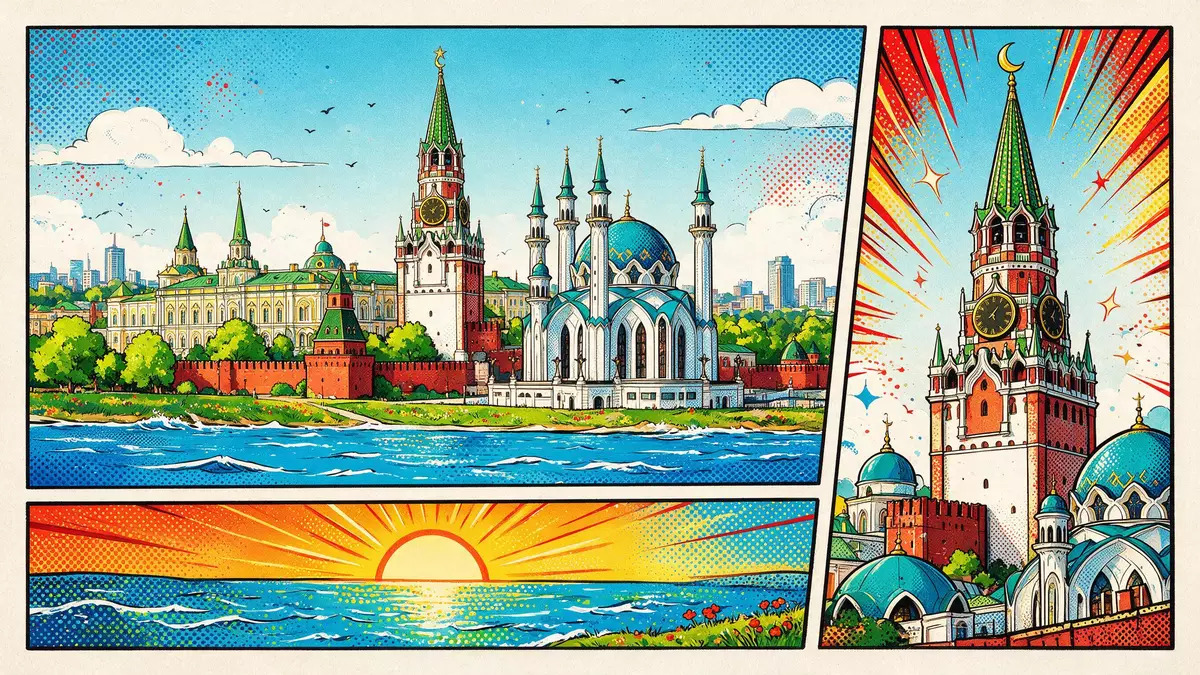
Kazanski Kreml in Kasan rises on a high terrace above the Kazanka River, combining Tatar and Russian architecture in a single fortified hilltop citadel recognised as a UNESCO World Heritage Site.Historic and Architectural Complex is the official name of this ensemble, which preserves fortifications and religious buildings dating from the sixteenth to nineteenth centuries in the capital of the Republic of Tatarstan within Russia.Kazan Kremlin anchors the historic centre, where white stone walls frame mosques, churches and administrative buildings on the same plateau.
Fortress walls on a Volga terrace
The core of Kazanski Kreml is its ring of white fortification walls and towers, which follow the outline of a promontory above the left bank of the Kazanka near its confluence with the Volga.the citadel stands on a high terrace that once carried successive medieval settlements from the tenth to the sixteenth centuries.archaeological, historical and architectural monuments inside the circuit document Volga Bulgaria, the Golden Horde, the Khanate of Kazan and later Russian rule.
The present stone fortifications are associated with Ivan IV, known as Ivan the Terrible, whose rule in the mid sixteenth century brought the construction of a masonry Kremlin around the conquered Tatar stronghold.walls and towers were built in the 1550s as part of this consolidation, replacing earlier timber defences and establishing a regular internal layout with streets and courtyards.the fortification complex includes walls and towers whose outer perimeter extends for about 1,800 m (5,905 ft), forming a continuous enclosure above the riverbank.
Religious landmarks sharing one enclosed plateau
Within the walls of Kazanski Kreml, a mosque and an Orthodox cathedral stand on the same enclosed plateau, reflecting the layered Tatar and Russian heritage of Kasan.the ensemble includes the Annunciation Cathedral as well as later religious structures associated with Islam and Christianity.the complex contains both mosques and churches, giving the skyline a mixture of domes, towers and minarets above the same set of ramparts.
The Orthodox Annunciation Cathedral dates from the sixteenth century and represents one of the earliest stone churches in the Volga region after the incorporation of the Khanate into the Russian state.buildings from the sixteenth to nineteenth centuries cluster around the central plateau, while a grand mosque with multiple minarets stands nearby as a symbol of Tatar cultural identity inside the historic citadel.the kremlin of Kazan is the main historic kremlin of Tatarstan, bringing these different religious traditions together within one fortified precinct.
Seat of Tatarstan’s authority and a World Heritage site
Kazanski Kreml functions as the administrative centre of the Republic of Tatarstan, housing the official residence of the regional head and other government institutions inside its historic walls.it is the official residence of the Head of the Republic of Tatarstan and a protected monument of federal cultural heritage.since 1992 it has been the state centre of the Republic of Tatarstan, continuing a long role as a seat of regional power.
The Historic and Architectural Complex of the Kazan Kremlin was inscribed on the UNESCO World Heritage List in 2000, recognising it as the only surviving Tatar fortress of its kind within Russia and an ensemble that preserves evidence of earlier Bulgar and Golden Horde cultures.inscription in 2000 confirms its status as a World Heritage Site, while the museum-reserve based there curates archaeological remains, historic buildings and later constructions from the sixteenth to twentieth centuries.Kazan Kremlin Museum-Reserve presents this layered history within the walls, together with views across the rivers and the modern city beyond.
Visiting Kazanski Kreml: what travellers from Western Europe should know
- Kazanski Kreml stands in the historic centre of Kasan, on a high terrace above the Kazanka River near its meeting point with the Volga, reached by city streets that climb to its gates.
- The terrain inside the citadel includes sloping streets and courtyards, with changes in level between the riverside edge, the fortification walls and the central religious and administrative buildings.
- The kremlin adjoins the Kazanka embankment and central districts of Kasan, so a visit can be combined with walks along the riverfront and the neighbouring streets of the old city.
- The official language is Russian and the currency is the rouble. Entry requirements depend on your nationality; UK travellers can check the FCDO travel advice at gov.uk/foreign-travel-advice, Irish travellers the Department of Foreign Affairs at ireland.ie.
Searching for Kazanski Kreml on social platforms
These links open searches for Kazanski Kreml on each platform.
Frequently asked questions about Kazanski Kreml
Where is Kazanski Kreml and what kind of place is it?
Kazanski Kreml is the historic citadel of Kasan, in the Republic of Tatarstan within Russia, standing on a high terrace above the Kazanka and Volga rivers.
What should a visitor expect inside the kremlin walls?
Inside the walls, visitors encounter white stone fortifications, religious buildings from different periods, government offices and open courtyards with views over the river and city.
What makes Kazanski Kreml distinctive among Russian kremlins?
Kazanski Kreml is distinctive for combining Tatar and Russian architectural traditions, housing both a mosque and an Orthodox cathedral, and serving as Tatarstan’s administrative centre within a UNESCO-listed fortress.


