
Katara in Doha: sand-coloured lanes between mosque, amphitheatre and sea
Published on 09/19/2026 at 10:19 | Editorial responsibility: Rafael Müller, Editor-in-Chief AD HOC NEWS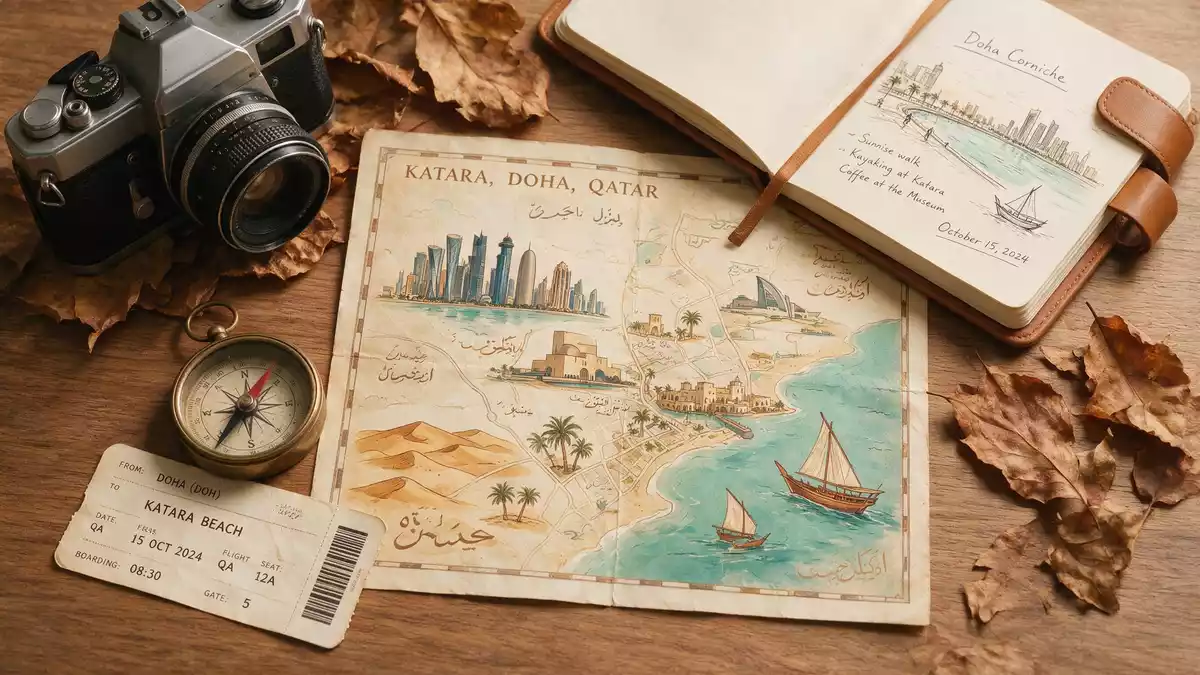
Katara in Doha is Qatar’s purpose-built cultural village on the Gulf, laid out as a waterfront district of sand-coloured streets, courtyards and cultural venues between West Bay and the Pearl. Opened in 2010 as a planned hub for arts and heritage rather than a residential neighbourhood, its ensemble of theatres, mosques and performance spaces has given Doha a dedicated quarter for exhibitions, concerts and public promenades.cultural and commercial complex
Sand-coloured village on Doha’s eastern waterfront
Katara occupies reclaimed coastline on the eastern side of Doha, between the skyscrapers of West Bay and the man-made island of the Pearl, with the waters of the Gulf forming its seaward edge.located between West Bay and the Pearl The layout is that of a village: narrow alleys, stepped streets and open squares run between low-rise buildings in muted beige and sand tones, with arcades and shaded passages linking different parts of the district.sand-coloured streets and courtyards
Towards the water, the streets open onto a long beach and promenade, where the façades of the cultural village face the sea and the skyline beyond. The architecture mixes references from different periods: traditional Qatari elements such as wind-tower silhouettes and plastered walls appear alongside arches and colonnades drawn from wider Islamic and Mediterranean traditions, giving the district a layered visual character.traditional Qatari styles with modern designs
Amphitheatre and performance spaces by the sea
At the heart of Katara stands a large marble amphitheatre, a broad open-air performance space with stepped seating arranged around a stage that opens towards the Gulf.classical Greek style amphitheatre Its plan draws on classical Greek theatre models, with tiers of seats rising in a curve and geometrically laid out steps, while arches and ornamental details at the entrances and balustrades introduce Islamic influences.marble amphitheatre with stepped seating and open views
The amphitheatre’s stone surfaces and open form make the surrounding village and water part of the backdrop for events, anchoring Katara’s identity as a place of performance. Nearby stand a drama theatre and an opera house, continuing the theme of combining contemporary construction with references to Islamic architecture; together, these venues give the district enclosed halls as well as outdoor terraces for concerts, film screenings and stage productions.Katara Amphitheatre and Drama Theater
Mosques, pigeon towers and tiled detail
One of Katara’s most striking landmarks is the Katara Mosque, also known as the Blue Mosque, designed by Turkish architect Zeynep Fadilloglu, whose work on contemporary mosques is widely noted.designed by Turkey’s Zeynep Fadilloglu Its exterior is clad in Persian and Turkish tile and enamel work in vivid shades of blue and gold, set against the neutral tones of surrounding buildings, and the dome, minaret and prayer niche draw inspiration from mosques across the Muslim world.outer surface adorned with turquoise and purple mosaic
Facing the amphitheatre stands the Golden Mosque, an Ottoman-style structure covered with small gold-coloured tiles that catch the light, giving the square beside it a distinct character.Ottoman-style Golden Mosque Near the Blue Mosque rise the pigeon towers, oblong structures dotted with openings and wooden perches, recalling traditional dovecotes found across the region and adding another vertical accent to the village skyline.unmistakable pigeon towers Between the amphitheatre and the water, a large sculpture titled “Force of Nature” depicts a figure hurling the globe with a piece of cloth, a reminder of humanity’s relationship with natural forces carved into metal and stone.Force of Nature art installation
Visiting Katara: what travellers from Western Europe should know
- Katara lies on Doha’s eastern waterfront between West Bay and the Pearl, and is reached by road; local signage points to the cultural village and the adjacent beach.
- The streets are paved and generally level but include some steps and gentle gradients, and moving between the upper squares and the seafront involves walking along outdoor passages.
- The official language is Arabic and the currency is the Qatari riyal.
- Entry requirements depend on your nationality; UK travellers can check the FCDO travel advice at gov.uk/foreign-travel-advice, Irish travellers the Department of Foreign Affairs at ireland.ie.
Searching for Katara on social platforms
These links open searches for Katara on each platform.
Frequently asked questions about Katara
Where is Katara and what kind of place is it?
Katara is a planned cultural village on Doha’s eastern waterfront in Qatar, set between West Bay and the Pearl as a dedicated district for arts and heritage.
What should visitors expect on a visit to Katara?
Visitors encounter sand-coloured streets, courtyards, a marble amphitheatre, mosques, galleries and a beach, with both open-air spaces and enclosed halls for performances and exhibitions.
What makes Katara distinctive among Doha’s districts?
Katara is distinctive for its combination of a classical Greek-inspired amphitheatre, richly tiled mosques such as the Blue Mosque by Zeynep Fadilloglu, pigeon towers and a long waterfront promenade in one cohesive village layout.


