
Kasbah des Oudaias, Rabat’s clifftop citadel above the Bou Regreg
Published on 08/20/2026 at 22:14 | Editorial responsibility: Rafael Müller, Editor-in-Chief AD HOC NEWS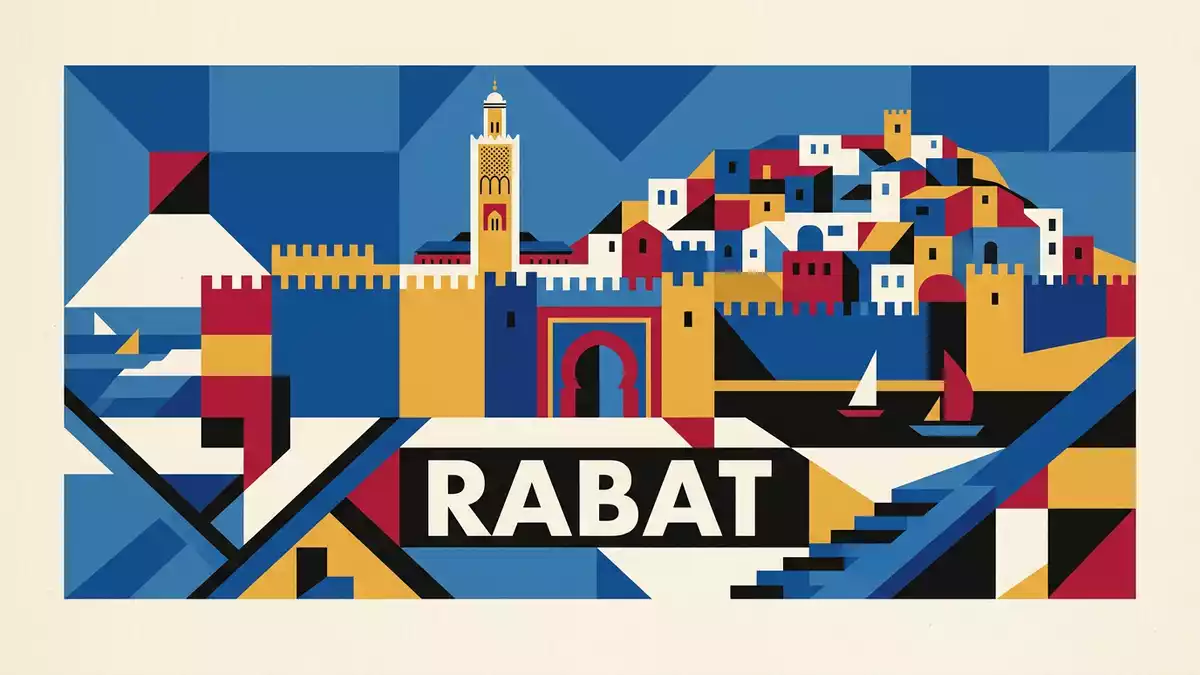
Kasbah des Oudaias rises above the mouth of the Bou Regreg in Rabat, its twelfth?century walls, Andalusian lanes and Atlantic outlook folding centuries of Moroccan history into a compact hilltop quarter.
Almohad power on the Atlantic edge
The story of Kasbah des Oudaias is tied to the era when Rabat emerged as an Atlantic stronghold for the Almohad dynasty in the twelfth century, guarding the river estuary where the Bou Regreg meets the ocean.The Almohad rulers Abdelmoumen and Yaqub al-Mansur used the site as a military base and their period defines much of what visitors see in the fortifications.
The citadel took shape on earlier defensive works but the extensive stone walls and monumental gate belong to the Almohad phase in the later twelfth century, when Rabat’s cliffs became a launch point for campaigns towards al?Andalus and a fortified shield for the new imperial city.The kasbah’s mosque, palace precinct and enclosing ramparts date from this programme of construction and still frame the quarter above the river.
The great gate and enclosed streets
Approach from Rabat’s medina brings visitors to Bab Oudaya, the vast stone gate that announces the kasbah with carved surfaces and projecting forms rather than height alone.This gate, also known as Bab al-Kabir, was completed in the late twelfth century at the north?west corner of the enclosure and still serves as the ceremonial entrance into the citadel quarter.
Beyond the gate, narrow lanes run between whitewashed houses with painted lower walls, opening at intervals into small squares and planted courtyards that soften the fortress character of the outer walls.Many façades and doorways reflect an Andalusian and Mediterranean style established after the arrival of Moriscos in the seventeenth century, giving the interior a domestic scale that contrasts with the martial outline seen from the riverbanks.
From corsair republic to UNESCO recognition
In the seventeenth century Rabat and neighbouring Salé formed a corsair republic whose power base lay inside Kasbah des Oudaias, turning the headland into both a trading centre and a stronghold for ships that sailed from the Bou Regreg into the Atlantic.Platforms and defensive towers from this period still overlook the river mouth, reminders of an age when privateers controlled the estuary.
The kasbah’s name preserves another layer of history from the nineteenth century, when the Oudaya tribe was settled in the citadel, and its value as part of Rabat’s historic ensemble was confirmed in 2012 when the Moroccan capital, including Kasbah des Oudaias, was inscribed as a UNESCO World Heritage Site.This recognition underlines the kasbah’s role as a military, residential and maritime quarter over many centuries, layered visibly in the walls, dwellings and lookout points facing both city and sea.
Visiting Kasbah des Oudaias: what travellers from Western Europe should know
- Kasbah des Oudaias stands on a rocky headland above the Bou Regreg estuary on the Atlantic side of Rabat, reached on foot from the adjoining medina and central streets.
- The approach from the medina climbs steadily through stone gateways and sloping lanes, and inside the enclosure many streets are stepped rather than level pavements.
- The kasbah looks across the river to the town of Salé and out towards the Atlantic surf, so exposed terraces and bastions can feel very open to wind and weather.
- The official language is Arabic and the currency is the Moroccan dirham.
- Entry requirements depend on your nationality; UK travellers can check the FCDO travel advice at gov.uk/foreign-travel-advice, Irish travellers the Department of Foreign Affairs at ireland.ie.
Searching for Kasbah des Oudaias on social platforms
These links open searches for Kasbah des Oudaias on each platform.
Frequently asked questions about Kasbah des Oudaias
Where is Kasbah des Oudaias?
Kasbah des Oudaias stands on a headland above the Bou Regreg estuary on the Atlantic side of Rabat, the capital of Morocco.
What can visitors expect inside the kasbah?
Inside the walls, visitors find narrow whitewashed lanes, small squares, a historic mosque and terraces looking across the river and towards the Atlantic.
What makes Kasbah des Oudaias distinctive?
The kasbah combines Almohad fortifications, Andalusian domestic architecture and views over a former corsair harbour, all condensed into a compact clifftop quarter.


