
Kasbah des Oudaias, Rabat’s cliff-top citadel of blue and white
Published on 09/16/2026 at 15:55 | Editorial responsibility: Rafael Müller, Editor-in-Chief AD HOC NEWS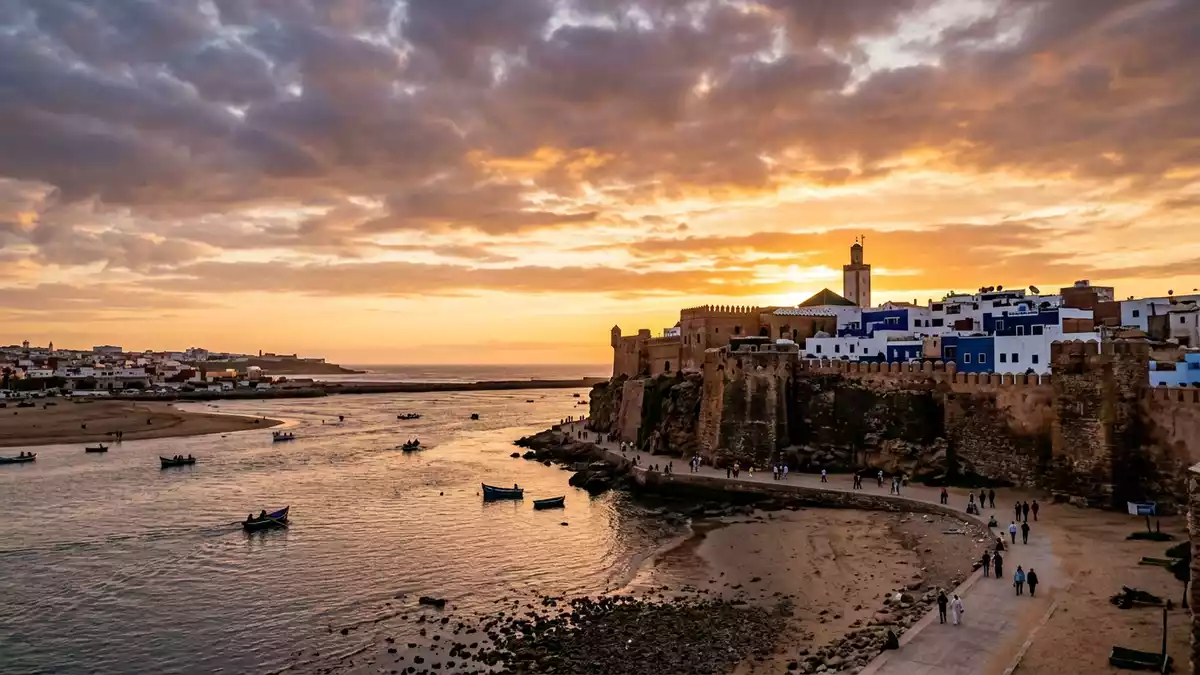
Kasbah des Oudaias in Rabat is a fortified quarter on a rocky headland above the Bou Regreg estuary, a twelfth-century Almohad citadel that today surrounds a blue-and-white residential neighbourhood.
Almohad walls above the Bou Regreg
Kasbah des Oudaias occupies a promontory at the mouth of the Bou Regreg River, directly opposite the historic town of Salé and beside Rabat’s old medina. The fortified enclosure follows the edge of the cliff, with curtain walls dropping towards the water and views out to the Atlantic Ocean beyond the estuary.Kasbah of the Udayas
The citadel is traditionally dated to the twelfth century, when the Almohad dynasty consolidated power in Morocco and established major works at Rabat. Massive stone and brick ramparts, towers and gateways reflect that period’s military architecture, framing a compact urban quarter within.twelfth-century Almohad citadel
Bab Oudaia and the Andalusian Garden
The most striking entrance to Kasbah des Oudaias is Bab Oudaia, a monumental Almohad gate whose sculpted stonework forms a ceremonial threshold from the lower streets into the fortified quarter. Its deep framing and carved surfaces make the gateway a landmark of Rabat’s medieval architecture.monumental Bab des Oudaïas
Inside the walls, narrow lanes painted in blue and white lead towards the Andalusian Garden, a formal planted space laid out with geometric paths, trees and hedges within the shelter of the kasbah. Close by stands an Alaouite-period palace, later adapted as the National Jewellery Museum, where rooms around an internal courtyard exhibit traditional ornaments, textiles and other pieces from across Morocco.Palais de la Kasbah des Oudayas
From military stronghold to lived neighbourhood
Kasbah des Oudaias began as a fortified camp guarding the Bou Regreg, controlling the river mouth and nearby sea approaches for successive dynasties in Rabat. Over centuries it also housed corsairs associated with Salé, reflecting the strategic and maritime character of this stretch of coast.fort military historique
In the Alaouite period a royal residence was established inside the kasbah, adding domestic and ceremonial buildings to the earlier defences. The whole ensemble forms part of the “Rabat, Modern Capital and Historic City” property inscribed on the UNESCO World Heritage List, recognising the continuity between the historic cliff-top citadel and the wider urban landscape.Rabat Région Patrimoine Historique
Visiting Kasbah des Oudaias: what travellers from Western Europe should know
- Kasbah des Oudaias lies in Rabat, Morocco’s administrative capital, on the south bank of the Bou Regreg opposite Salé; it is reached on foot from Rabat’s medina streets and riverside avenues.
- Inside the kasbah, approaches involve cobbled lanes and occasional stairways, and the Andalusian Garden and ramparts sit on elevated ground above the river and ocean.
- The fortified headland forms part of a broader historic waterfront, with views towards Salé across the estuary and towards the Atlantic breakers at the river mouth.
- The official language is Arabic and the currency is the Moroccan dirham.
Searching for Kasbah des Oudaias on social platforms
These links open searches for Kasbah des Oudaias on each platform.
Frequently asked questions about Kasbah des Oudaias
Where is Kasbah des Oudaias located?
Kasbah des Oudaias stands on a cliff-like headland at the mouth of the Bou Regreg in Rabat, on the south bank of the river opposite Salé.
What should visitors expect inside the kasbah?
Visitors encounter fortified walls, the Almohad gate of Bab Oudaia, blue-and-white alleys, the Andalusian Garden and historic buildings including an Alaouite-era palace now used as a museum.
What makes Kasbah des Oudaias distinctive among Rabat’s historic sites?
Its combination of twelfth-century Almohad fortifications, a lived residential quarter and its position above the Bou Regreg estuary gives the kasbah a characteristic cliff-top profile within Rabat’s historic waterfront.


