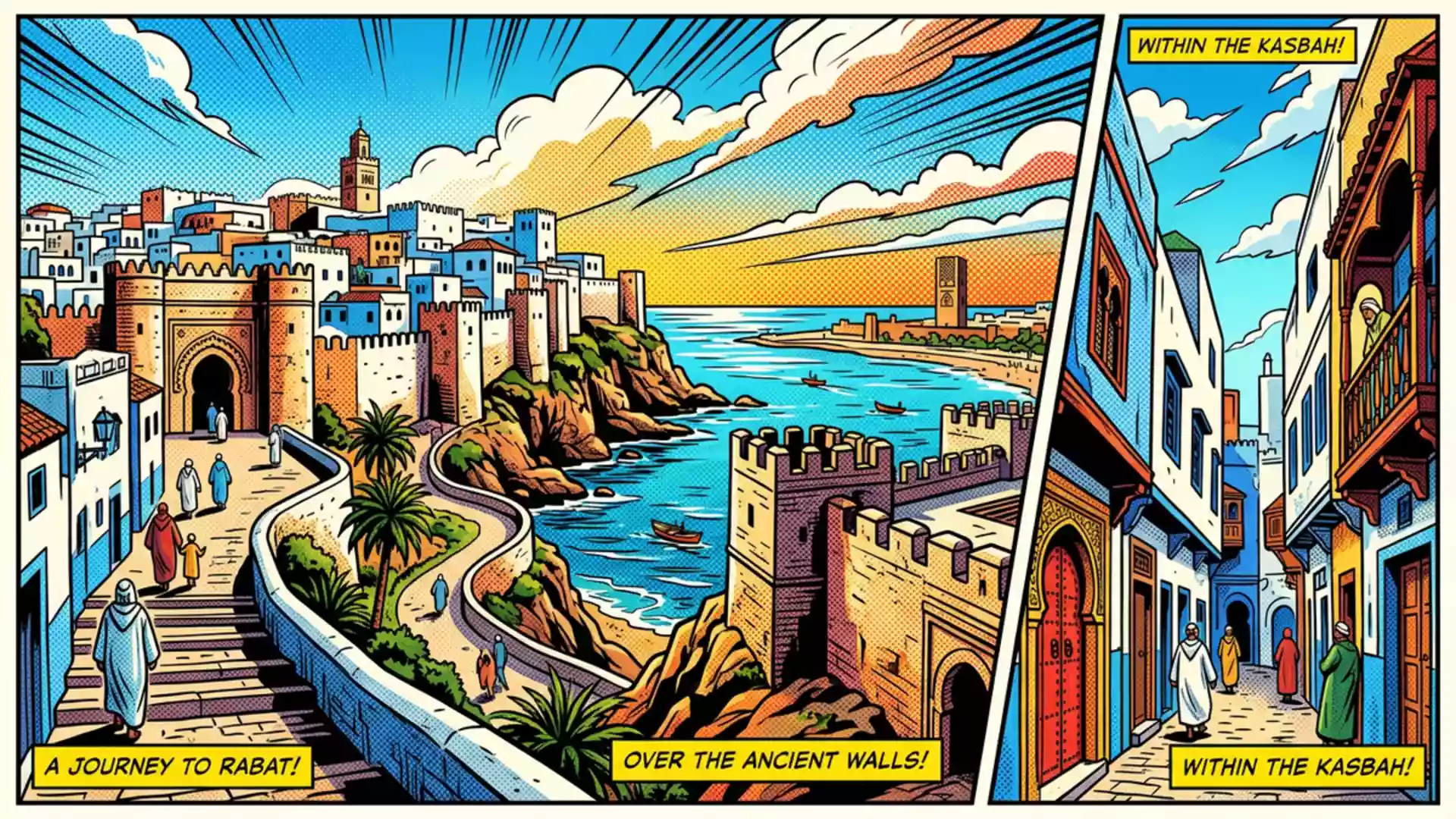
Kasbah des Oudaias: Rabat’s cliff-top citadel and blue-and-white quarter
Published on 09/02/2026 at 16:31 | Editorial responsibility: Rafael Müller, Editor-in-Chief AD HOC NEWS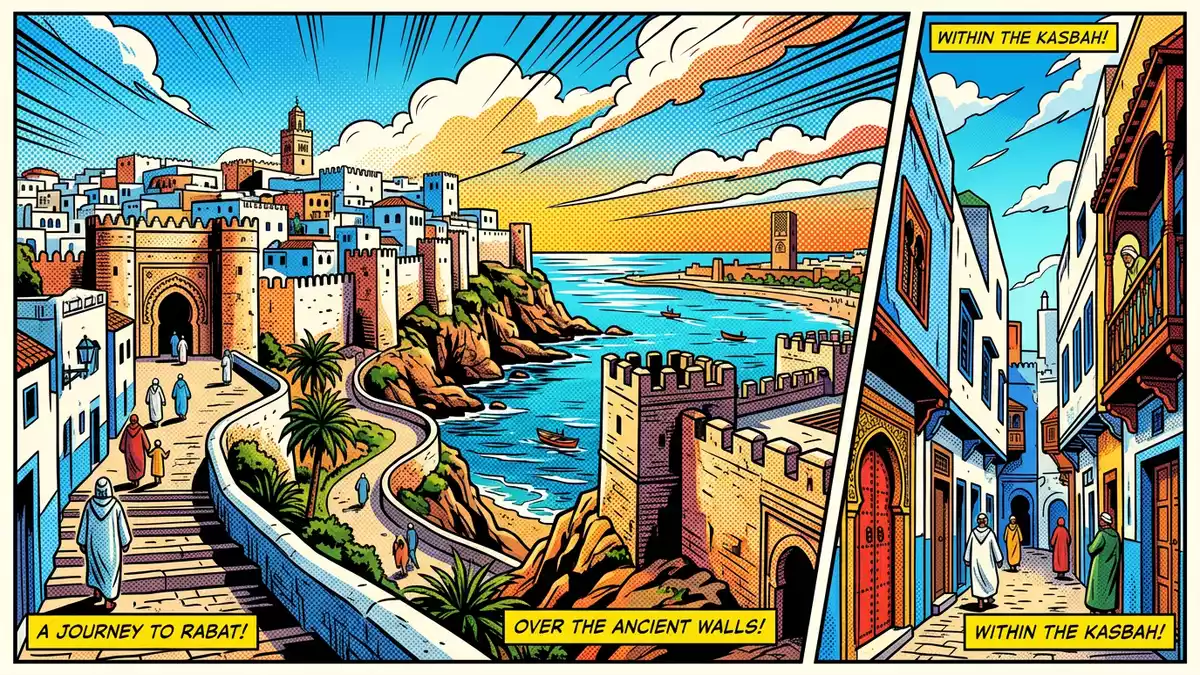
On the Atlantic edge of Rabat, Kasbah des Oudaias rises above the mouth of the Bou Regreg as a walled citadel that has become one of the city’s historic quarters. First laid out in the twelfth century under the Almohad caliph Abd al-Mu’min, it combines massive fortifications with narrow residential streets and later Andalusian-style houses.
Almohad stronghold above the Bou Regreg
Kasbah des Oudaias occupies a rocky headland where the Bou Regreg River meets the Atlantic Ocean, a position that gave it clear views over the estuary and sea approaches to Rabat and Salé. The site was fortified in the mid-twelfth century under the Almohad dynasty, when Abd al-Mu’min established a citadel with enclosing walls, a palace complex and a congregational mosque inside the perimeter.The mid-twelfth-century Almohad citadel set the basic outline of the kasbah that visitors walk through.
The main monumental gate on the landward side dates from this Almohad phase and is recognisable by its carved stonework and layered arches framing the entrance passage.The Almohad dynasty, including sultans Abdelmoumen and Yacoub El Mansour, used the kasbah as a base for campaigns towards al-Andalus, tying this headland on the Atlantic to the wider history of Islamic Spain.
From corsair republic to Oudaya quarter
After the first Almohad period, Kasbah des Oudaias went through phases of neglect and renewal, shaped by arrivals from across the Strait of Gibraltar. In the seventeenth century, after the expulsion of the Moriscos from Spain in 1609, Andalusian refugees settled in Rabat and Salé and gave new life to the enclosure, which became a centre of the so?called Republic of Salé.For several decades in the seventeenth century the kasbah served as an important base for Moorish corsairs operating from this stretch of coast.
The fortified headland also took on a new name linked to an Arab tribal group. Under the Alaouite sultan Moulay Abderrahman in the nineteenth century, the Oudaya or Udaya tribe was settled in the citadel, and the enclosure came to be known by their name.This association with the Oudayas tribe is still reflected in how the quarter is described on maps and signs.
Blue-and-white lanes and Andalusian garden
Inside the defending walls, Kasbah des Oudaias opens into a compact network of streets lined with houses whose façades are painted in white with blue sections at lower level. The lanes climb and turn between small squares, stepped passages and occasional viewpoints over the river mouth and the Atlantic, giving the fortified headland the character of a small town within the wider city.This residential fabric grew around earlier military buildings and gives the kasbah a lived?in feel rather than that of an isolated monument.
Close to the former palace, an enclosed Andalusian-style garden introduces another layer of history. It was laid out during the French Protectorate in the early twentieth century as a formal composition of paths, planted beds and citrus trees within the older walls.This garden draws inspiration from historic Andalusian gardens while adapting to the confined space of the kasbah interior. Together with the blue-and-white lanes and the views towards Salé, it makes Kasbah des Oudaias both a historic fortification and a residential quarter.
Visiting Kasbah des Oudaias: what travellers from Western Europe should know
- Kasbah des Oudaias stands on a headland above the Bou Regreg River in Rabat, on Morocco’s Atlantic coast. It lies a short uphill walk from Rabat’s lower streets and the riverside quays.
- Entry from the city side is through a monumental stone gate that leads into sloping lanes and stepped passages. Visits involve walking on uneven surfaces and climbing gradients inside the quarter.
- The kasbah walls look over the river mouth towards the town of Salé on the opposite bank. From several terraces and open points, there are broad views of the estuary and the Atlantic shoreline.
- The official language is Arabic and the currency is the Moroccan dirham. Entry requirements depend on your nationality; UK travellers can check the FCDO travel advice at gov.uk/foreign-travel-advice, Irish travellers the Department of Foreign Affairs at ireland.ie.
Searching for Kasbah des Oudaias on social platforms
These links open searches for Kasbah des Oudaias on each platform.
Frequently asked questions about Kasbah des Oudaias
Where is Kasbah des Oudaias?
Kasbah des Oudaias stands on a rocky headland above the Bou Regreg River in Rabat, on Morocco’s Atlantic coast, facing the town of Salé across the estuary.
What can visitors expect inside the kasbah?
Inside the walls are blue-and-white residential lanes, the Jamaa el Atiq mosque, remains of palace buildings and an enclosed Andalusian-style garden laid out in the early twentieth century.
What makes Kasbah des Oudaias distinctive among Rabat’s historic areas?
Its twelfth-century Almohad gate and walls, river?mouth setting, later Andalusian influences and continued residential character bring several historical layers together in one compact quarter.