
Kasbah des Oudaias and Rabat’s layered citadel
Published on 08/29/2026 at 13:01 | Editorial responsibility: Rafael Müller, Editor-in-Chief AD HOC NEWS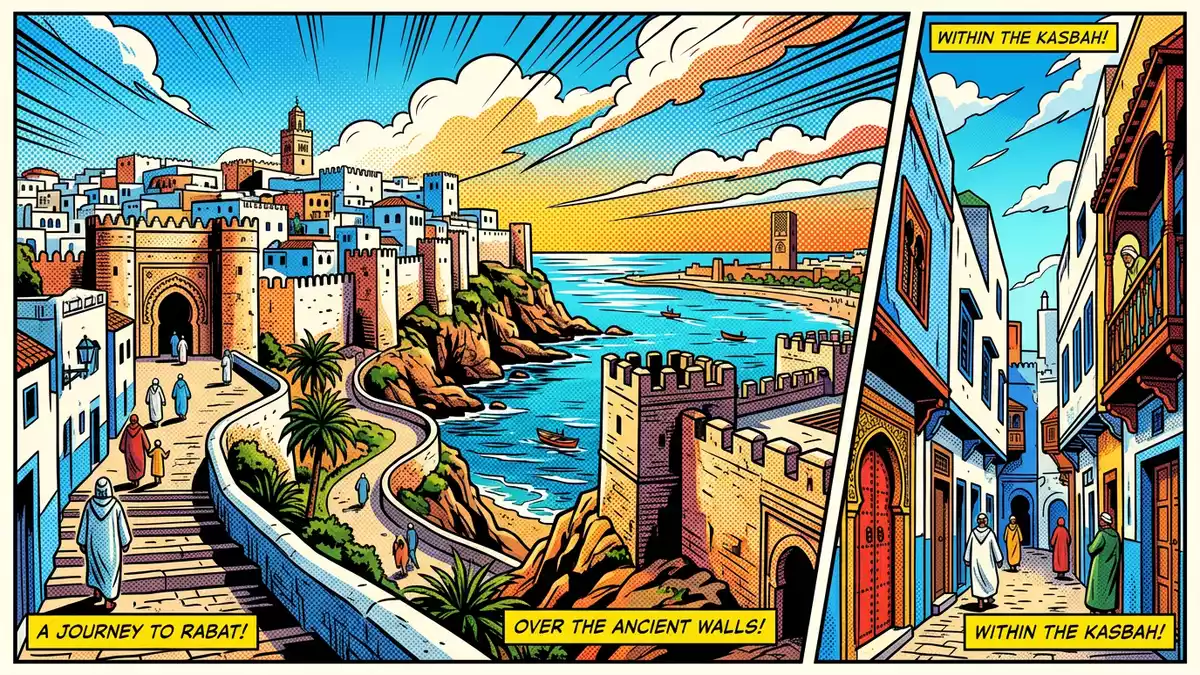
Kasbah des Oudaias in Rabat is a fortified quarter where Almohad stonework, later gates and narrow lanes meet above the Bou Regreg. Its layered fabric links Abd al-Mu'min, Yaqub al-Mansur and Moulay Ismail in one compact hilltop site.Almohad stoneworkUNESCO World Heritage List
Almohad walls and a later gate
The kasbah is a citadel in Rabat, at the mouth of the Bou Regreg and beside the city’s old quarter. The name is tied to the Udaya tribe, while the core of the site belongs to the twelfth century and the Almohad period.the Udaya tribethe twelfth century
Bab Oudaia, the main gate, belongs to the formal face of the kasbah and gives the quarter one of its strongest visual contrasts. Inside the walls, the streets shift between whitewashed surfaces, blue paint and stone passages, with the Old Mosque as a fixed point in the fabric.
From royal pavilion to museum quarter
The southern side of the kasbah carries a different tone, with the former pavilion of Moulay Ismail and the garden laid out beside it. That pairing brings an Alaouite court setting into the same enclosure as the older Almohad citadel.Moulay IsmailCasbah des Oudaias
The Andalusian Garden introduces clipped planting and paths within the same compact district, while the museum buildings add a later public layer. The result is not a single monument but a small historic district with gates, a mosque, a garden and residential lanes.
A hillside citadel above the river
The kasbah rises on a hill above the Bou Regreg, with the river on one side and Rabat’s medina nearby. That setting gives the quarter a clear edge, with the walls and terraces stepping down towards the water.the Bou Regreg
Its plan combines military enclosure and lived-in streets, and the spaces change from gate to mosque to garden without a sharp break. The site’s long use has left a mix of masonry, plaster, tiles and plantings that can be read in a single walk.
Visiting Kasbah des Oudaias: what travellers from Western Europe should know
- The kasbah sits in Rabat, close to the medina and the Bou Regreg waterfront. Public transport in the city links the quarter with the rest of the capital.
- The site is on a hill, with walls, steps and narrow lanes. Footwear suited to uneven paving is useful.
- The streets combine residential buildings, a mosque, garden spaces and museum structures. That mix gives the quarter a lived-in character rather than a sealed monument.
- Bab Oudaia marks the main ceremonial entrance, while the Old Mosque and Moulay Ismail’s pavilion give the enclosure two clear historical centres.
- The quarter lies beside the river mouth, with open views towards the water and Salé across the Bou Regreg.
Searching for Kasbah des Oudaias on social platforms
These links open searches for Kasbah des Oudaias on each platform.
Frequently asked questions about Kasbah des Oudaias
Where is Kasbah des Oudaias?
It stands in Rabat, at the mouth of the Bou Regreg and beside the medina. The hilltop position places it above the river and opposite Salé.
What does a visit involve?
The quarter combines gates, lanes, a mosque, garden spaces and museum buildings. It reads as a historic district rather than a single isolated monument.
What makes it distinctive?
Its most striking feature is the layering of periods in one enclosed place. Almohad walls, an Alaouite pavilion and later garden spaces sit within the same citadel.


