
Kakh-e Golestan: Qajar-era palace gardens in Teheran
Published on 09/18/2026 at 12:39 | Editorial responsibility: Rafael Müller, Editor-in-Chief AD HOC NEWS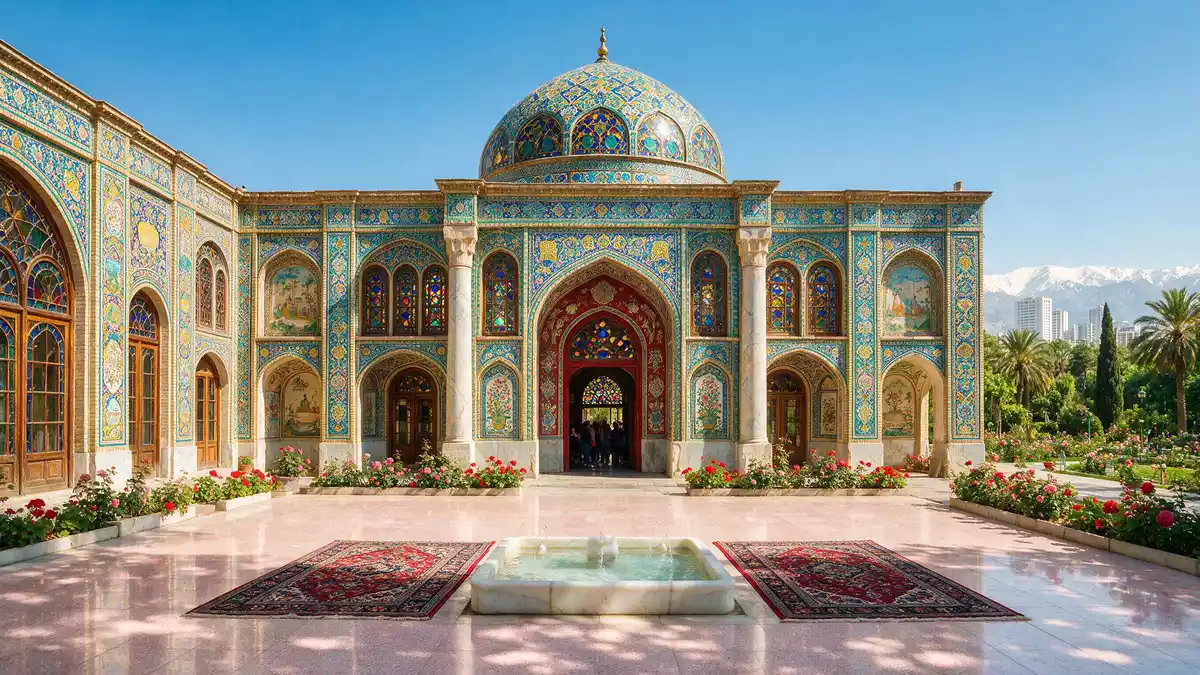
Kakh-e Golestan, known internationally as Golestan Palace, is a historic royal complex in Teheran where Qajar-era palaces, mirrored halls and gardens sit within the remains of the city’s old citadel. Rooted in the Safavid period and reshaped in the nineteenth century, it presents a layered picture of Iranian court life and architecture in the age when Teheran emerged as the capital of Iran.
From Safavid citadel to Qajar royal residence
The origins of Kakh-e Golestan lie in the Safavid dynasty, when a royal citadel was established in the sixteenth century as part of Teheran’s walled core. The palace complex developed within this historic enclosure, known as the arg, and later became the principal residence of the Qajar ruling family after they came to power in the late eighteenth century and confirmed Teheran as the capital of Iran.Safavid dynasty origins Within that setting, successive Qajar shahs expanded the compound into a courtly centre with ceremonial halls, reception rooms and residential quarters that occupied a substantial part of the old citadel.Qajar royal residence
The most recognisable form of Kakh-e Golestan dates from the nineteenth century, when the complex was rebuilt and refined as the official seat of Qajar power. During the reign of Naser al-Din Shah, new buildings were commissioned and European influences were introduced alongside established Persian forms.Naser al-Din Shah’s reign In this period the palace gained the mixture of brickwork facades, tile panels and ornate interiors that visitors encounter on the site.
Architecture between Persian tradition and European influence
Kakh-e Golestan is widely recognised as a major example of Qajar art and architecture, combining long-standing Persian techniques with imported motifs and materials. The complex includes garden courtyards, palace buildings and museum spaces arranged around landscaped grounds, reflecting a long evolution of the site from Safavid foundations to Qajar ceremonial centre.Qajar art and architecture Many interiors are characterised by extensive mirror decoration, painted panels and stucco work, creating bright surfaces that catch and fragment light within reception halls and throne rooms.
European elements appear particularly in facades and structural details introduced in the nineteenth century. Buildings such as Shams-ol-Emareh show the adoption of European architectural styles and building technologies alongside Persian decorative schemes, illustrating the period’s engagement with external models while retaining local forms.European architectural influences Across the complex, brick, tile, plaster and mirror glass combine to create a visual language that is associated with Qajar royal architecture and that later influenced artists and builders elsewhere in Iran.influence on Iranian artists
Gardens, museums and UNESCO recognition
The palace buildings of Kakh-e Golestan are set around gardens that form a central feature of the complex. Paths, planting and water elements create outdoor spaces between the halls, linking the architecture to a landscaped environment that reflects long-standing Persian garden traditions. These grounds frame key structures, including audience halls and museum buildings, and provide a setting where decorative tilework and façades face onto greenery.
Several of the palace structures now function as museums, displaying collections of Iranian crafts and European gifts from the eighteenth to the twentieth century.collections of Iranian and European works Together, the architecture, interiors and collections form a record of Iran’s political and artistic history across multiple dynasties. In recognition of this significance, Kakh-e Golestan was inscribed on the UNESCO World Heritage List, identified as an outstanding example of Qajar-era architecture that integrates earlier Persian crafts with Western influences.UNESCO World Heritage inscription The complex stands in Teheran’s old centre, where historic streets and commercial districts surround the palace enclosure.location in the old centre
Visiting Kakh-e Golestan: what travellers from Western Europe should know
- Kakh-e Golestan stands in Teheran’s historic core, within the area of the former arg, with access from streets in the old centre and proximity to major city thoroughfares.
- The palace complex includes garden courtyards and interior staircases within the buildings, and a visit involves moving between outdoor paths and indoor museum spaces.
- The official language of Iran is Persian (Farsi) and the currency is the Iranian rial.
- Entry requirements depend on your nationality; UK travellers can check the FCDO travel advice at gov.uk/foreign-travel-advice, Irish travellers the Department of Foreign Affairs at ireland.ie.
Searching for Kakh-e Golestan on social platforms
These links open searches for Kakh-e Golestan on each platform.
Frequently asked questions about Kakh-e Golestan
Where is Kakh-e Golestan located in Teheran?
Kakh-e Golestan is situated in Teheran’s old centre within the area of the historic arg citadel, surrounded by established streets and commercial districts of the capital.
What should visitors expect during a visit to Kakh-e Golestan?
A visit typically involves moving through garden courtyards and entering palace buildings that now serve as museums, with decorated interiors, mirror work and historical collections.
What makes Kakh-e Golestan distinctive among Iranian palaces?
Kakh-e Golestan is distinctive for its combination of Safavid roots and Qajar-era architecture, its integration of Persian and European elements, and its recognition as a UNESCO World Heritage palace complex.


