
Kakadu National Park: a vast living landscape near Jabiru
Published on 08/27/2026 at 22:21 | Editorial responsibility: Rafael Müller, Editor-in-Chief AD HOC NEWS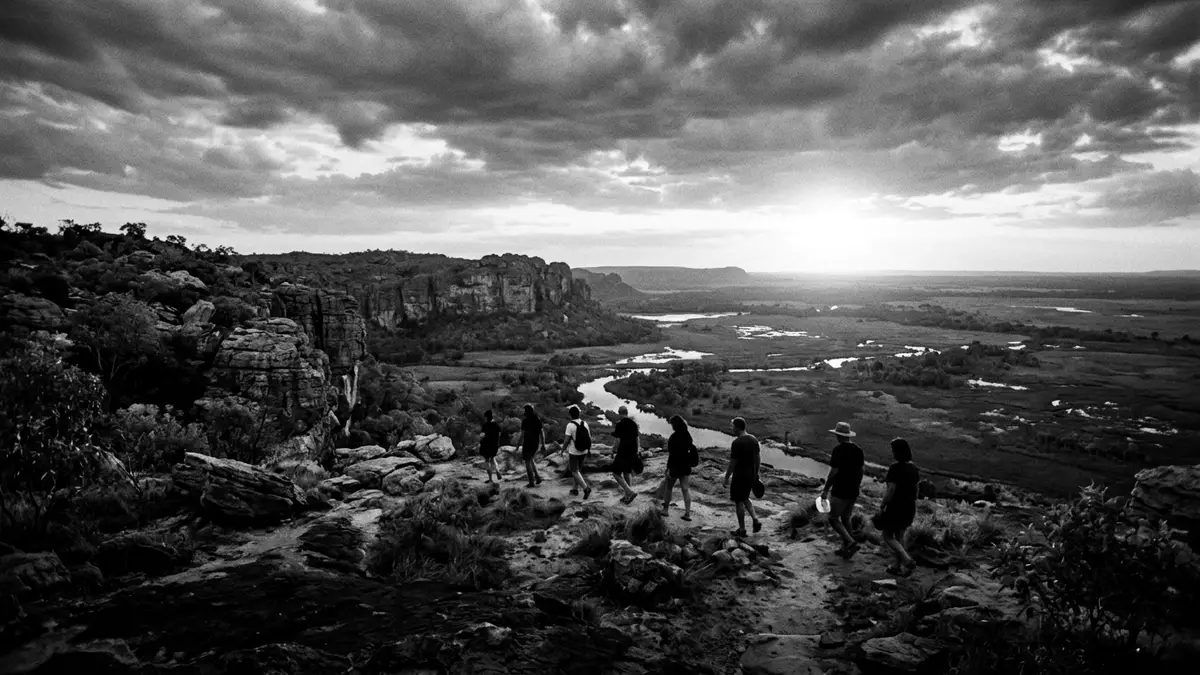
Kakadu National Park in Australia’s tropical north is a vast protected landscape east of Jabiru where sandstone plateaux, sweeping wetlands and ancient Aboriginal rock art sit within one national park. It is recognised as both a cultural and natural World Heritage site and covers almost 20,000 square kilometres (7,722 sq mi), making it one of the largest national parks in Australia.
A national park shaped by stone country and wetlands
Kakadu National Park lies in the Northern Territory within the Alligator Rivers Region and stretches from the Timor Sea coast in the north to rugged sandstone country in the south.Alligator Rivers Region The park’s World Heritage area extends over 19,804 square kilometres (7,646 sq mi), with later additions such as Koongarra bringing the total World Heritage area to more than 19,816 square kilometres.World Heritage area
The northern part of Kakadu is characterised by extensive lowlands and wetlands formed by river systems including the East, South and West Alligator Rivers and the Wildman River.wetlands fed by major rivers These floodplains, billabongs and mangrove fringes are recognised under the Ramsar Convention as wetlands of international importance, particularly for waterfowl habitat. The wetlands support a wide range of birdlife and other animals and change dramatically between wet and dry seasons as water levels rise and fall across the plains.
Ancient rock art and a living cultural landscape
Kakadu National Park is described as a living cultural landscape where Aboriginal people have maintained connections to country over tens of thousands of years.living cultural landscape Archaeological and ethnological evidence from the World Heritage documentation and park information shows that the Kakadu region has been continuously inhabited for more than 40,000 years, with some sources noting more than 50,000 years of occupation by Aboriginal people. This deep history is visible in rock shelters, occupation sites and ceremonial places scattered through the stone country.
One of the most striking features for visitors is Kakadu’s concentration of Aboriginal rock art on cliff faces and in rock shelters. The escarpment and plateau country is estimated to contain thousands of rock art sites, with thousands more recorded by park staff.rock art concentration Places such as Nourlangie and Ubirr are known for panels that depict animals, ancestral beings and contact-period scenes, painted over generations and layered on the sandstone surfaces.
World Heritage recognition and ecological diversity
Kakadu National Park was first inscribed on the UNESCO World Heritage List in 1981 at the fifth session of the World Heritage Committee, with later extensions in 1987 and 1992 to cover more of the landscape.World Heritage inscription in 1981 It is one of a small number of Australian sites recognised on the List for both cultural and natural outstanding universal values, reflecting the combination of ecological richness and long Aboriginal cultural history.dual cultural and natural values
Within the park, habitats range from open forest and woodlands to sandstone monsoon rainforest patches, floodplains, riverine and coastal environments, mangroves, shrublands and heath.varied habitats and vegetation Government information notes that Kakadu contains more than one-third of Australia’s bird species and one-quarter of its freshwater and estuarine fish species, highlighting its importance for conservation and biodiversity protection.rich bird and fish diversity
Visiting Kakadu National Park: what travellers from Western Europe should know
- Kakadu National Park lies in Australia’s Northern Territory, with the township of Jabiru located within the park. The Bowali Visitor Centre near Jabiru is reached by road from Darwin in the direction of the Arnhem Highway.
- The landscape includes flat floodplains, rocky escarpments and stone country, so some walking areas involve uneven ground and short climbs over rock or up formed paths.
- The park experiences a tropical climate, with a pronounced wet season when parts of the floodplain fill with water and a dry season when some tracks and roads cross firm ground.
- English is the official language and the currency is the Australian dollar.
- Entry requirements depend on your nationality; UK travellers can check the FCDO travel advice at gov.uk/foreign-travel-advice, Irish travellers the Department of Foreign Affairs at ireland.ie.
Searching for Kakadu National Park on social platforms
These links open searches for Kakadu National Park on each platform.
Frequently asked questions about Kakadu National Park
Where is Kakadu National Park?
Kakadu National Park is in the Northern Territory of Australia, east of Darwin, with the township of Jabiru located within the park area.
What can visitors expect on a trip to Kakadu?
Visitors encounter large wetlands, floodplains, sandstone escarpments, monsoon forest patches and many sites with Aboriginal rock art across the stone country.
What makes Kakadu National Park distinctive?
Kakadu stands out for its combination of extensive tropical wetlands, ecological diversity and long Aboriginal cultural history recognised through dual World Heritage listing.


