

Jungfraujoch, where railway engineering meets high alpine ice
Published on 08/26/2026 at 21:01 | Editorial responsibility: Rafael Müller, Editor-in-Chief AD HOC NEWS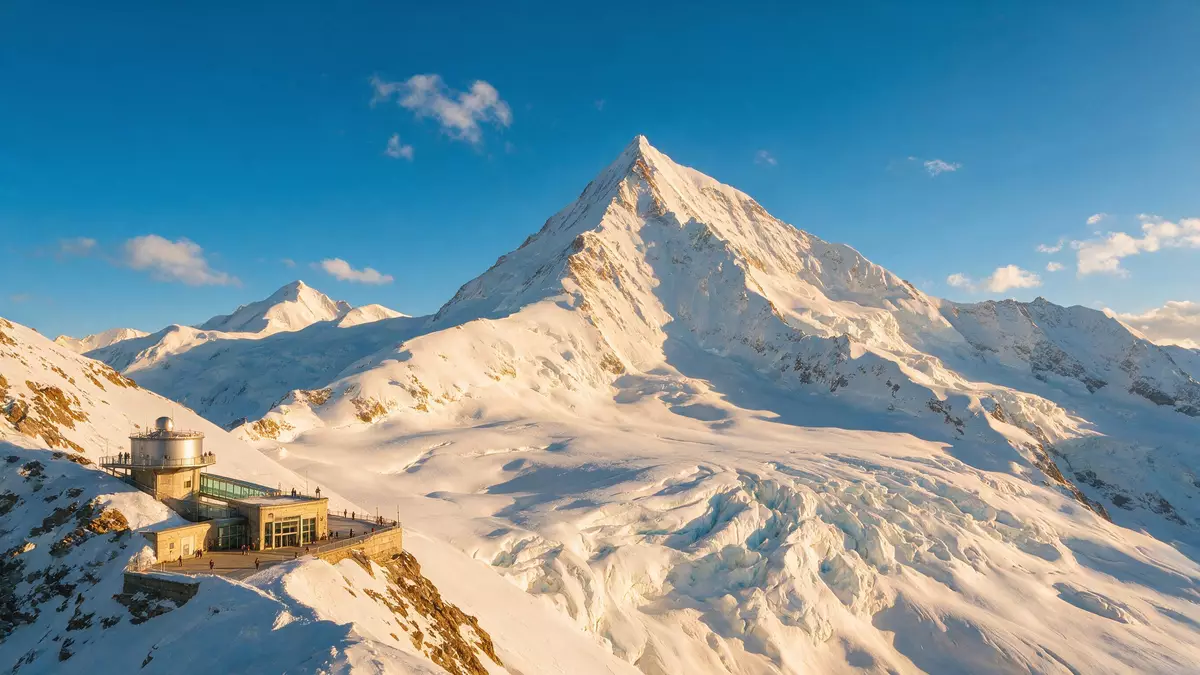
Jungfraujoch is a high alpine saddle in the Bernese Alps, framed by ice, rock and railway engineering at over 3,400 m (around 11,000 ft) above sea level. It links the massifs of the Jungfrau and the Mönch above the upper reaches of the Aletsch Glacier and forms part of the Swiss Alps Jungfrau-Aletsch World Heritage area, where snow and ice dominate the landscape in every direction.high alpine saddle in the Bernese Alps
Jungfraujoch on the glacier ridge between Jungfrau and Mönch
Geographically, Jungfraujoch is a snow-covered saddle on the ridge that runs between the summit of the Jungfrau and the summit of the Mönch, two major four-thousand-metre peaks of the Bernese Alps. The saddle lies above the upper basin of the Aletsch Glacier, which flows southwards away from the ridge and forms one of the dominant glacial systems of the central Alps.saddle between Jungfrau and Mönch The location sits on the border between the cantons of Bern and Valais, with the main complex of buildings and the railway station administratively in the Valais commune of Fieschertal.
The altitude of Jungfraujoch is given in official descriptions as 3,454 m (11,332 ft) to 3,463 m (11,362 ft), reflecting different reference points for the saddle and nearby structures.3,454 m railway station height Whatever precise figure is used, it is a permanent high-altitude environment where ice and snow are part of the terrain rather than a seasonal feature. On clear days, the view from the ridge takes in the length of the Aletsch Glacier and a sweep of summits across the Bernese Alps.
The Jungfrau Railway and the “Top of Europe” station
Jungfraujoch is closely bound to the Jungfrau Railway, a high-mountain line whose construction in the early twentieth century made the saddle accessible to visitors arriving from the valley. The route connects with trains from Interlaken, Lauterbrunnen, Wengen and Grindelwald at Kleine Scheidegg, then climbs steeply and passes through long tunnels bored through the massifs of the Eiger and the Mönch before reaching the terminus near the saddle.terminus of the Jungfrau Railway The engineering of the line, and its alignment inside the rock, are part of what has made Jungfraujoch a reference point in alpine railway history.more than 100 years of Jungfrau Railway
Near the saddle, the underground Jungfraujoch railway station stands at around 3,454 m (11,332 ft) above sea level and functions as the highest railway station in Europe.highest railway station in Europe From the station, passageways lead to the “Top of Europe” complex, a multi-level building overlooking the glacier on the south side of the ridge and linked to the Sphinx Observatory by lifts and tunnels.Top of Europe building Inside, visitors find restaurants, exhibition spaces, a post office at high altitude and access routes that bring them out onto viewing platforms and snow-covered terraces.
Ice, observatories and World Heritage status
From Jungfraujoch, the scale of the Swiss Alps Jungfrau-Aletsch World Heritage site becomes apparent, with the Aletsch Glacier stretching away beneath the saddle and the surrounding peaks rising in a ring of rock and ice.centre of the Swiss Alps Jungfrau-Aletsch The plateau areas give direct access to firm snow surfaces, where marked routes lead away from the buildings towards viewpoints over the glacier and, in suitable conditions, towards high-alpine routes such as the path to the Mönchsjoch Hut.
Above the main complex, the Sphinx Observatory stands on a rocky prominence that rises directly over the Jungfraujoch saddle. It houses scientific instruments and meteorological facilities at high altitude and is associated with long-running research into alpine weather and glaciology.Sphinx Observatory and research station Within the tourist complex itself, an Ice Palace and other ice-themed attractions are set inside excavated spaces in the glacier, combining sculpted ice surfaces with views out to the surrounding snowfields.Ice Palace and glacier walks
Visiting Jungfraujoch: what travellers from Western Europe should know
- Jungfraujoch lies in the Bernese Alps between the Jungfrau and the Mönch, reached by the Jungfrau Railway from Kleine Scheidegg, itself connected to Interlaken, Lauterbrunnen, Wengen and Grindelwald by mountain railways.
- The environment is high-altitude terrain at around 3,400 m, with permanent snow and ice surfaces and indoor-outdoor routes that include stairways, tunnels and exposed platforms at elevation.
- The Jungfraujoch complex belongs to Switzerland, where the official languages include German and the currency is the Swiss franc.
- Entry requirements depend on your nationality; UK travellers can check the FCDO travel advice at gov.uk/foreign-travel-advice, Irish travellers the Department of Foreign Affairs at ireland.ie.
Searching for Jungfraujoch on social platforms
These links open searches for Jungfraujoch on each platform.
Frequently asked questions about Jungfraujoch
Where is Jungfraujoch located?
Jungfraujoch lies on the ridge between the Jungfrau and the Mönch in the Bernese Alps, above the Aletsch Glacier on the border of the Bern and Valais cantons in Switzerland.
What kind of experience does a visit to Jungfraujoch offer?
A visit combines high-altitude alpine terrain with indoor complexes, including the Top of Europe building, viewing platforms over the glacier, snow-covered plateaus and attractions such as the Ice Palace.
What makes Jungfraujoch distinctive among alpine destinations?
Jungfraujoch brings together a glacier saddle, Europe’s highest railway station and scientific facilities such as the Sphinx Observatory within one World Heritage landscape of ice and rock.


