
Joya de Ceren and the Maya village beneath volcanic ash
Published on 09/24/2026 at 05:21 | Editorial responsibility: Rafael Müller, Editor-in-Chief AD HOC NEWS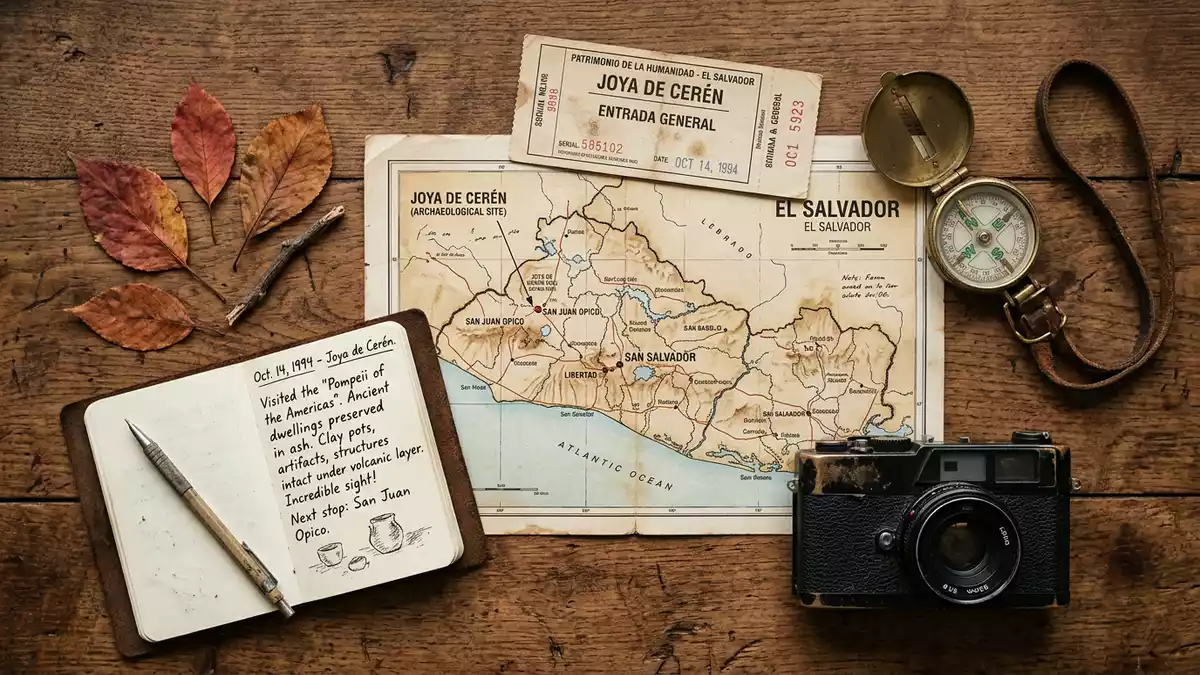
Joya de Ceren is a pre-Hispanic farming settlement near San Juan Opico in El Salvador. Volcanic ash buried its earthen buildings around AD 600, preserving houses, work areas, food vessels and cultivated land in place.
Joya de Ceren beneath the ash
The settlement lies in the Zapotitan Valley, within the Department of La Libertad. Its remains belong to a farming community of the seventh century AD, during the Late Classic period of Mesoamerican history. The site is part of the official UNESCO World Heritage listing, inscribed in 1993.
The Loma Caldera eruption covered the village with volcanic material. The deposit preserved architecture made from earth, household objects and traces of plants. The result is a settlement that records ordinary agricultural life, rather than a royal centre or monumental ceremonial complex.
Homes, kitchens and a Maya temascal
Excavated structures include houses, storehouses, a kitchen, public buildings and a temascal, the Mesoamerican sweat bath. The buildings are grouped into compounds around open spaces. Household walls used wattle and daub, while public buildings and the sweat bath used rammed earth.
Structure 2 contains a house with a porch, an earthen bench and a niche holding bowls. Structure 6 is a storehouse with pottery, grinding equipment and obsidian tools. Structure 11 is a kitchen with a hearth, cooking vessels and a metate. Structure 9, the temascal, has thick earthen walls, benches and a fire box made from river cobbles.
The buildings were roofed with grass thatch supported by light wooden frames. Carbonised roof material remained within the volcanic deposits. The site also contains evidence of maize, beans, squash, manioc, cacao, guava, agave and other cultivated plants.
What the preserved village reveals
Joya de Ceren was uncovered in 1976 when a clay-built structure appeared during work for grain-storage silos. Archaeological investigations identified household spaces and agricultural features beneath the ash. The discovery connected domestic objects with the rooms where people stored, prepared and used them.
Several vessels retain traces of food, while tools and storage containers show practical activities. Casts of plants preserve the position of crops that grew beside the buildings. These details place farming, cooking, storage and bathing at the centre of the settlement’s archaeological record.
The preserved buildings are protected beneath shelter structures within the archaeological park. The site museum presents objects and information associated with the excavated community. The archaeological park description identifies houses, storehouses, a kitchen and the temascal among the exposed remains.
Joya de Ceren was inscribed on the World Heritage List in 1993. Its preservation gives visitors a view of domestic Maya architecture, agricultural production and household equipment within one archaeological setting.
Visiting Joya de Ceren: what travellers from Western Europe should know
- Joya de Ceren lies in the Canton Joya de Ceren, in La Libertad Department, near San Juan Opico. The approach follows the road to San Juan Opico.
- The archaeological park includes sheltered excavation areas and an archaeological trail. Visitors see earthen structures, volcanic deposits and exposed agricultural features.
- The site museum accompanies the outdoor remains with artefacts and information about the ancient settlement.
- The official language is Spanish and the currency is the United States dollar.
- Entry requirements depend on your nationality; UK travellers can check the FCDO travel advice at gov.uk/foreign-travel-advice, Irish travellers the Department of Foreign Affairs at ireland.ie.
Searching for Joya de Ceren on social platforms
These links open searches for Joya de Ceren on each platform.Frequently asked questions about Joya de Ceren
Where is Joya de Ceren?
Joya de Ceren is in La Libertad Department, near San Juan Opico in central El Salvador. The site lies in the Zapotitan Valley.
What can visitors see there?
The park presents sheltered earthen buildings, houses, storehouses, a kitchen, a temascal, agricultural traces and a site museum.
What makes Joya de Ceren distinctive?
Volcanic ash preserved a seventh-century farming village with domestic buildings and everyday objects. The remains show Maya rural life through homes, food preparation, storage and cultivation.


