
Joya de Ceren, a buried Maya village in the Zapotitán Valley
Published on 09/12/2026 at 20:16 | Editorial responsibility: Rafael Müller, Editor-in-Chief AD HOC NEWS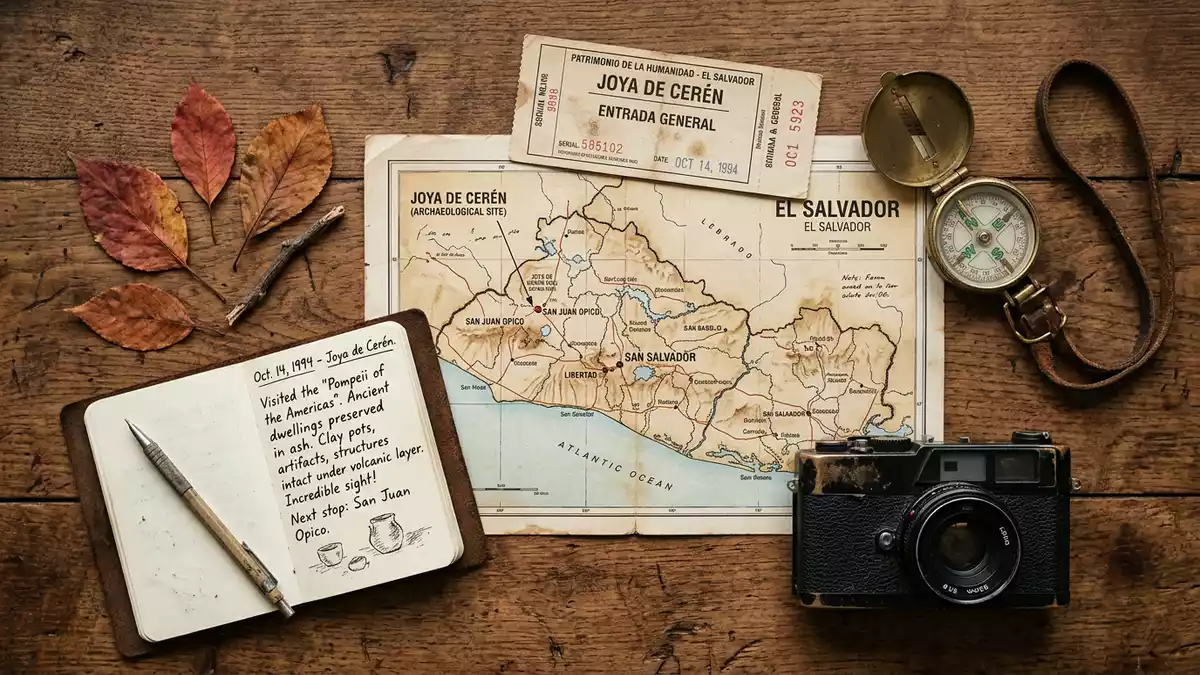
Joya de Ceren in central El Salvador preserves a small pre-Columbian Maya farming village frozen beneath volcanic ash, an entire rural community caught in the moment of everyday life. Recognised as a cultural World Heritage Site since 1993, it sits near San Juan Opico in the La Libertad department and offers a rare archaeological window onto ordinary households rather than palaces or temples.
A Maya farming village sealed in ash
The heart of Joya de Ceren is a cluster of pre-Hispanic structures that formed a farming settlement in the fertile Zapotitán Valley, west of San Salvador.pre-hispanic farming village Archaeological work has revealed houses, storehouses, a kitchen building and a temascal, a type of sweat bath or sauna, preserved under thick layers of ash from a volcanic eruption.Maya settlement of circa AD 650 preserved The settlement belongs to the Maya cultural sphere and illustrates rural life in the Late Classic period of Mesoamerican history.
The eruption that buried the village is associated with the Loma Caldera vent and is dated to around the seventh century AD, when ash rapidly covered the buildings and surrounding fields.engulfed by a volcanic eruption around AD 600 Because the village was covered rather than destroyed by lava, the deep ash layers encapsulated construction details, household equipment and traces of cultivation. The result is often compared with volcanic sites in Italy, as Joya de Ceren preserves tools, containers and structures linked to everyday tasks in a way that is rare for a rural Maya community.evidence of everyday life in a Mesoamerican farming community
World Heritage status and layout of the park
In December 1993 Joya de Ceren was inscribed on the UNESCO World Heritage List as a cultural property under criteria (iii) and (iv), acknowledging its value for understanding pre-Hispanic rural society.inscribed on the UNESCO World Heritage List in 1993 It is recorded as the Joya de Ceren Archaeological Site and stands as El Salvador’s only World Heritage Site, giving it a particular place in the country’s heritage landscape.El Salvador's only UNESCO World Heritage Site
The archaeological park today combines the excavated village area with an administrative zone and public facilities set within several hectares of land.approximately 5 hectares of terrain Protective roofs shelter the exposed pre-Hispanic structures, and walkways guide visitors past the different building groups that have been uncovered. The site museum presents artefacts from the excavation and interpretive displays about the Maya and Pipil communities in the region, while the surrounding parkland includes areas for picnics and rest between viewing the archaeological remains.Joya de Ceren Archaeological Park facilities
Setting in the Zapotitán Valley and San Juan Opico
Joya de Ceren lies in the Zapotitán Valley in La Libertad department, north-west of San Salvador and near the municipality of San Juan Opico.within the Valle de Zapotitán, northwest of San Salvador The valley is a fertile basin framed by volcanic hills, and the location reflects the agricultural character of the ancient settlement. Fields around the site still form part of a cultivated landscape, linking present-day farming with the patterns archaeologists observe in the buried village.
The park stands a few kilometres from San Juan Opico and is reached along the road that connects the town with San Salvador, with the entrance close to kilometre marker 35.at kilometer 35 along the road to San Juan Opico A historical marker near the entrance records the declaration of Joya de Ceren as a World Heritage Site and situates it in the municipality and department, underlining its role both as an archaeological park and as part of the wider cultural geography of La Libertad.marker near San Juan Opico, La Libertad
Visiting Joya de Ceren: what travellers from Western Europe should know
- Joya de Ceren is located in La Libertad department in central El Salvador, reached along the main road between San Salvador and the municipality of San Juan Opico, with the park entrance near kilometre 35.
- The archaeological park has roofed walkways and paths that lead around the excavated structures, and visitors spend time on foot between the covered building groups and the site museum.
- The surrounding terrain in the Zapotitán Valley is relatively low-lying compared with the neighbouring volcanic hills, and the park sits within cultivated land that reflects its agricultural origins.
- El Salvador’s official language is Spanish and the currency is the United States dollar (USD).
- Entry requirements depend on your nationality; UK travellers can check the FCDO travel advice at gov.uk/foreign-travel-advice, Irish travellers the Department of Foreign Affairs at ireland.ie.
Searching for Joya de Ceren on social platforms
These links open searches for Joya de Ceren on each platform.
Frequently asked questions about Joya de Ceren
Where is Joya de Ceren located?
Joya de Ceren is in La Libertad department in central El Salvador, near the municipality of San Juan Opico in the Zapotitán Valley, north-west of San Salvador.
What can visitors expect to see at the site?
Visitors walk through an archaeological park where protective roofs cover excavated Maya village structures, including houses, storage buildings, a kitchen and a temascal, alongside a site museum.
What makes Joya de Ceren distinctive among Maya sites?
Joya de Ceren preserves a rural farming community sealed under volcanic ash, providing detailed evidence of everyday life, and is recognised as El Salvador’s only UNESCO World Heritage Site.


