

Joya de Ceren, a buried Maya village in the Zapotitán Valley
Published on 08/21/2026 at 07:32 | Editorial responsibility: Rafael Müller, Editor-in-Chief AD HOC NEWS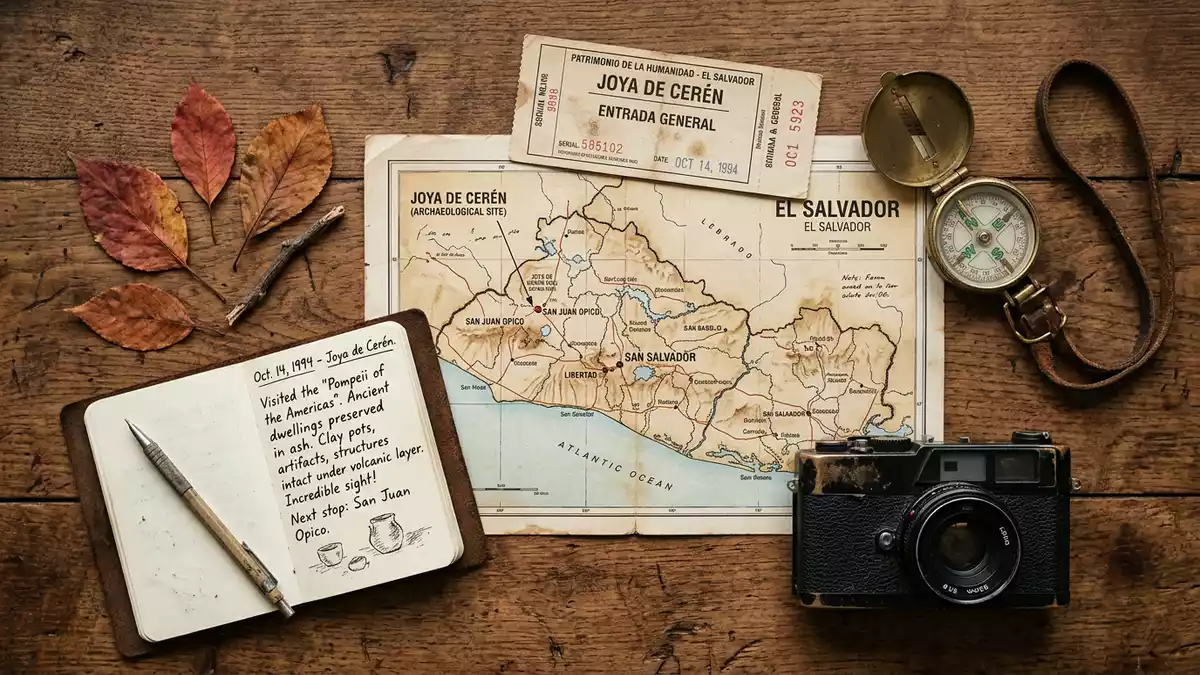
Joya de Ceren in the municipality of San Juan Opico in El Salvador is an archaeological site where a pre-Columbian Maya farming village lies preserved beneath volcanic ash from the seventh century AD. In 1993, the Joya de Ceren Archaeological Site was inscribed on the UNESCO World Heritage List as El Salvador’s only World Heritage property, recognised for the extraordinary preservation of daily life in a small rural community.
A Maya village frozen beneath ash
The heart of Joya de Ceren is a cluster of structures that once formed a farming village in the Zapotitán Valley in the La Libertad Department of El Salvador. The settlement was buried by ash from the Loma Caldera or Laguna Caldera volcano around AD 600, when a sudden eruption covered houses, work spaces and fields in thick layers of volcanic material that sealed them in place.A pre-Hispanic farming village remains visible here, with buildings preserved up to roof height under protective shelter structures.
The site offers an unusually intimate view of domestic life in a small community rather than a monumental temple centre. Archaeologists have identified buildings such as houses, kitchens, storage structures, work areas and a sweat bath, arranged around open spaces that once served as courtyards and paths.The village layout from around 600 CE survives with a clarity rare in Mesoamerica, because walls, floors and even household objects were sealed in place by ash rather than eroded away.
The Pompeii of the Americas
Joya de Ceren is often compared with Pompeii and Herculaneum, because it preserves the remains of daily life in a community suddenly engulfed by a volcanic eruption. The UNESCO description of the site highlights how deep layers of volcanic ash protected food stores, tools, ceramics and even traces of crops in the fields, creating an archaeological record of everyday activity rather than royal or religious display.
The farming community here formed part of the wider Maya cultural sphere. Fields and garden plots at Joya de Ceren show traces of cultivated plants and planting beds, while structures for storing harvests and tools underline how closely the settlement’s layout was tied to agriculture.Evidence of ordinary Mesoamerican farmers is preserved in situ, giving researchers a rare chance to study how non-elite households organised their homes and work.
From excavation trench to archaeological park
The archaeological park lies in the Zapotitán Valley, around 36 km north-west of San Salvador and a short distance south of the town of San Juan Opico in the Department of La Libertad.The park’s location in the valley places it within a fertile area that supported agriculture long before the eruption. Visitor infrastructure today includes covered walkways and viewing platforms that run along the edges of the excavated areas, so the preserved structures remain sheltered from the elements.
Excavations have revealed a series of building groups set at slightly different levels within the ash deposits, connected by paths that visitors can follow from one cluster to another. A museum on site presents artefacts and explanatory material about the community and the eruption, complementing the view into the excavated village remains.Interpretive displays in the archaeological park help visitors relate the exposed walls, floors and pits to the daily activities of the people who lived here before the seventh century ash fall.
Visiting Joya de Ceren: what travellers from Western Europe should know
- Joya de Ceren stands in the municipality of San Juan Opico in the La Libertad Department of El Salvador, south of the town centre and in the Zapotitán Valley, on the road that links San Salvador with San Juan Opico.
- The archaeological park is laid out with a network of paths and walkways that pass beside excavated structures, and some sections involve walking along slightly uneven ground and short flights of steps between viewing platforms.
- The official language is Spanish and the currency is the United States dollar.
- Entry requirements depend on your nationality; UK travellers can check the FCDO travel advice at gov.uk/foreign-travel-advice, Irish travellers the Department of Foreign Affairs at ireland.ie.
Searching for Joya de Ceren on social platforms
These links open searches for Joya de Ceren on each platform.Frequently asked questions about Joya de Ceren
Where is Joya de Ceren located?
Joya de Ceren is in the municipality of San Juan Opico in the La Libertad Department of El Salvador, in the Zapotitán Valley north-west of San Salvador.
What can visitors expect to see at Joya de Ceren?
Visitors walk along paths and viewing platforms beside excavated village structures, with houses, work areas and a site museum presenting artefacts and information about the community.
What makes Joya de Ceren distinctive among Maya sites?
Joya de Ceren preserves a farming village buried by volcanic ash around AD 600, giving an unusually detailed view of everyday rural life rather than monumental architecture.


