
Joshua Tree National Park where two deserts meet in stone
Published on 08/31/2026 at 22:16 | Editorial responsibility: Rafael Müller, Editor-in-Chief AD HOC NEWS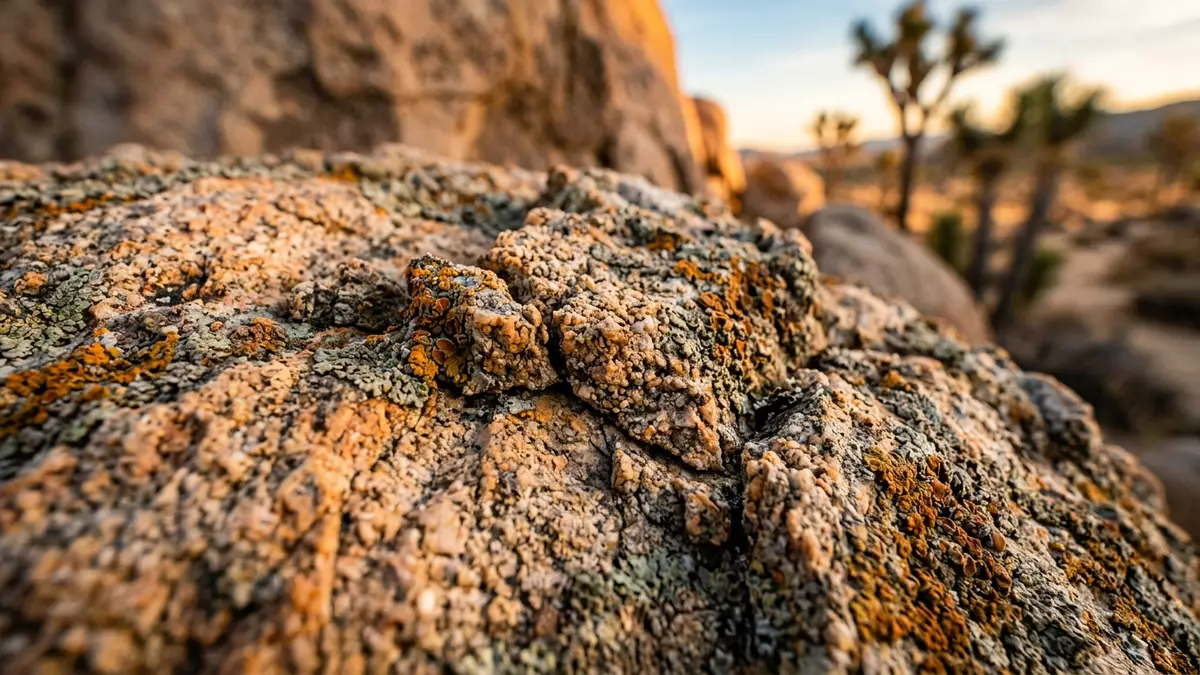
Joshua Tree National Park in southern California is a desert landscape where two distinct ecosystems meet in a wide basin of rock, sand and hardy plants. Set along the Little San Bernardino Mountains near Joshua Tree and Twentynine Palms, it was first protected as Joshua Tree National Monument in 1936 and redesignated as a national park in 1994, preserving an expanse of desert that stretches over hundreds of thousands of acres.national monument in 1936
The meeting of Mojave and Colorado deserts
The core character of Joshua Tree National Park lies in the way two deserts overlap within its boundaries. In the higher parts of the park the cooler Mojave Desert provides the special habitat of Yucca brevifolia, the Joshua tree that gives the park its name and defines its skyline.the higher Mojave Desert At lower elevations the landscape belongs to the Colorado Desert, a western portion of the larger Sonoran Desert, where creosote bush, cholla cactus and other shrubs take over the open ground.two separate desert ecosystems
This transition between deserts is not a single line but a broad zone across the park, and it gives the terrain a layered feel. In the Mojave zone the Joshua trees rise from coarse sand and scattered granite boulders, their spiny leaves clustered at the ends of thick branches. In the Colorado zone the vegetation drops lower to the ground, leaving long views towards distant ranges and exposing the underlying geology more clearly. The park sits along the Transverse Ranges province of California, where mountains run east–west and mark the edge of the Coachella Valley to the south and the Morongo Basin to the north.Transverse Ranges province
Granite piles and ancient bedrock
Beyond the vegetation the shapes of Joshua Tree National Park are dominated by bare rock hills broken into piles of rounded boulders. The bedrock geology here records plate tectonics, mountain-building and erosion over a span that reaches back into the Proterozoic Eon, with metamorphic rocks between about 1.7 and 1.4 billion years old exposed in ranges such as the Cottonwood, Pinto and Eagle Mountains.Proterozoic metamorphic rocks Later Jurassic and Cretaceous intrusions of granitic rock, particularly monzogranite, form the striking piles of stone that visitors associate with the park, especially in areas like the Wonderland of Rocks.monzogranite intrusions
These granitic bodies cooled and fractured underground into roughly blocky forms and were then sculpted by groundwater and weathering, which softened their corners and edges. As the overlying material was stripped away, the altered blocks emerged as stacks of boulders with rounded profiles. In some parts of the park these rocks form low domes and ridges; in others they gather as mazes where stone corridors twist around clusters of massive blocks. Between the ranges broad valleys lie on eroded surfaces or in graben basins formed by faults, giving Joshua Tree National Park an alternation of long, open plains and confined rocky enclaves.several distinct mountain ranges
Joshua trees and desert life
The plant that lends Joshua Tree National Park its name, Yucca brevifolia, is a giant yucca in the Asparagaceae family that grows to the height and stance of a tree, with a fibrous trunk and bayonet-like leaves.Yucca brevifolia fact sheet It is native to the Mojave Desert and thrives at intermediate elevations where winter chill and limited moisture suit its slow growth. Joshua trees often stand in irregular groves separated by stretches of open ground, their branching forms giving the high desert a distinctive pattern.
Alongside them grow pinyon pines, California junipers, blackbrush and other shrubs adapted to the dry climate. In lower areas the plant communities shift to creosote bush scrub and cactus gardens, with dense stands of cholla and other succulents. Wildlife ranges from reptiles and small mammals to birds that move between the scattered trees and rocky outcrops. The park’s role as desert and wilderness area has been formally recognised; it was designated a biosphere reserve in 1984, giving international emphasis to its ecological value.biosphere reserve in 1984
Visiting Joshua Tree National Park: what travellers from Western Europe should know
- Joshua Tree National Park lies in southern California, east of Palm Springs and near communities such as Joshua Tree and Twentynine Palms. It is reached by road from the Coachella Valley and the Morongo Basin, with park entrances signposted from surrounding highways.
- The terrain inside the park varies from open desert flats to rocky hills of granite boulders, and many paths cross uneven ground with patches of sand and stone.
- Within the park some viewpoints sit at higher elevation along the Little San Bernardino Mountains, where the air is thinner and the approaches follow longer stretches on foot.
- Joshua Tree National Park is in the USA, where the official language is English and the currency is the US dollar.
- Entry requirements depend on your nationality; UK travellers can check the FCDO travel advice at gov.uk/foreign-travel-advice, Irish travellers the Department of Foreign Affairs at ireland.ie.
Searching for Joshua Tree National Park on social platforms
These links open searches for Joshua Tree National Park on each platform.
Frequently asked questions about Joshua Tree National Park
Where is Joshua Tree National Park?
Joshua Tree National Park is in southern California, east of Palm Springs, along the Little San Bernardino Mountains between the Coachella Valley and the Morongo Basin.
What should visitors expect on a visit?
Visitors encounter wide desert plains, scattered Joshua trees, cactus gardens and hills of rounded granite boulders, with long views across basins and mountain ranges.
What makes Joshua Tree National Park distinctive?
The park is distinctive for the overlap of the Mojave and Colorado deserts, the presence of Joshua tree woodlands and the dramatic granite rock formations shaped over geological time.


