
Joshua Tree National Park’s desert of twisted trees and sculpted stone
Published on 09/19/2026 at 10:31 | Editorial responsibility: Rafael Müller, Editor-in-Chief AD HOC NEWS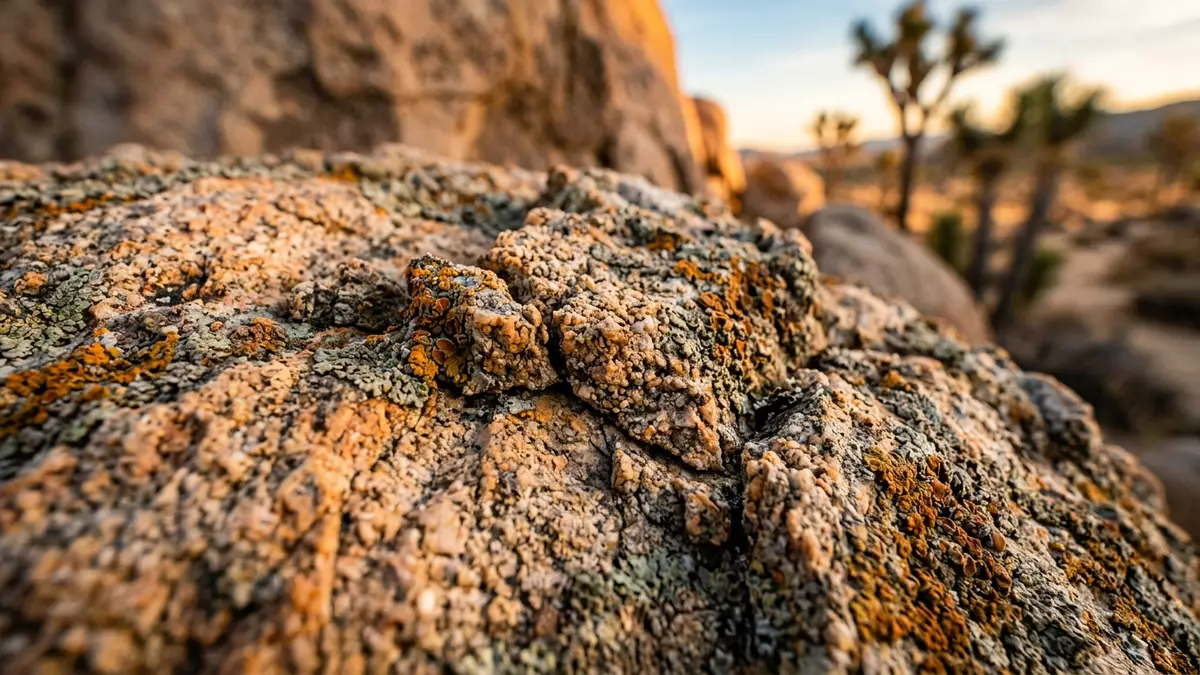
Joshua Tree National Park stretches across the high desert above the town of Joshua Tree in southern California, where strange, spiky Joshua trees rise among jumbled granite boulders and wide sandy basins. Established as Joshua Tree National Monument in 1936 and redesignated as a national park in the late twentieth century, it preserves a desert landscape shaped over geological time and a distinctive stand of desert vegetation.Joshua Tree National Monument in 1936
Where two deserts meet in a single park
Joshua Tree National Park lies in the interior of California, east of the Los Angeles basin, and spans parts of the Mojave Desert and the Colorado Desert, two distinct desert regions with differing elevations and plant communities.Mojave Desert and Colorado Desert The higher Mojave sections carry the park’s namesake trees, a type of yucca with branching limbs and tufted leaves, while the lower Colorado portions are characterised by sparse shrubs and open plains.
Mountain ranges and broad basins form a repeating pattern across the park, with an east–west grain controlled by fault zones of the wider San Andreas system.east–west physiographic grain The highest ground reaches 1,773 m (5,814 ft) at Quail Mountain, while low valleys drop to much warmer elevations, giving visitors a wide range of desert terrain within a single protected area.highest point at Quail Mountain
Granite piles, ancient gneiss and a long geological story
The most striking feature of Joshua Tree National Park is its abundance of large, rounded boulder piles, where blocks of pale granite stack in irregular towers and labyrinths across the desert floor. These formations grew from bodies of monzogranite that crystallised beneath the surface more than 100 million years ago, later jointed and weathered so that once-angular blocks became smooth and rounded before erosion exposed them.monzogranite with rectangular joints In many areas, these granite intrusions cut through older metamorphic rocks, creating sharp contrasts between pale, coarse-grained stone and darker, banded gneiss.
Geologically, the park records nearly two billion years of Earth history, with crystalline basement rocks dating to the Proterozoic Eon and younger plutonic bodies emplaced during the Mesozoic Era.Proterozoic and Mesozoic rocks Over the Cenozoic Era, faulting associated with the San Andreas system uplifted mountain blocks and helped strip deeply weathered granitoid layers, leaving tors and rock-studded etchplains as defining elements of the landscape.tors and etchplains Washes, alluvial fans and playas then accumulated sand, gravel and clay at the feet of these ranges, giving the park its mix of bare rock and loose desert soils.
From monument to national park in the Californian desert
In the early twentieth century, local advocates campaigned to protect the desert region that would become Joshua Tree National Park, emphasising its characteristic trees, rock formations and wildlife. Their efforts led President Franklin D. Roosevelt to set aside about 825,000 acres as Joshua Tree National Monument in 1936 under federal management, creating a formal boundary around a large section of the desert uplands.set aside as Joshua Tree National Monument Later legislation, including the California Desert Protection Act of 1994, reclassified the monument as a national park and adjusted its protected area, anchoring its status among the major desert parks of the United States.California Desert Protection Act of 1994
Within this designation, the park conserves desert ecosystems shaped by limited rainfall, high solar exposure and strong temperature variations between day and night. Springs and oases often occur along fault lines, where geologic structures bring groundwater to the surface, and these pockets of water support palms, shrubs and animal life that contrast with the drier plains around them.fault zones and springs For visitors, the protected status means long views across undeveloped desert, with roads and trails giving access to both rocky highlands and wide basins.
Visiting Joshua Tree National Park: what travellers from Western Europe should know
- Joshua Tree National Park lies in southern California, east of major coastal cities, and is reached by road from communities such as Joshua Tree and Twentynine Palms.
- Much of the park’s terrain consists of rocky slopes, sandy washes and uneven surfaces, and approaches to viewpoints and boulder areas can involve walking on loose desert ground.
- The higher parts of the park stand well above sea level, and exposed areas offer little shade, so conditions can vary markedly with elevation and season.
- In the United States the official language is English and the currency is the US dollar.
- Entry requirements depend on your nationality; UK travellers can check the FCDO travel advice at gov.uk/foreign-travel-advice, Irish travellers the Department of Foreign Affairs at ireland.ie.
Searching for Joshua Tree National Park on social platforms
These links open searches for Joshua Tree National Park on each platform.
Frequently asked questions about Joshua Tree National Park
Where is Joshua Tree National Park?
Joshua Tree National Park is in southern California in the United States, stretching across desert uplands around the communities of Joshua Tree and Twentynine Palms.
What can visitors expect on a visit?
Visitors encounter extensive desert scenery with Joshua trees, rocky hillsides, granite boulder piles and broad sandy basins, reached by park roads and marked routes.
What makes Joshua Tree National Park distinctive?
The combination of twisted Joshua trees, long geological history and conspicuous granite formations within a single protected desert area gives the park a distinctive character.


