
Joshua Tree National Park and its split desert landscape
Published on 08/30/2026 at 13:11 | Editorial responsibility: Rafael Müller, Editor-in-Chief AD HOC NEWS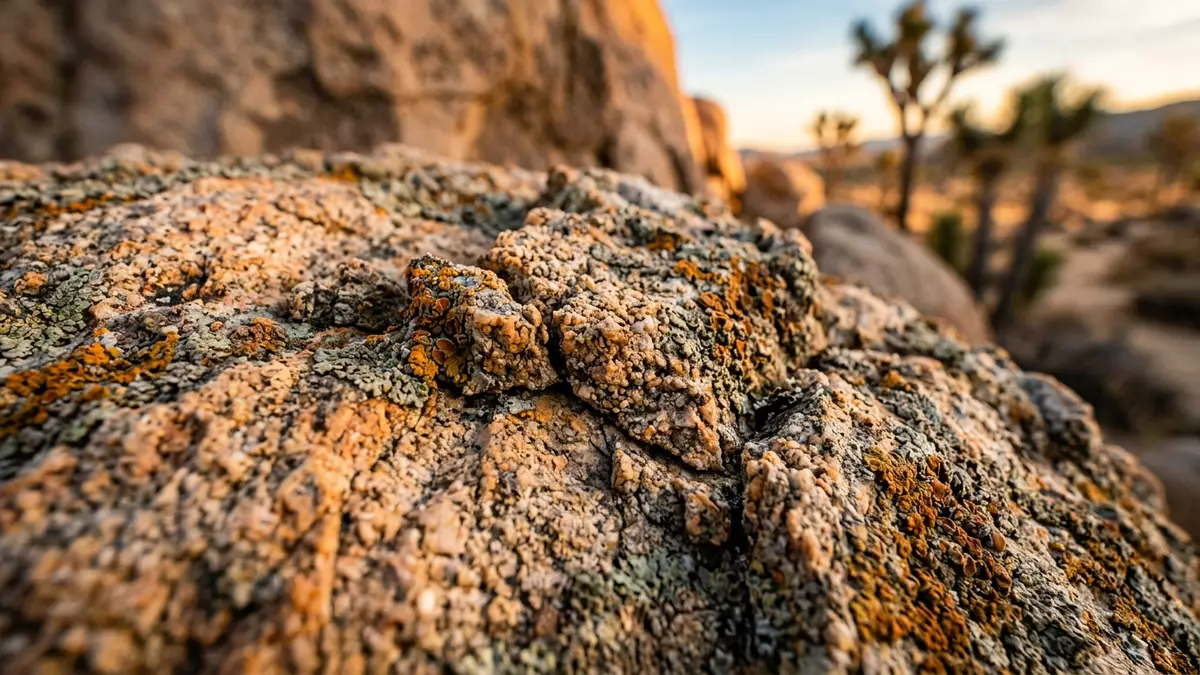
Joshua Tree National Park in southern California is marked by a sharp meeting of two deserts, the Mojave and the Colorado. The Joshua tree, Yucca brevifolia, gives the park its name and appears across the higher western ground.
Granite boulders and desert trees in Joshua Tree National Park
The park’s best-known ground is a landscape of rounded granite boulders, open flats and scattered trees. Its oldest rocks include Proterozoic metamorphic material, and the park was established as a national monument in 1936 before becoming a national park in 1994.1936 and 1994
The monzogranite and gneiss visible in the park record a long geological history, with uplift, intrusion and erosion shaping the surface into the boulder fields seen on many ridges. A National Park Service overview places the oldest rocks at around 1.7 billion years old, while the broader geologic story stretches through the Mesozoic and into the Miocene.1.7 billion years old
Two deserts meeting in one park
Joshua Tree National Park spans the boundary between the higher Mojave Desert and the lower Colorado Desert. The western half lies above 3,000 feet, while the eastern half sits below that line and belongs to the Sonoran Desert system.Mojave and Colorado Desert
That split is visible in the plant life. The Joshua tree favours the western side, while the eastern ground carries creosote bush, ocotillo and cholla cactus, giving the park a broad sweep of desert textures within a single boundary.Joshua tree habitat
History, protection and the name Joshua Tree
The park’s formal protection began under Franklin D. Roosevelt, when the area became Joshua Tree National Monument on 10 August 1936. Congress later redesignated it as Joshua Tree National Park on 31 October 1994, and the name comes from the tree-like yucca that defines the Mojave landscape.Joshua tree1936
That history sits lightly on the land. The park’s identity comes from its granite forms, desert flora and the transition between two ecosystems, not from a single monument or building.
Visiting Joshua Tree National Park: what travellers from Western Europe should know
- The park lies in southern California, east of Los Angeles, with access from CA 62 and Interstate 10. Twentynine Palms and Joshua Tree are the named gateway communities.east of Los Angeles
- Much of the park sits at desert elevation, and the terrain includes open rock piles, sandy basins and exposed slopes. Foot travel crosses bare ground and stone, especially away from the main roads.
- The official language is English and the currency is the United States dollar.
- Entry requirements depend on your nationality; UK travellers can check the FCDO travel advice at gov.uk/foreign-travel-advice, Irish travellers the Department of Foreign Affairs at ireland.ie.
Searching for Joshua Tree National Park on social platforms
These links open searches for Joshua Tree National Park on each platform.
Frequently asked questions about Joshua Tree National Park
Where is Joshua Tree National Park?
It lies in southern California, east of Los Angeles, across parts of Riverside and San Bernardino counties. The park sits where the Mojave Desert meets the Colorado Desert.
What does a visit to Joshua Tree National Park involve?
Expect desert roads, open rock formations and large areas of bare ground between plant communities. The park is spread across a wide landscape rather than around a single central monument.
What makes Joshua Tree National Park distinctive?
Its contrast of desert zones gives it a strong visual identity, with Joshua trees in the higher ground and different desert plants lower down. The granite boulder fields add a second, clearly visible layer to the landscape.


