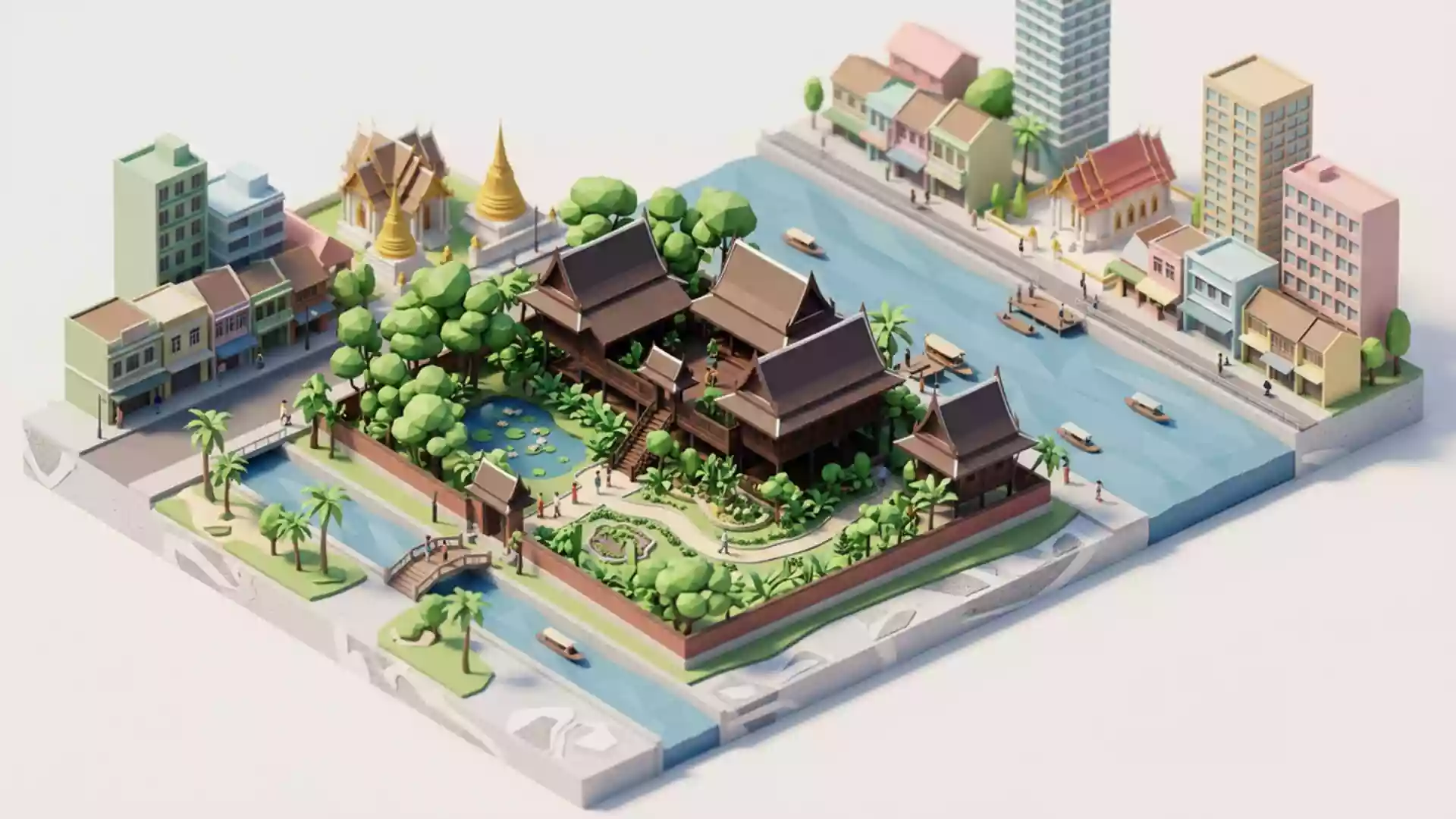
Jim Thompson House and its teakwood garden refuge in Bangkok
Published on 09/02/2026 at 17:45 | Editorial responsibility: Rafael Müller, Editor-in-Chief AD HOC NEWS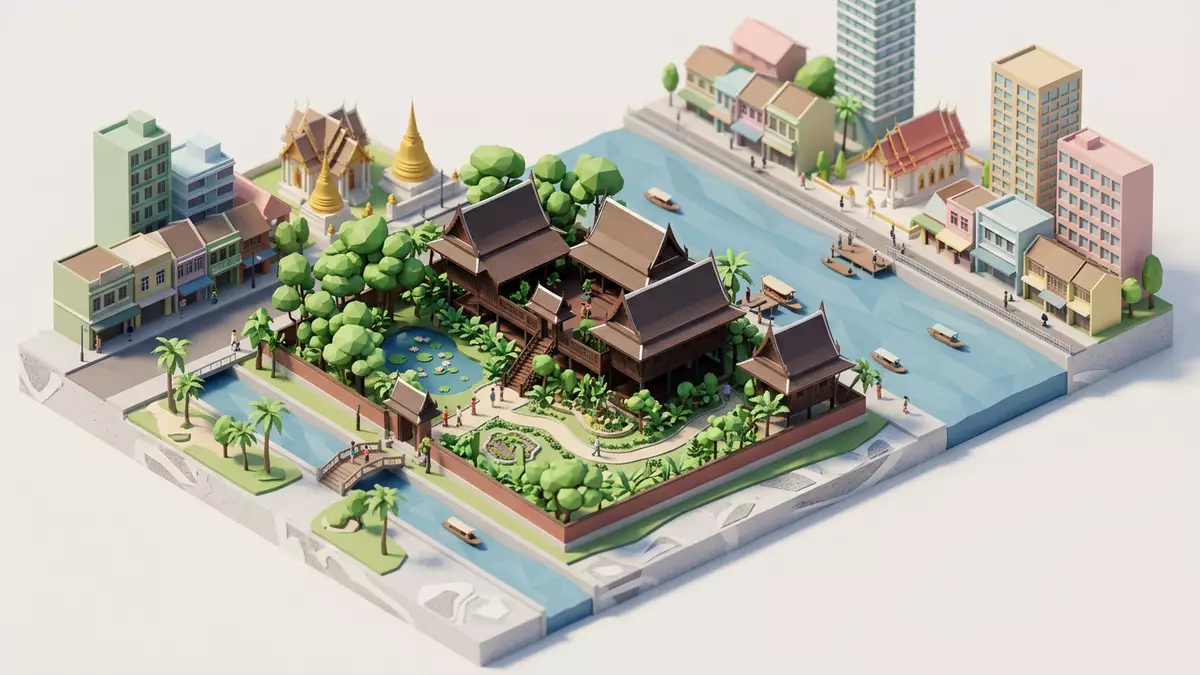
Jim Thompson House in Bangkok brings together traditional Thai teak houses, an Asian art collection and a tropical garden beside a canal, all on a compact inner-city plot. Built as the home of American silk entrepreneur James Harrison Wilson Thompson in the late 1950s, it later took on a second life as a museum dedicated to his collection and legacy.
A canal-side compound of traditional Thai houses
Jim Thompson House stands in the Pathumwan area of central Bangkok, tucked down Soi Kasemsan 2 off Rama 1 Road, within walking distance of the National Stadium junction and the Siam shopping district.central Bangkok location The compound backs onto one of the city’s klongs, the Saen Saep canal, so the garden slopes towards the water and the houses sit on slightly raised ground above it.canal-side setting
The museum building is not a single structure but a cluster of traditional Thai wooden houses assembled into one residence. Sources describe six separate teak houses, collected from different parts of central Thailand and moved to Bangkok before being re-erected as a combined home and gallery.six teak houses These houses are raised on piles, with covered verandas, steeply pitched roofs and deep overhangs sheltering interior rooms that open onto the garden. Inside, structural timbers, wall panelling and floors expose the dark teak, while openings frame views of foliage and water.
From private silk merchant’s home to museum
The story behind Jim Thompson House is closely tied to the revival of Thai silk in the mid-twentieth century. James H. W. Thompson, born in the United States in 1906, came to Bangkok after the Second World War and became a driving force in bringing hand-woven Thai silk to international attention.Thai Silk King He built the house in 1959, combining the relocated wooden homes and using them as a residence, reception space and showcase for his growing art collection.built in 1959
In 1967 Thompson disappeared while staying in Malaysia, and he was never found.1967 disappearance After his disappearance, his Bangkok home was turned into a museum, preserving both the architecture and his Asian art holdings. The rooms remain arranged as domestic interiors, with furniture, textiles and artworks displayed together, so visitors move through what still feels like a private residence rather than a gallery built from scratch. The garden paths, steps and platforms connect the different houses, giving a sense of walking through a unified compound in which the museum’s life grew out of a lived-in home.
Asian art among teak, brick and tropical planting
Jim Thompson House today functions as a historic house museum with a strong focus on Asian decorative and religious art. The collection includes sculptures from Southeast Asia, Chinese porcelain, paintings and objects from Thailand and neighbouring countries, all arranged against wooden walls and open shelves.Asian art collection One highlight described in travel accounts is an ancient Buddha sculpture fragment from around a millennium ago, set among other religious artefacts within the timber interiors.sculpture highlights
Outside, brick paths, ponds and dense tropical planting surround the houses, softening the timber structures and visually tying them to the canal. Mature trees shade much of the courtyard, and the walkways pass by small shrines, clay pots and decorative details that extend the museum beyond its interiors. A shop linked to the wider Jim Thompson brand sits at the edge of the compound, continuing the connection with Thai silk and textiles while remaining distinct from the historic residential buildings.
Visiting Jim Thompson House: what travellers from Western Europe should know
- Jim Thompson House lies in the Pathumwan district of Bangkok, just off Rama 1 Road and close to the National Stadium junction; the BTS Skytrain station National Stadium on the Silom Line provides straightforward access on foot from its exit towards Soi Kasemsan 2.
- The museum compound is arranged as a series of raised wooden houses connected by steps, verandas and garden paths, so a visit involves walking on uneven surfaces, ascending and descending short flights of stairs and moving between indoor rooms and outdoor areas.
- The site is surrounded by dense urban development yet opens onto the Saen Saep canal, so approaches by canal boat along this waterway are possible in addition to road and Skytrain links.
- The official language is Thai and the currency is the baht; English is used in museum interpretation alongside other major languages.
- Entry requirements depend on your nationality; UK travellers can check the FCDO travel advice at gov.uk/foreign-travel-advice, Irish travellers the Department of Foreign Affairs at ireland.ie.
Searching for Jim Thompson House on social platforms
These links open searches for Jim Thompson House on each platform.
Frequently asked questions about Jim Thompson House
Where is Jim Thompson House in Bangkok?
Jim Thompson House stands in the Pathumwan district of central Bangkok, down Soi Kasemsan 2 off Rama 1 Road, opposite the Bangkok National Stadium area.
What can visitors expect during a visit?
Visitors walk through interconnected teak houses furnished as a historic residence and museum, viewing Asian art and textiles, and then explore the surrounding garden and canal-side setting.
What makes Jim Thompson House distinctive among Bangkok museums?
Its combination of relocated traditional Thai wooden houses, a mid-twentieth-century silk merchant’s story and an integrated Asian art collection gives Jim Thompson House a character that blends architecture, craft and personal history.