
Jigoku Meguri in Beppu, where hot springs become theatrical hells
Published on 08/28/2026 at 09:07 | Editorial responsibility: Rafael Müller, Editor-in-Chief AD HOC NEWS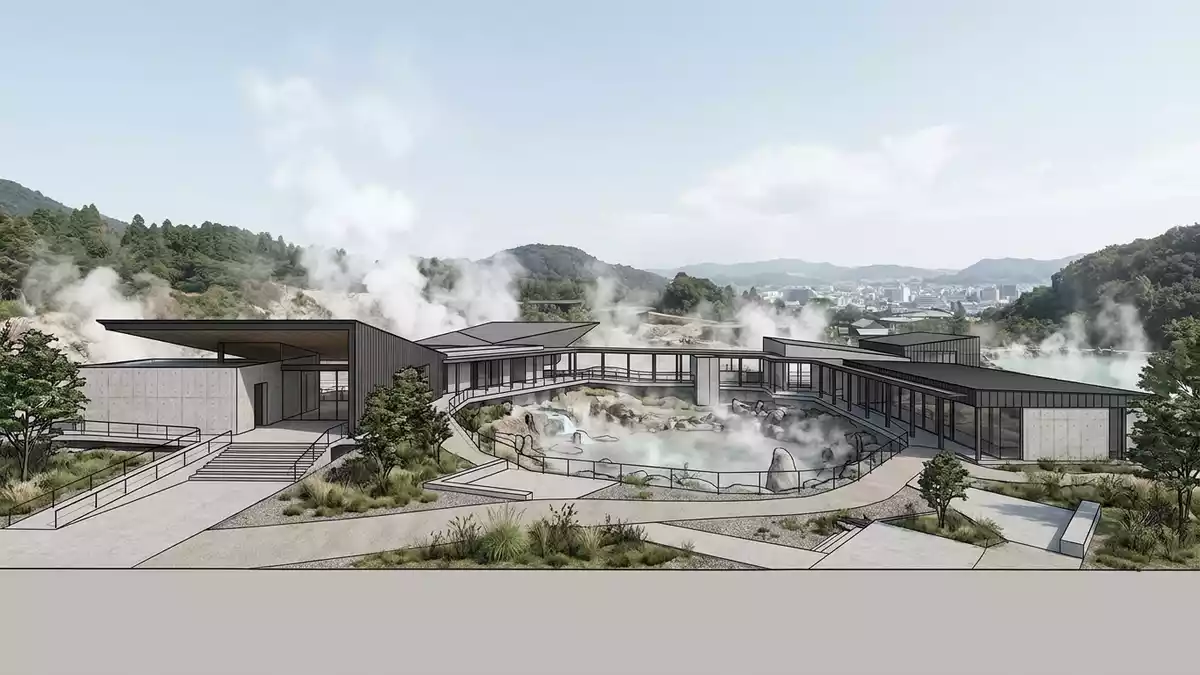
Jigoku Meguri in Beppu, Japan is a circuit of vividly coloured, scalding hot springs presented as a series of “hells”, laid out for viewing rather than bathing along streets and garden paths in the city’s volcanic hills.
Steam, colour and heat on the Beppu hell circuit
The name Jigoku Meguri, literally “hell tour”, refers to a linked set of hot spring sites where water, mud and steam rise from the ground in ponds and vents that are far too hot for soaking. The route is commonly described as a circuit of seven hells, divided between the Kannawa and Shibaseki areas of Beppu, and promoted locally as the Beppu Jigoku Tour.tourist course of seven hells At each stop the geothermal activity is framed as a theatrical scene, with paths, viewing platforms and planted grounds giving visitors clear views of the boiling pools and billowing steam.vividly coloured, scalding hot springs
The hells themselves reach temperatures around the boiling point of water in places, making them a spectacle rather than a spa. Jigoku Meguri has formal recognition as a “Place of Scenic Beauty” in Japan, reflecting the way this concentration of hot springs has been shaped into a landscape attraction in Beppu, a city long associated with onsen culture.nationally designated Place of Scenic Beauty Low fences, planted borders and signposted routes keep visitors at a safe distance while preserving open views of the water, mud and steam.
Kannawa: cobalt blues, bubbling mud and landscaped ponds
Most of the hells on the Jigoku Meguri circuit cluster around Beppu’s Kannawa district, a neighbourhood of streets and slopes where steam rises from vents and chimneys above houses and bathhouses.hot springs in Kannawa and Kamegawa Here Umi Jigoku presents a wide pond of milky blue water with strong venting steam, set within gardens that contrast dense planting with the bare surface of the hot spring.Umi Jigoku milky blue pool Nearby Oniishibozu Jigoku consists of several mud pools, their grey surfaces rising and falling in rounded domes that have long been compared to a monk’s shaved head.
Other Kannawa hells add further variations on heat and colour. Shiraike Jigoku is centred on a pale, milky white pond with a small aquarium at the edge, combining landscaped water with an indoor space.Shiraike Jigoku landscaped milky white pond Kamado Jigoku gathers several ponds in blue, green and red hues around a prominent demon figure, continuing the “hell” theme in statuary and signage while food stalls line parts of the grounds. Oniyama Jigoku is marked by strong steam venting from its pond, and paths around the site give views of the rising vapour against the surrounding slopes.multiple blue, green and red ponds
Shibaseki: blood pond red and a timed geyser
Further north, in Beppu’s Shibaseki district, the Jigoku Meguri circuit continues with two hells that highlight red water and erupting steam. Chinoike Jigoku, often rendered in English as the “Blood Pond Hell”, centres on a pond coloured in a red to orange range by minerals in the hot water, framed by terraces and paths that give wide views of the surface.Chinoike Jigoku blood pond hell Tatsumaki Jigoku is a geyser that erupts at regular intervals, sending a column of hot water and steam upward within a stone-lined setting; seating and barriers mark out the viewing area around it.
The grouping of five hells in Kannawa and two in Shibaseki gives the Jigoku Meguri tour a clear spatial structure, with visitors often beginning at Umi Jigoku before moving through the other sites and then continuing by road to Chinoike Jigoku and Tatsumaki Jigoku.distribution between Kannawa and Shibaseki Together they show different ways geothermal activity can appear on the surface, from still coloured water to bubbling mud and timed eruptions, all within the wider landscape of Beppu’s onsen town.
Jigoku Meguri in Beppu’s wider hot spring landscape
Beppu lies in Oita Prefecture on the island of Kyushu, facing Beppu Bay and backed by hills where steam vents mark the presence of underground water heated by volcanic forces.Beppu in Oita Prefecture on Kyushu The town is widely associated with onsen bathing, with numerous hot spring baths making use of the same geothermal system that feeds the hells. Within this setting Jigoku Meguri stands out as a circuit where the hottest springs are presented as something to look at, rather than as pools to enter.
The entire Jigoku Meguri course has been described as taking around two to two and a half hours to complete when visiting all seven hells in sequence, reflecting the compactness of the circuit within Beppu’s hot spring districts.tour takes two to two and a half hours The combination of formal scenic designation, easily reached sites and clear paths makes Jigoku Meguri one of the most recognisable hot spring landscapes in Japan, showing natural geothermal features framed by urban and garden design.
Visiting Jigoku Meguri: what travellers from Western Europe should know
- Jigoku Meguri is in Beppu City in Oita Prefecture on Kyushu, with the hell sites grouped mainly around the Kannawa and Shibaseki districts reached by local buses from Beppu Station.
- The terrain around the hells consists of paved streets, short slopes and garden paths, with stairs and level changes inside some sites as visitors move between viewing areas.
- The official language is Japanese and the currency is the yen; entry requirements depend on your nationality, UK travellers can check the FCDO travel advice at gov.uk/foreign-travel-advice, Irish travellers the Department of Foreign Affairs at ireland.ie.
Searching for Jigoku Meguri on social platforms
These links open searches for Jigoku Meguri on each platform.Frequently asked questions about Jigoku Meguri
Where is Jigoku Meguri located?
Jigoku Meguri is in Beppu City in Oita Prefecture on the island of Kyushu in Japan, with hell sites mainly around the Kannawa and Shibaseki districts.
What should visitors expect on a Jigoku Meguri tour?
Visitors follow a circuit linking several hot spring sites, viewing coloured ponds, bubbling mud and steam vents from paths and platforms rather than entering the water.
What makes Jigoku Meguri distinctive among hot spring areas?
Jigoku Meguri concentrates very hot springs into a themed scenic circuit, recognised as a Place of Scenic Beauty and shaped for viewing as “hells” instead of for bathing.


