
Jigoku Meguri in Beppu: theatrical hot spring hells
Published on 08/29/2026 at 19:59 | Editorial responsibility: Rafael Müller, Editor-in-Chief AD HOC NEWS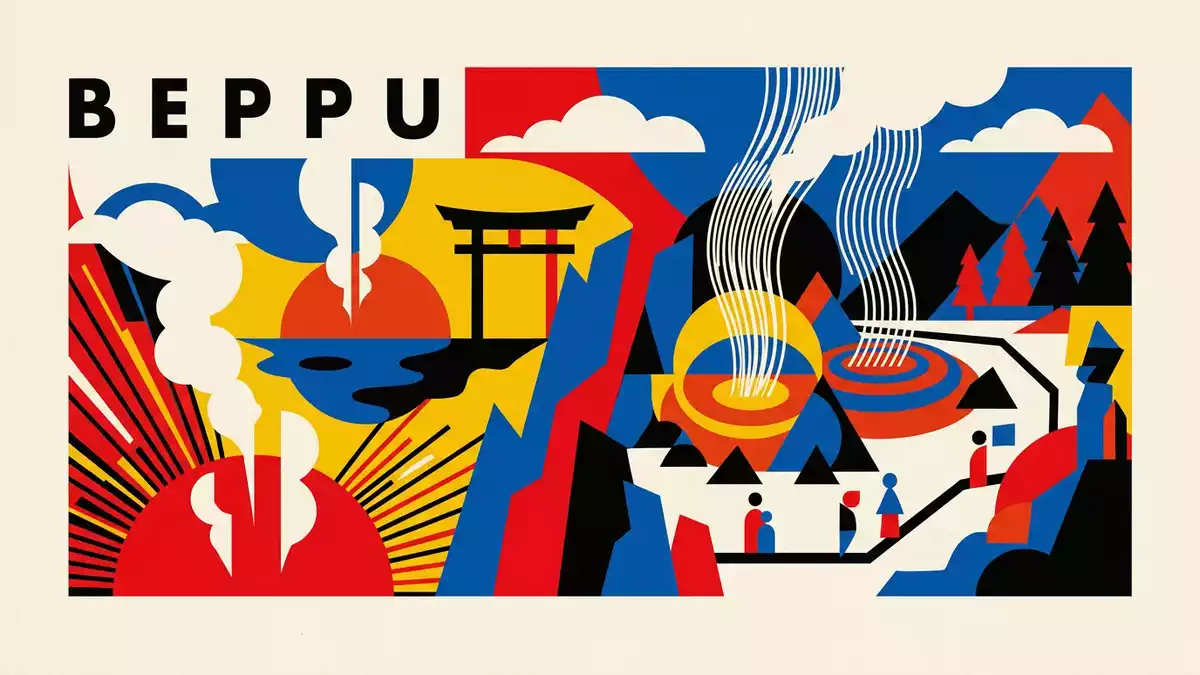
Jigoku Meguri in Beppu on Kyushu is a circuit of vividly coloured, scalding hot springs presented as theatrical “hells”, laid out for viewing rather than bathing.Beppu Jigoku Meguri brings together a group of extreme onsen pools in Oita Prefecture, turning the town’s geothermal power into a dramatic landscape of water, steam and mineral deposits.
Hot spring hells in Kannawa and Shibaseki
Jigoku Meguri is the name used for a sightseeing course of hot springs known as “hells” in Beppu, with the route traditionally dated to a circuit of seven sites.the eight hells of Beppu Five of these hells stand around the Kannawa district, while further springs lie in the Shibaseki area of the city.hells in Kannawa and Shibaseki The course is laid out so travellers can walk between several of the hells along streets and garden paths, with others reached by short local transfers.
The hells themselves take distinct forms, each shaped by temperature, dissolved minerals and gas. Umi Jigoku, Sea Hell, is known for a striking blue hot spring set within landscaped grounds, one of the most recognisable pools in the circuit.Umi Jigoku Sea Hell Chinoike Jigoku, Blood Pond Hell, is a red-tinted pool where iron-rich water has stained the surface and the surrounding rock, while Tatsumaki Jigoku, Tornado Hell, centres on a regularly erupting geyser.Sea Hell, Blood Pond Hell and Tornado Hell
A circuit built around extremes of water and steam
The Beppu Jigoku Meguri course gathers several types of geothermal feature: open pools of near-boiling water, thick mud springs and vents where steam escapes under pressure.temperatures of the seven hells Oniishi Bozu Jigoku is a cluster of bubbling grey mud pools surrounded by volcanic rock, their surfaces rising and collapsing in rounded domes. Shiraike Jigoku, White Pond Hell, takes its name from pale milky water in a landscaped pond, with an attached small aquarium making use of warm conditions.
Other hells add animal life or movement to the picture. Oniyama Jigoku is associated with strong steam vents and enclosures where crocodiles are kept, drawing attention to the contrast between a tropical species and the temperate surroundings.Oniyama Jigoku crocodiles Kamado Jigoku, Cooking Pot Hell, presents several pools of differing colours in one area, alongside statues and stalls that use geothermal heat to prepare food, connecting the spectacle of steam with everyday uses of hot spring energy in the town.
Beppu, Kyushu and the culture of onsen hells
Jigoku Meguri sits within Beppu City in Oita Prefecture on Kyushu, one of Japan’s principal hot spring regions.hells in Beppu City Beppu is known for extensive geothermal activity, with onsen districts where plumes of steam rise between houses and guesthouses. Within this context, the hells are distinguished by the fact that their waters are kept for display rather than soaking, with temperatures recorded around or above the boiling point for water at the surface.
The route combining these springs is described as Beppu Jigoku Meguri, literally a “hell tour”, and has become a defined sightseeing course, separate from bathhouses and ordinary public onsen.Beppu Hell Tour course The circuit is structured so that several hells such as Umi Jigoku and Oniishi Bozu Jigoku can be visited on foot within the Kannawa area, with the remaining sites linked by local transport. Together they form a concentrated display of volcanic energy: blue and white pools, red water, mud bubbles and periodic geyser eruptions within a single organised route through the town.
Visiting Jigoku Meguri: what travellers from Western Europe should know
- Jigoku Meguri is in Beppu City in Oita Prefecture on Kyushu, with the hell sites grouped mainly around the Kannawa and Shibaseki districts of the town.
- Several hells lie within walking distance of one another in the Kannawa district, while others in Shibaseki are reached by short transfers along urban roads.
- The terrain within the hell sites consists of paved paths, garden areas and occasional stairways, with ground-level viewpoints close to the pools and mud springs.
- Beppu is served by regional rail on the Nippo Line and road connections across Oita Prefecture, with local buses running to the onsen districts.
- The official language is Japanese and the currency is the yen.
Searching for Jigoku Meguri on social platforms
These links open searches for Jigoku Meguri on each platform.
Frequently asked questions about Jigoku Meguri
Where is Jigoku Meguri located?
Jigoku Meguri is in Beppu City in Oita Prefecture on Kyushu, with hell springs grouped around the Kannawa and Shibaseki districts.
What should visitors expect on a visit?
Visitors encounter extremely hot hot spring pools, mud springs and steam vents arranged as named hells, viewed from paths and gardens rather than used for bathing.
What makes Jigoku Meguri distinctive among Japanese onsen areas?
The circuit concentrates blue, white and red pools, bubbling mud and a geyser into a single organised route, emphasising geothermal spectacle instead of bathing facilities.


