
Jigoku Meguri in Beppu and its seven hot spring hells
Published on 09/17/2026 at 15:53 | Editorial responsibility: Rafael Müller, Editor-in-Chief AD HOC NEWS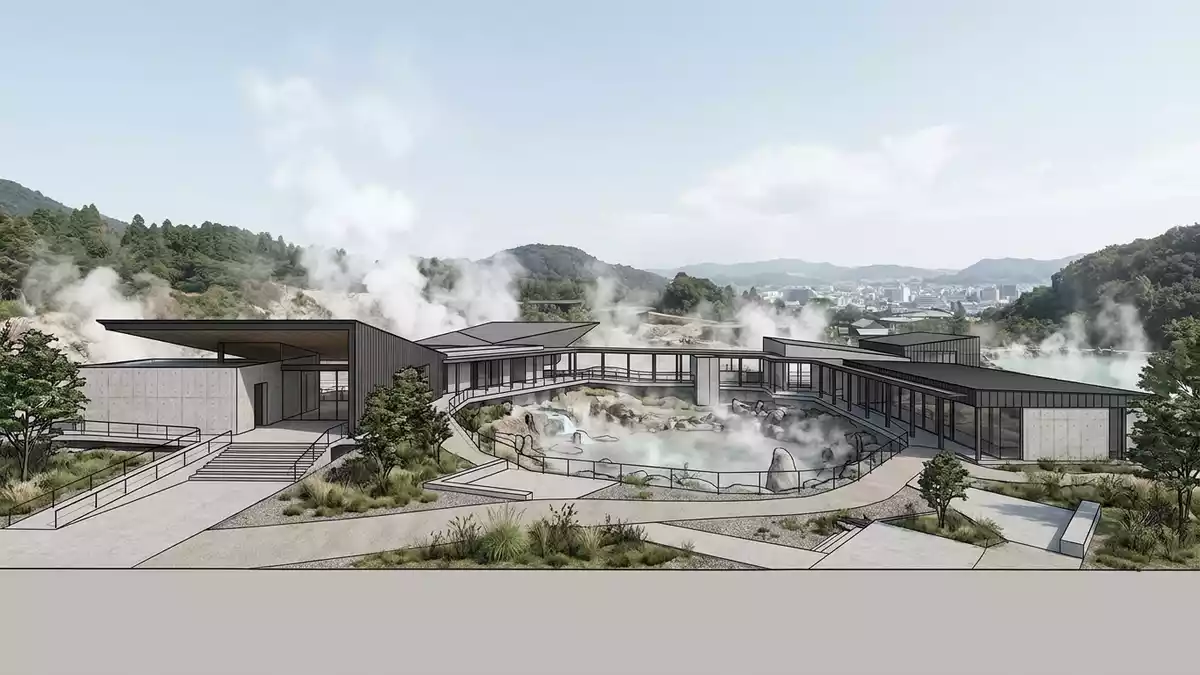
Jigoku Meguri in Beppu is a circuit of hot spring sites where boiling pools, mud, steam and mineral colours replace the usual image of a bathing onsen. The route is tied to Beppu, Oita Prefecture, on Kyushu, and the name means “hell tour”.
Seven geothermal sites across Beppu
The best-known form of Jigoku Meguri brings together seven hells, each with its own visible character. The Beppu Jigoku Association has long presented the tour as a linked group, and the sites sit in the Kannawa and Shibaseki areas.seven hells
Umi Jigoku is remembered for blue water; Chinoike Jigoku for red-toned mineral water; Shiraike Jigoku for a pale pool; and Oniishibozu Jigoku for bubbling grey mud. Tatsumaki Jigoku adds a geyser, while Kamado Jigoku and Oniyama Jigoku complete the circuit with their own steaming basins and surrounding displays.geothermal sites
From bathing waters to viewing grounds
The hells are part of Beppu’s wider hot-spring landscape, but they are not ordinary baths. Their appeal lies in what can be seen at ground level: water that bubbles, mud that heaves and vapour that hangs above the basins.
That visual character has made Jigoku Meguri one of the city’s defining cultural routes. The name itself keeps the older, more dramatic vocabulary of the landscape, and the sites present heat as a spectacle rather than a place for immersion.Beppu’s Jigoku
Why the hells remain distinct
What makes the route memorable is the variety packed into a single district. Blue, red, grey and white surfaces appear within one visitor circuit, and the contrast between pools and steam is visible from site to site.
That range gives each hell a separate identity without breaking the unity of the whole tour. Beppu’s wider geothermal setting explains the abundance of hot springs, while Jigoku Meguri turns that setting into a sequence of named places.
Visiting Jigoku Meguri: what travellers from Western Europe should know
- The sites lie in Beppu, in the Kannawa and Shibaseki areas. Beppu Station is the usual rail reference point, and local buses connect the districts.
- The ground around the hells is geothermal and paved in sections, with steam, stone paths and viewing edges. The circuit includes several separate sites rather than a single enclosed attraction.
- English is not an official language in Japan. The official language is Japanese and the currency is the Japanese yen.
- Entry requirements depend on your nationality; UK travellers can check the FCDO travel advice at gov.uk/foreign-travel-advice, Irish travellers the Department of Foreign Affairs at ireland.ie.
- The tour is organised as a sequence of named pools and vents. The differences between them are part of the appeal, especially where colour and texture change from one stop to the next.
Searching for Jigoku Meguri on social platforms
These links open searches for Jigoku Meguri on each platform.
Frequently asked questions about Jigoku Meguri
Where is Jigoku Meguri?
It is in Beppu, Oita Prefecture, on Kyushu in Japan. The hells are spread across the Kannawa and Shibaseki areas.
What can be seen on a visit?
The route brings together steaming pools, coloured water, bubbling mud and a geyser. Each site has a distinct surface and a separate name.
What makes Jigoku Meguri distinctive?
It presents hot springs as a linked set of viewing sites rather than bathing pools. The mix of colour, steam and volcanic ground gives the circuit its character.


