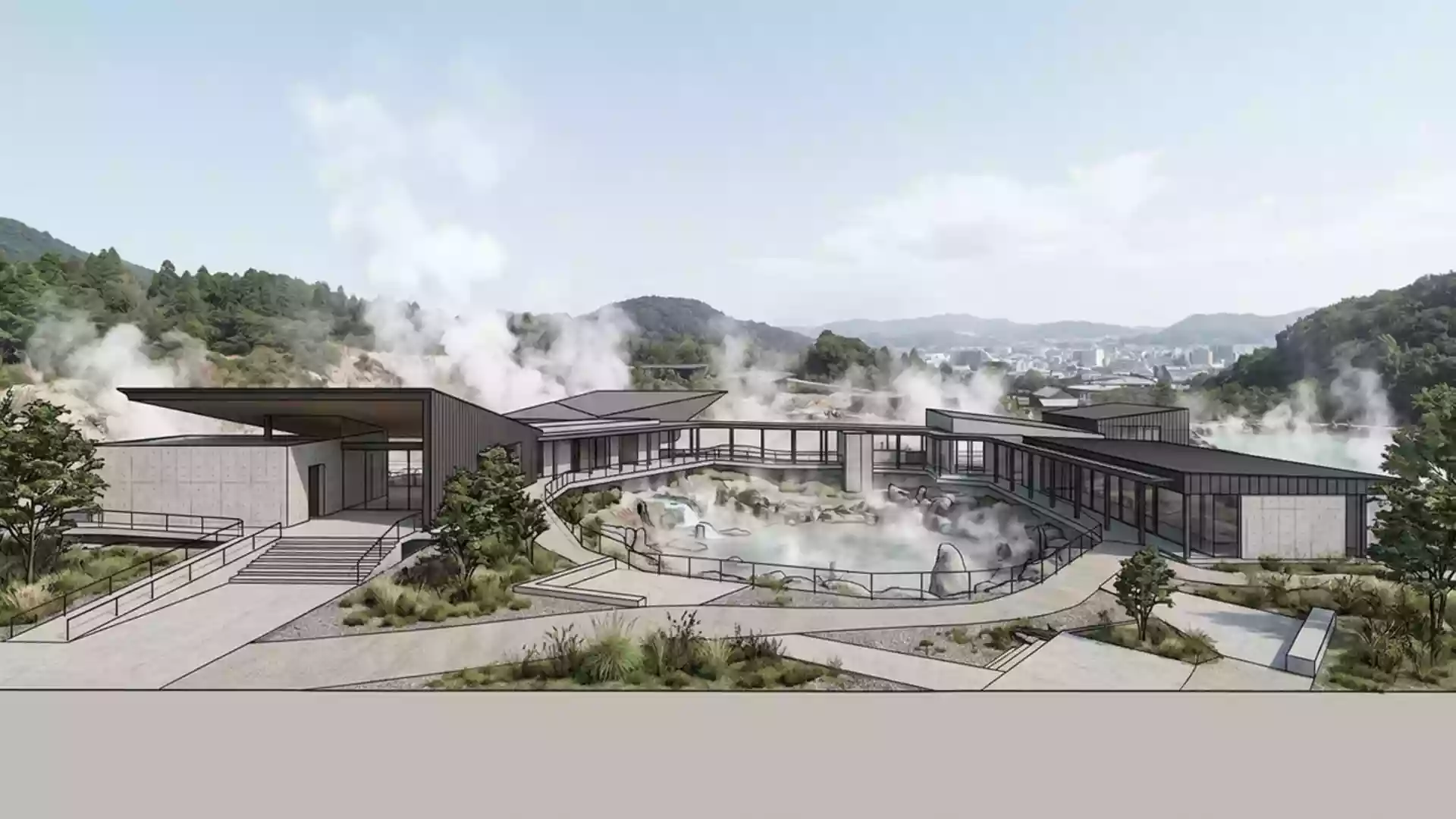
Jigoku Meguri and the hot-spring landscapes of Beppu
Published on 09/02/2026 at 17:16 | Editorial responsibility: Rafael Müller, Editor-in-Chief AD HOC NEWS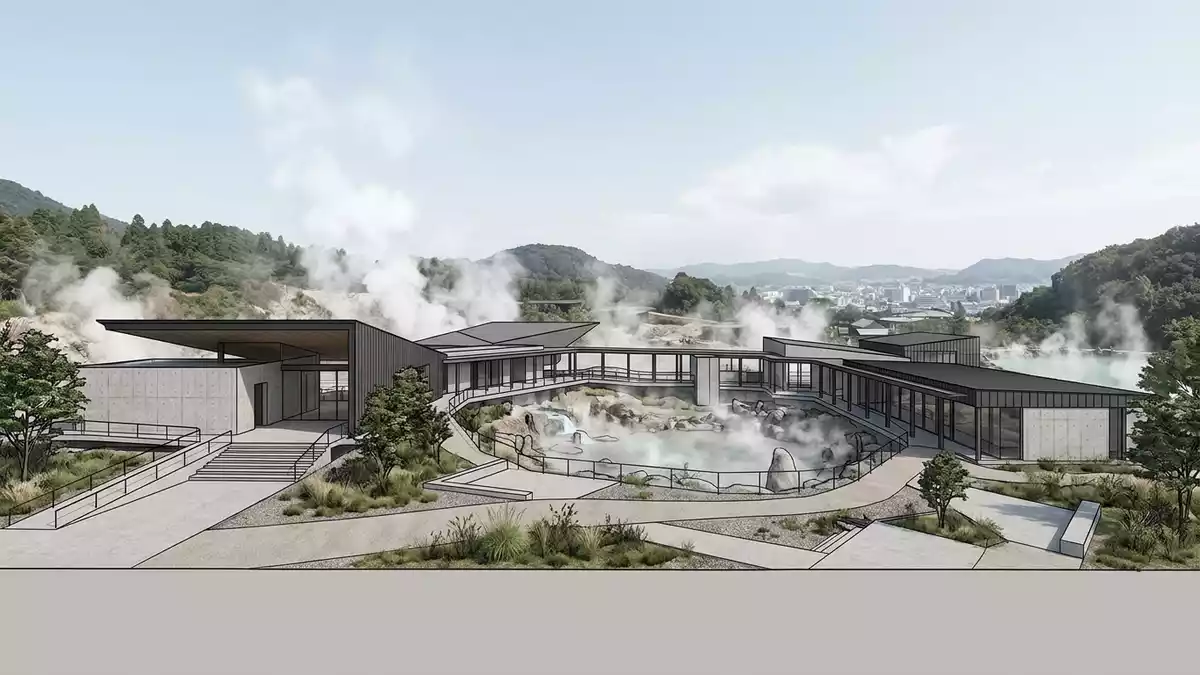
Jigoku Meguri in Beppu is a circuit of hot-spring sites built around steam, mineral colours and near-boiling water. The name is tied to Kannawa, Beppu, and the wider onsen landscape of Kyushu, where the place sits within a long hot-spring tradition.
Beppu’s hells in colour and steam
The best-known image is visual rather than architectural: pools, vents and mud in strong colours, with steam rising from the ground. The official Beppu Jigoku Meguri site describes seven hells, and the route is associated with Umi Jigoku, Chinoike Jigoku, Tatsumaki Jigoku, Shiraike Jigoku, Kamado Jigoku, Oniyama Jigoku and Oniishi Bozu Jigoku.
Some of the most distinctive names are linked to the place itself. Umi Jigoku is the blue pool, Chinoike Jigoku is the red clay pond, and Tatsumaki Jigoku is the geyser that releases bursts of hot water and steam at intervals. The official English pamphlet gives the most direct outline of the route and its individual sites.
The names, the setting and the first tours
The place is closely associated with Beppu’s wider volcanic terrain and with the long use of hot springs in the area. A municipal tourism brochure traces the organised sightseeing route to the late Meiji period and names Aburaya Kumahachi as the founder of Beppu sightseeing, linking the modern tour with the district’s established onsen identity.
Another stable reference point is the naming tradition itself. The term jigoku appears in connection with Beppu’s hot springs in older historical and religious language, and the landscape has long been read through ideas of heat, danger and visible geothermal force. The government note on the name connects the word with Buddhist hell imagery and with the old eruption record of Mount Tsurumi in 867.
How the circuit works as a place
Jigoku Meguri is not a bathing complex. It is a sightseeing route built around hot springs that are viewed rather than used for immersion, and the individual sites differ in colour, texture and form.
That variety gives the circuit its interest. One hell may present a blue pond, another a red clay surface, another grey bubbling mud, and another a geyser that sends up water and steam. The site overview offers a clear map of those contrasts, while the official site identifies the seven sites and the national scenic status of selected hells.
Visiting Jigoku Meguri: what travellers from Western Europe should know
- Jigoku Meguri is in Beppu’s Kannawa area, with further sites in Kamegawa. Beppu Station is the main rail reference point, and local buses serve the hot-spring district.
- The terrain is geothermal rather than alpine. Steam, hot water and mud appear close to the paths, and the site includes outdoor viewing areas rather than a single enclosed building.
- English is used in visitor-facing material, and the official language is Japanese. The currency is the Japanese yen.
- The route combines several named hells, so the place works as a circuit rather than a single pool. The names themselves are part of the experience: blue, red, grey and white surfaces appear across the sites.
- Entry requirements depend on your nationality; UK travellers can check the FCDO travel advice at gov.uk/foreign-travel-advice, Irish travellers the Department of Foreign Affairs at ireland.ie.
Searching for Jigoku Meguri on social platforms
These links open searches for Jigoku Meguri on each platform.
Frequently asked questions about Jigoku Meguri
Where is Jigoku Meguri?
It is in Beppu, on Kyushu in Japan, with the main sightseeing area centred on Kannawa and additional sites in Kamegawa. The circuit is closely linked to the city’s onsen district.
What does a visit involve?
It involves moving between several hot-spring sites and viewing their steam, water and mud from paths and viewing points. It is a sightseeing route rather than a bathing venue.
What makes it distinctive?
The variety of colours and geothermal forms is the defining feature. Blue, red, white and bubbling surfaces appear across the different hells, and the names are part of the landscape itself.