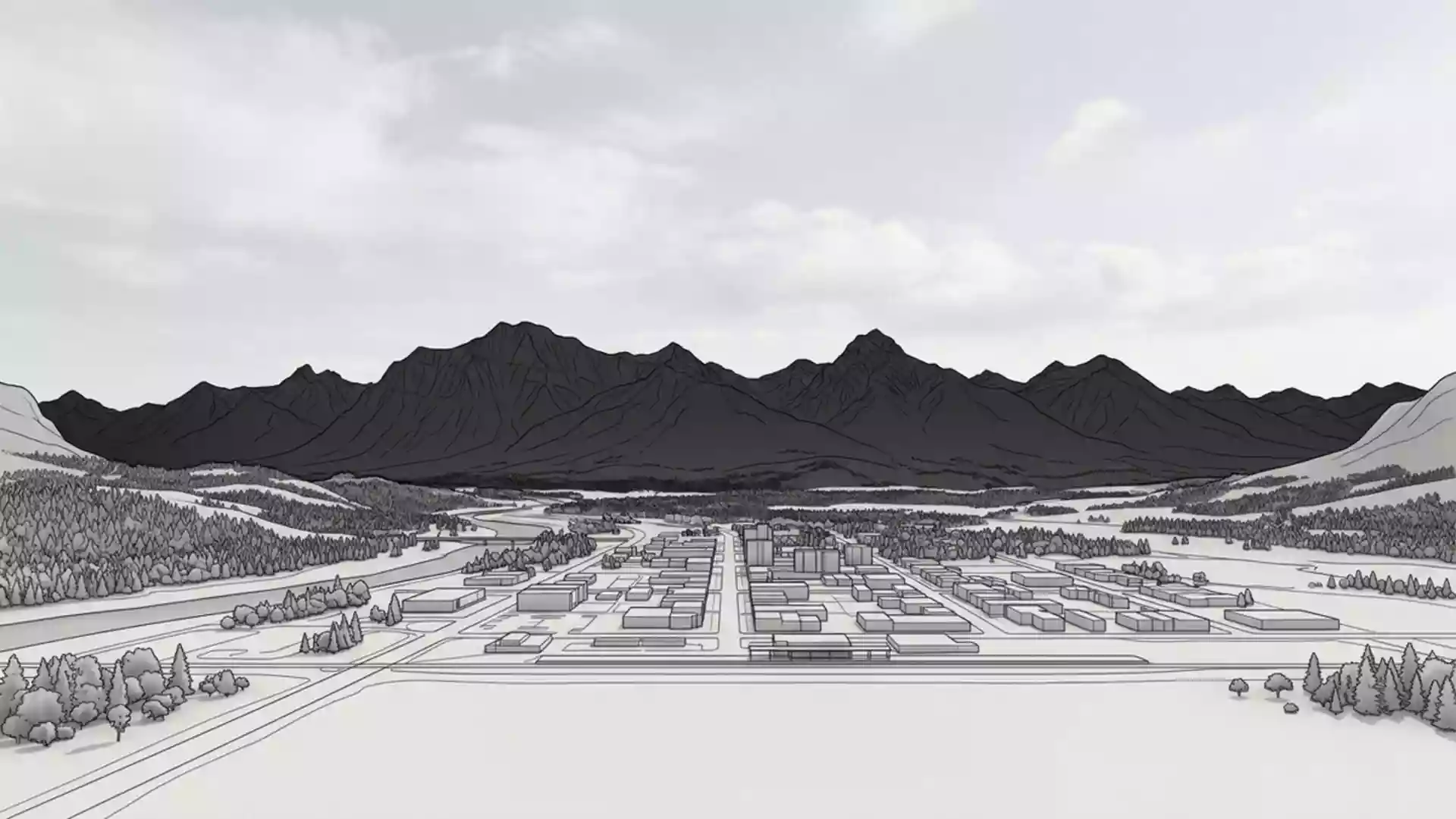
Jasper National Park, where icefields meet alpine lakes
Published on 09/15/2026 at 12:33 | Editorial responsibility: Rafael Müller, Editor-in-Chief AD HOC NEWS
Jasper National Park in Alberta is a vast Rocky Mountain landscape where broad valleys, glaciers, lakes and high peaks spread around the small town of Jasper. The park was established as Jasper Forest Park in 1907, giving it an early twentieth-century origin that still shapes its protected status in western Canada. Today it forms part of the Canadian Rocky Mountain Parks World Heritage site, a designation that highlights both its scale and the variety of mountain terrain contained within its boundaries.
A mountain park on the eastern flank of the Rockies
Jasper National Park lies along the eastern slopes of the Rocky Mountains in western Alberta, north of Banff National Park and west of Edmonton, in a position where the ranges rise in successive ridges above long glacial valleys.Situated in western Alberta The protected area spans about 10,878 square kilometres (4,200 square miles), making it the largest of the national parks in the Canadian Rockies and giving visitors room to encounter different landscapes without leaving the park boundary.Jasper spans 4,200 square miles
Within this expanse the park encompasses forests, alpine meadows, rivers and broad glacial valleys, each shaped by past ice and present climate. Valleys cut through the mountains in wide troughs typical of glacial erosion, while river systems such as the Athabasca and Smoky find their sources within the park’s high basins.Athabasca River and Smoky River originate The setting around Jasper town brings these elements together, with wooded lower slopes rising into craggy summits that form the backdrop to daily life.
Glaciers, icefields and the Maligne Valley
One of Jasper National Park’s defining features is the presence of extensive icefields and valley glaciers in its high country, particularly the Columbia Icefield, which straddles the boundary between Jasper and its neighbouring parks.The park boundaries encompass an area From this plateau of ice descend tongues such as the Athabasca Glacier, whose meltwater feeds rivers and lakes downstream and makes the transition from frozen summit plateau to flowing valley water visible within a single journey.The Columbia Icefield forms one of the park’s strongest visual signatures
To the south-east of Jasper, the Maligne Valley offers a textbook example of a glaciated U?shaped valley, carved by past valley glaciers that once occupied its entire length.The Maligne Valley is over 36 miles long Maligne Lake lies within this valley, the largest lake in Jasper National Park, stretching for about 23 kilometres (14 miles) between steep, forested slopes.Maligne Lake is the largest lake in Jasper Park The lake has been dammed at its northern end by an end moraine left by the last glacier, so its calm water today is a direct consequence of the ice that once filled the valley. From viewpoints along its shores, islands and distant peaks form a classic Canadian Rockies scene.
A protected landscape with a century of history
Jasper Forest Park was formally established on 14 September 1907 under the Government of Canada, reflecting an era when rail expansion and settlement brought increased attention to the Rocky Mountains as a landscape to preserve.It was established as Jasper Forest Park in 1907 In 1930 the area was given national park status with its present size, consolidating earlier protection into a defined conservation mandate that now falls under the IUCN category II designation for national parks.In 1930 it was declared a national park The park takes its name from Jasper Hawes, a nineteenth?century manager of Jasper House, a trading post on the Athabasca River.
In 1984 Jasper was inscribed as part of UNESCO’s Canadian Rocky Mountain Parks World Heritage site, alongside Banff, Yoho and Kootenay National Parks.UNESCO declared the Canadian Rocky Mountain Parks a World Heritage Site in 1984 The designation recognises both its outstanding natural beauty and its intact mountain ecosystems, where broad valleys, rugged peaks, glaciers and forests form a continuous protected landscape.Jasper spans broad valleys, rugged mountains and glaciers Within the park, the Jasper Park Information Centre in Jasper town, built in 1913–14, stands as an early example of rustic park architecture and functions as a focal point for orientation before travellers disperse into the surrounding mountains.Jasper Park Information Centre was built in 1913–14
Visiting Jasper National Park: what travellers from Western Europe should know
- Jasper National Park surrounds the town of Jasper in western Alberta; it lies along the eastern slopes of the Canadian Rockies and is reached by road and railway from other parts of the province.
- Terrain in the park includes broad valleys, steep mountain slopes and high passes, so excursions may involve walking on uneven ground, crossing rocky sections and dealing with noticeable changes in elevation.
- Water features such as Athabasca Falls, cold lakes and glacial outwash streams appear throughout the park, and paths near them can include wet rock and spray?affected sections that call for sure footing.
- The official languages of Canada are English and French, and the currency is the Canadian dollar.
- Entry requirements depend on your nationality; UK travellers can check the FCDO travel advice at gov.uk/foreign-travel-advice, Irish travellers the Department of Foreign Affairs at ireland.ie.
Searching for Jasper National Park on social platforms
These links open searches for Jasper National Park on each platform.Frequently asked questions about Jasper National Park
Where is Jasper National Park located?
Jasper National Park is in western Alberta, along the eastern slopes of the Canadian Rockies, surrounding the town of Jasper and lying north of Banff National Park.
What can visitors expect on a visit to Jasper National Park?
Visitors encounter broad forested valleys, rivers, lakes and prominent mountain peaks, along with features such as the Columbia Icefield, Athabasca Glacier and the long Maligne Valley.
What makes Jasper National Park distinctive among Canada’s mountain parks?
Its combination of large area, extensive glacial landforms, the Maligne Lake basin and its inclusion in the Canadian Rocky Mountain Parks World Heritage site gives Jasper a distinctive protected mountain landscape.