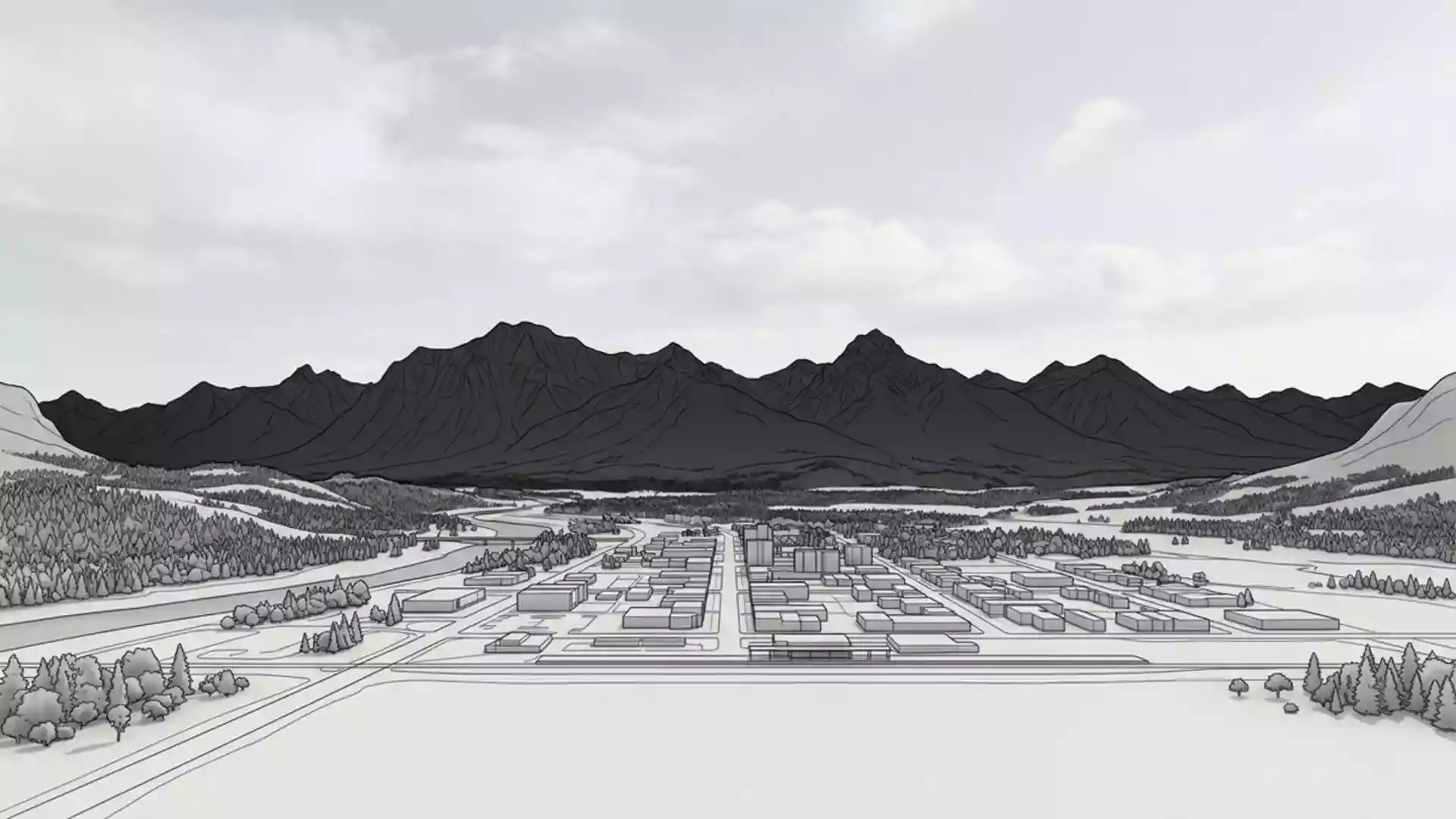
Jasper National Park and the wide valleys of the Canadian Rockies
Published on 09/09/2026 at 06:37 | Editorial responsibility: Rafael Müller, Editor-in-Chief AD HOC NEWS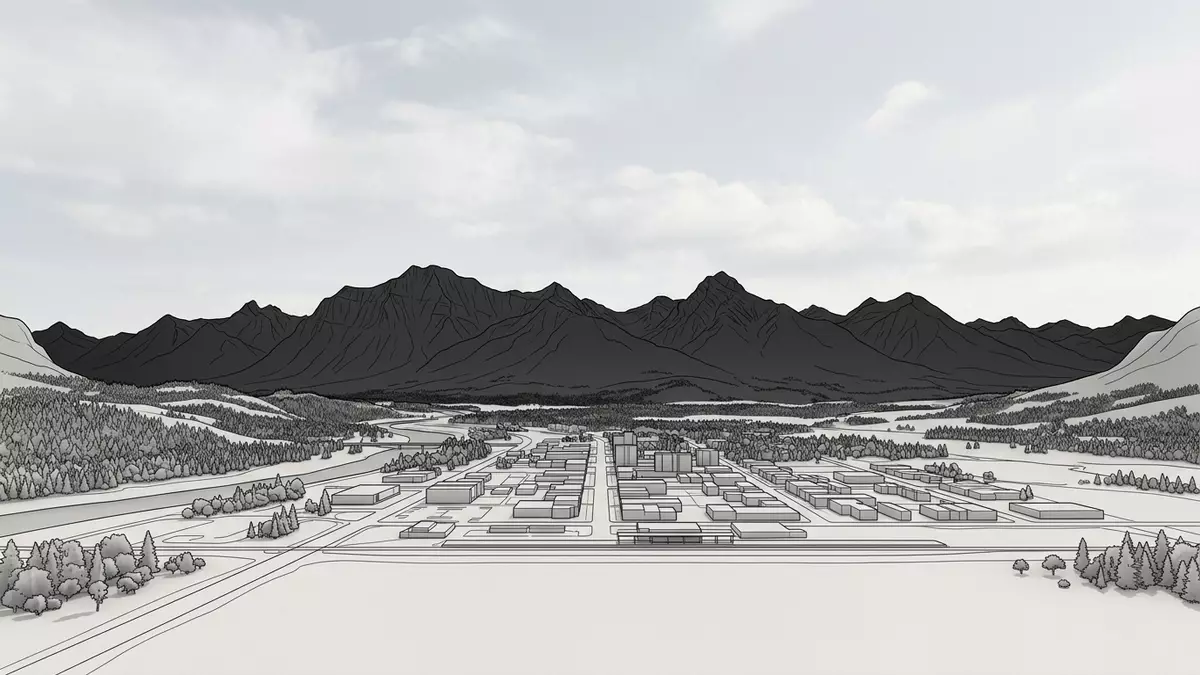
Jasper National Park in Alberta’s Canadian Rockies unfolds as a landscape of broad river valleys framed by steep mountain ranges, with the town of Jasper sitting within this protected terrain. The park was first set aside as Jasper Forest Park in 1907 and later given national park status in 1930, anchoring it firmly in the history of Canada’s protected areas.
Broad valleys under high peaks
Jasper National Park spans an extensive section of the Rocky Mountains in western Alberta, with its boundaries reaching towards British Columbia along parts of the western edge and meeting Banff National Park to the south.spans over 11,000 km2 The town of Jasper lies inside the park, in one of the main valleys that cut through the surrounding ranges.the town of Jasper is located within the park’s boundaries
The mountain ranges in Jasper National Park run broadly northwest to southeast, forming a pattern of parallel ridges divided by long valleys.ranges running parallel to one another Many of the summits rise well above 3,000 m (9,843 ft), with Mount Columbia reaching 3,782 m (12,405 ft) and marking the highest point in Alberta.Mt. Columbia, the highest peak in Alberta, is 3782 metres Elevation within the park drops to around 985 m (3,232 ft) near the eastern gate, giving the protected area a pronounced vertical range from valley floor to high summit.range in altitude from about 985 metres to nearly 3800 metres
Ice, rivers and the structure of the landscape
Glaciers, rivers and lakes are central to how Jasper National Park is arranged, with the Athabasca River and its tributaries draining most of the protected area.the Athabasca River and its tributaries drain more than four-fifths of the park From the toe of the Columbia Glacier the Athabasca flows north and east through the park, joined by several other rivers before leaving the mountains and continuing towards the Arctic Ocean basin.from the toe of the Columbia Glacier the Athabasca flows north and east The section of the Athabasca that lies inside Jasper National Park has been recognised as a Canadian Heritage River, underlining its role in the country’s natural and historical geography.designated as a Canadian Heritage River
The park holds glaciers of the Columbia Icefield along its southern reaches, springs, lakes, waterfalls and steep canyons, giving its valleys a distinct mix of water and rock features.glaciers of the Columbia Icefield, springs, lakes, waterfalls and mountains Geologically, the main ranges are built from sandstone, limestone, shale and quartzite, including a notable unit locally termed Gog quartzite, which weathers into sharp ridges and broken slopes.coarse sandstone, limestone, shale, and quartzite The alignment of the westernmost range marks the continental divide, splitting streams that eventually reach the Arctic Ocean and Hudson Bay from those that flow to the Pacific, a physical boundary that is easy to trace on any map of western Canada.forms the continental divide
Protected status, ecosystems and human history
Jasper Forest Park was created on 14 September 1907 under federal authority to safeguard the watersheds and forested slopes of this part of the Rockies.set aside as the Jasper Forest Park of Canada an area of 12,950 km2 In 1930 the area was formally declared a national park, giving Jasper National Park its present status within Canada’s national park system.declared a national park in 1930 The protected landscapes were later included in the Canadian Rocky Mountain Parks, a transboundary group of national and provincial parks that together were inscribed as a UNESCO World Heritage Site in 1984 for their mountain peaks, glaciers, lakes and deeply incised canyons.declared a UNESCO World Heritage Site in 1984
Ecologically, Jasper National Park is described in terms of three broad life zones: montane, subalpine and alpine.divided into three life zones - montane, subalpine, alpine Montane valleys carry forests of Douglas fir and lodgepole pine along with trembling aspen, balsam poplar, black cottonwood, white birch and white spruce, while higher slopes and basins move into subalpine and finally alpine vegetation.Douglas fir and lodgepole pine are numerous Human history in the area reaches back to early nineteenth century fur traders, who followed the Athabasca River and neighbouring passes, and later to railway builders and town planners who worked within the expanding framework of the park.an alpine wonderland first seen by pioneer fur-traders
Visiting Jasper National Park: what travellers from Western Europe should know
- Jasper National Park lies in western Canada on the eastern slopes of the Rocky Mountains in Alberta, with the town of Jasper located inside the park and road access from other communities along the highway network.
- The terrain combines high mountain passes and deep valleys, with steep slopes and uneven ground in many areas; routes away from the valley floors can involve significant elevation change.
- In winter months snow reaches down into the valleys and covers mountain approaches, while in summer alpine areas can remain snow-covered and exposed above the treeline.
- English and French are Canada’s official languages and the currency is the Canadian dollar.
- Entry requirements depend on your nationality; UK travellers can check the FCDO travel advice at gov.uk/foreign-travel-advice, Irish travellers the Department of Foreign Affairs at ireland.ie.
Searching for Jasper National Park on social platforms
These links open searches for Jasper National Park on each platform.Frequently asked questions about Jasper National Park
Where is Jasper National Park?
Jasper National Park is in western Alberta, Canada, on the eastern side of the Rocky Mountains, with the town of Jasper located inside its boundaries.
What should visitors expect on a first visit?
Visitors encounter wide valleys, high mountain ranges, extensive forests and prominent rivers, with significant changes in elevation between the valley floors and the surrounding peaks.
What makes Jasper National Park distinctive among Canada’s parks?
Its combination of large mountain ranges, the Athabasca River system, glaciers of the Columbia Icefield and inclusion in the Canadian Rocky Mountain Parks World Heritage Site gives Jasper National Park a particular profile.