
Jameos del Agua turns a lava tube into architecture
Published on 09/23/2026 at 06:19 | Editorial responsibility: Rafael Müller, Editor-in-Chief AD HOC NEWS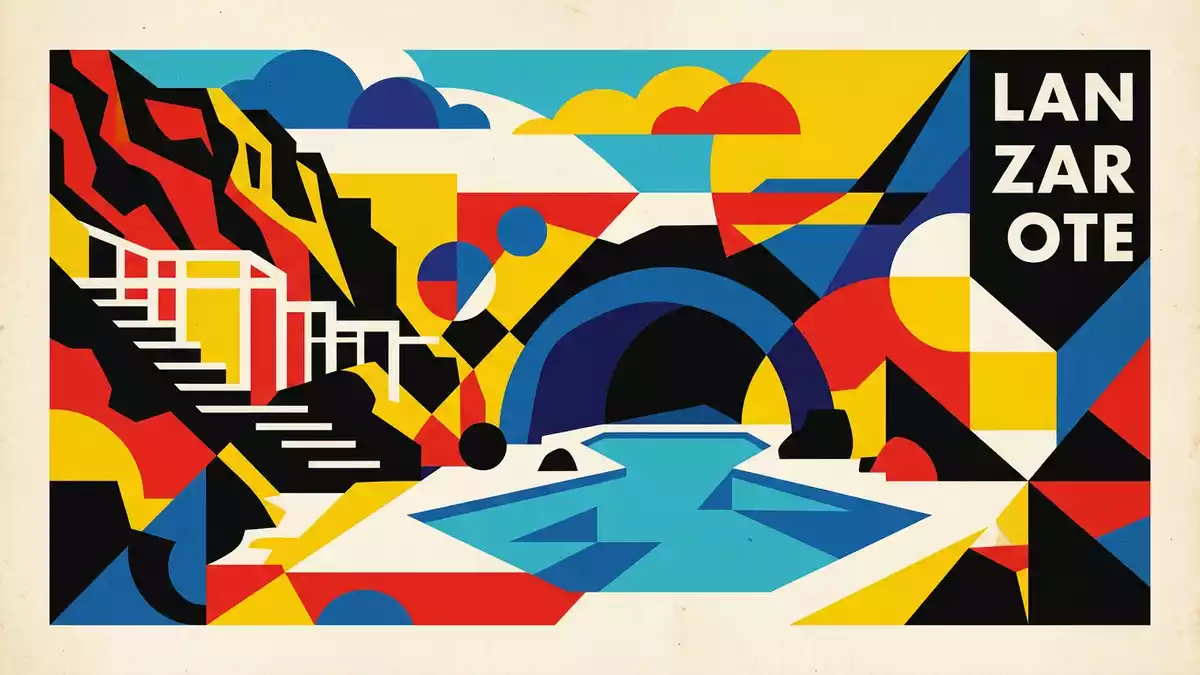
Jameos del Agua occupies a section of the La Corona volcanic tube in northern Lanzarote. Dark basalt, seawater, gardens and white architectural surfaces appear together along a route shaped by César Manrique, creating a place where the cave remains the dominant form.
Jameos del Agua and the La Corona lava tube
The name refers to openings formed when sections of a volcanic tube roof collapsed. Jameos del Agua belongs to the La Corona system, created by volcanic activity thousands of years ago and extending from the cone towards the Atlantic. The nearby Cueva de los Verdes shares this geological origin. La Corona volcanic tube remains visible through the exposed chambers, dark rock surfaces and submerged passages.
The route includes Jameo Chico, Jameo Grande and the area known as Jameo de la Cazuela. These names describe separate parts of the cave complex rather than detached buildings. The volcanic tube continues beneath the coast through the section known as the Atlantis Tunnel.
César Manrique’s architecture among basalt walls
César Manrique began the first interventions at Jameos del Agua between 1964 and 1966. The first Centre of Art, Culture and Tourism created by Manrique opened here in 1968, and the intervention was completed in 1977. the first architectonic attraction combines paths, platforms, planting and furnishings with the existing volcanic surfaces.
The entrance descends through Jameo Chico towards an underground lake. A narrow walkway follows the water before the route rises towards Jameo Grande, where a garden, palm trees, cacti and a white pool occupy an open section of the cave. The contrast between black basalt, green planting and white surfaces is one of the complex’s clearest visual features.
Jameos del Agua is also associated with the artist Jesús Soto and with the craftspeople, technicians and workers who contributed to the project. Manrique’s name identifies the design, but the finished place contains many kinds of work, from masonry and planting to furniture and lighting.
Lake, auditorium and Casa de los Volcanes
The underground lake contains the blind crab Munidopsis polymorpha, an endemic species adapted to darkness. Small pale shapes can be seen in the water, while the lake’s connection with the sea gives the chamber a changing relationship with tides. The aquatic habitat forms part of the Los Jameos Site of Scientific Interest.
At Jameo Grande, the route reaches an outdoor garden and a pool set against the volcanic walls. A staircase rises towards the restaurant and Casa de los Volcanes, a museum dedicated to volcanic landscapes, the La Corona tube and the Lanzarote and Chinijo Archipelago Geopark.
The auditorium occupies another volcanic chamber. Its walls and vaulted ceiling are natural rock, while seats follow the ground’s slope. The space is also used for performances, giving Jameos del Agua a cultural function alongside its geological and architectural character. the first interventions began in Jameo Chico before the larger chambers and auditorium were completed.
Visiting Jameos del Agua: what travellers from Western Europe should know
- Jameos del Agua lies in northern Lanzarote, in the municipality of Haría. The Arrieta–Órzola road passes the site, and the complex is reached by road.
- The route descends over volcanic stone, crosses beside the underground lake and rises through the cave. Changes in level and uneven paving form part of the permanent layout.
- The site combines an underground lake, Jameo Grande, an auditorium, gardens, a restaurant and the Casa de los Volcanes museum.
- The official language is Spanish and the currency is the euro.
Searching for Jameos del Agua on social platforms
These links open searches for Jameos del Agua on each platform.Frequently asked questions about Jameos del Agua
Where is Jameos del Agua?
Jameos del Agua is in northern Lanzarote, within the municipality of Haría. It occupies part of the La Corona volcanic tube near the Atlantic coast.
What can visitors expect inside?
The route passes through volcanic chambers, an underground lake, Jameo Grande, a garden, a pool and an auditorium. The Casa de los Volcanes adds museum rooms about volcanoes and the local landscape.
What makes Jameos del Agua distinctive?
The place combines a natural lava tube with César Manrique’s architecture. Basalt walls, seawater, planting, cultural spaces and the endemic blind crab share one connected setting.


