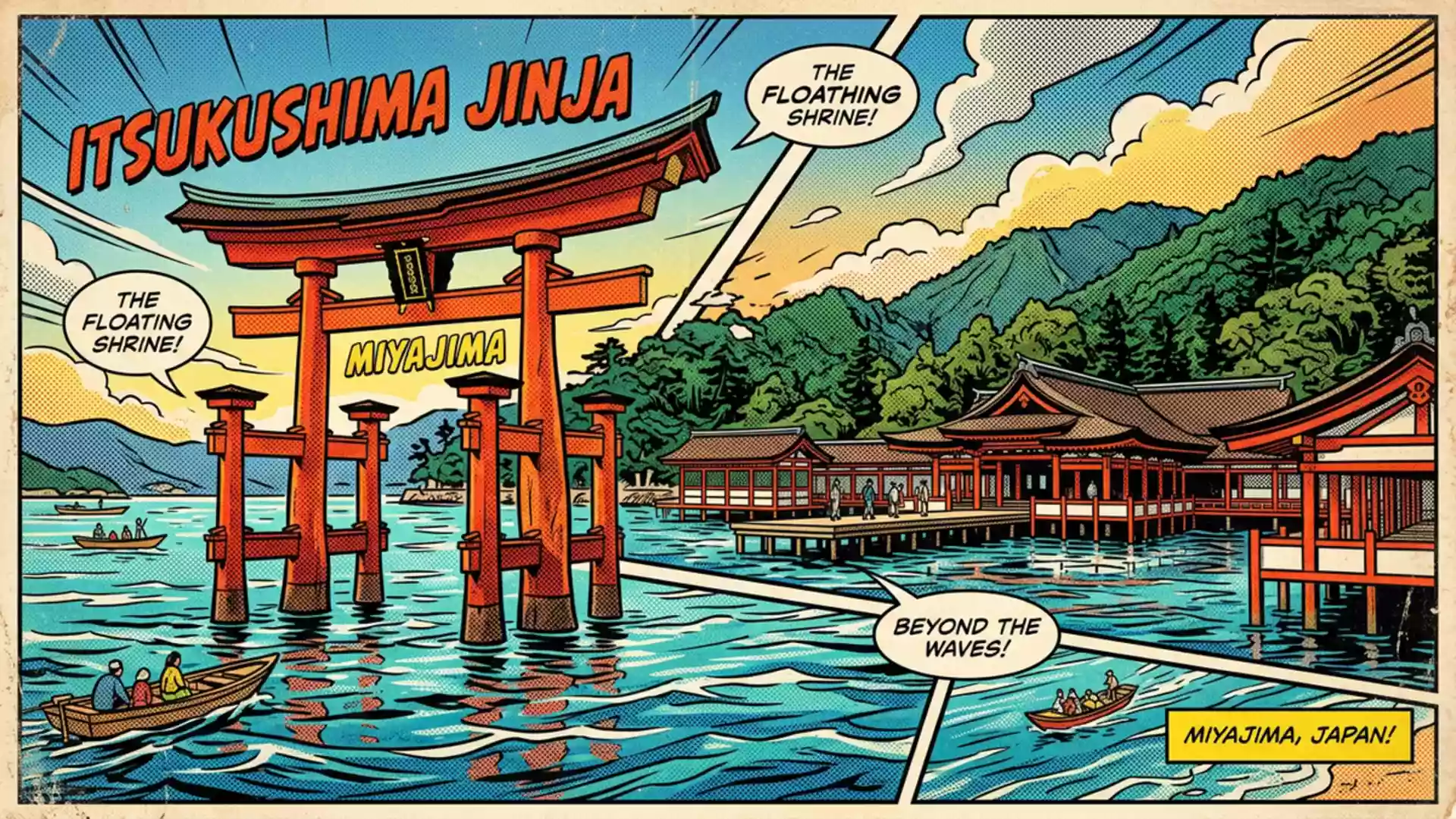
Itsukushima Jinja and the over-water shrine on Miyajima
Published on 09/14/2026 at 20:17 | Editorial responsibility: Rafael Müller, Editor-in-Chief AD HOC NEWS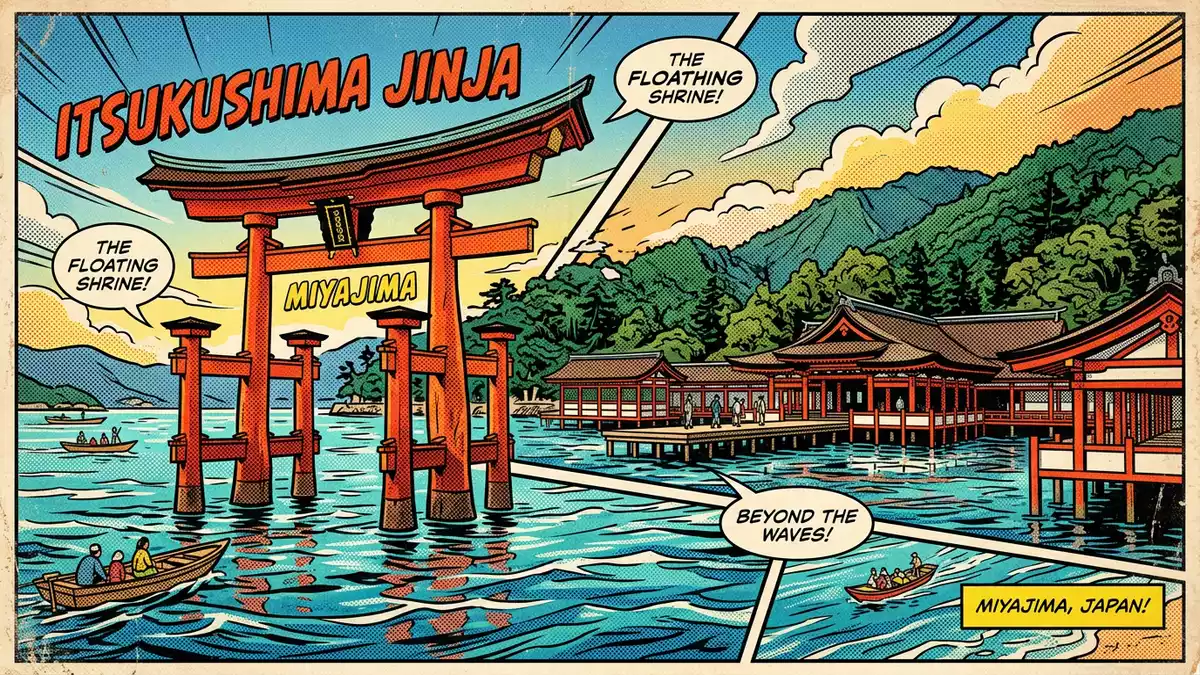
Itsukushima Jinja on Miyajima is a Shinto shrine spread across pavilions, corridors and a torii standing over the sea. Its World Heritage status and association with Taira no Kiyomori place it among Japan’s best-known sacred landscapes.
Itsukushima Jinja above the waterline
The shrine’s most striking feature is its relationship with the tide. Wooden halls, connecting walkways and covered passages sit above the water, while the vermilion colour links the buildings into one long composition.
The present arrangement reflects a Heian-period courtly style rather than a heavy temple compound. The shrine is tied to the island of Itsukushima, the sacred core of Miyajima, and the name appears in records from the early ninth century. World Heritage listing
Taira no Kiyomori and the Heian-period setting
The shrine’s surviving form is linked to Taira no Kiyomori, the late Heian-period statesman and warlord who gave the sanctuary greater prominence. Its architecture draws on aristocratic residence forms, with broad verandas, raised floors and a sequence of linked buildings. Heian-period form
The shrine’s long over-water frontage gives it a measured, horizontal profile. That line of roofs and platforms is part of what makes the complex memorable from both the shore and the boat approach. official shrine site
Miyajima’s sacred island landscape
Miyajima belongs to the Seto Inland Sea, and the shrine sits within an island landscape of water, hills and shoreline. The surrounding setting includes Mount Misen, which rises behind the shrine and gives the site a clear vertical backdrop.
The island’s religious importance and the shrine’s maritime setting belong together in the way the place is experienced: water at the front, wooded height behind, and lacquered timber in between. The buildings, bridges and corridors all remain part of a single shrine complex. Miyajima setting
Visiting Itsukushima Jinja: what travellers from Western Europe should know
- The shrine stands on Miyajima in Hiroshima Prefecture. Ferries serve the island from the mainland, and JR Hiroshima Station is the main rail gateway named in travel material.
- The buildings sit above the water and along broad wooden passages. The shoreline setting, tide changes and open-sided walkways shape the experience of moving through the complex.
- The official language is Japanese and the currency is the Japanese yen.
- Conditions on the mountain change with the seasons; the local cable-car operators and alpine clubs provide information.
Searching for Itsukushima Jinja on social platforms
These links open searches for Itsukushima Jinja on each platform.
Frequently asked questions about Itsukushima Jinja
Where is Itsukushima Jinja?
It stands on Miyajima, the island in Hiroshima Prefecture also known for Mount Misen and the Seto Inland Sea. The shrine complex extends across the waterfront rather than sitting inland.
What should a visit involve?
The experience centres on the shrine’s wooden platforms, corridors and sea-level setting. The island setting and the broad shrine compound give it a spatial scale that changes with the tide.
What makes Itsukushima Jinja distinctive?
The shrine combines vermilion timber, an offshore torii and a Heian-period courtly architectural tradition. Its place on the water, together with its association with Taira no Kiyomori, defines its character.