
Itsukushima Jinja and its sea-bound shrine buildings
Published on 08/27/2026 at 20:43 | Editorial responsibility: Rafael Müller, Editor-in-Chief AD HOC NEWS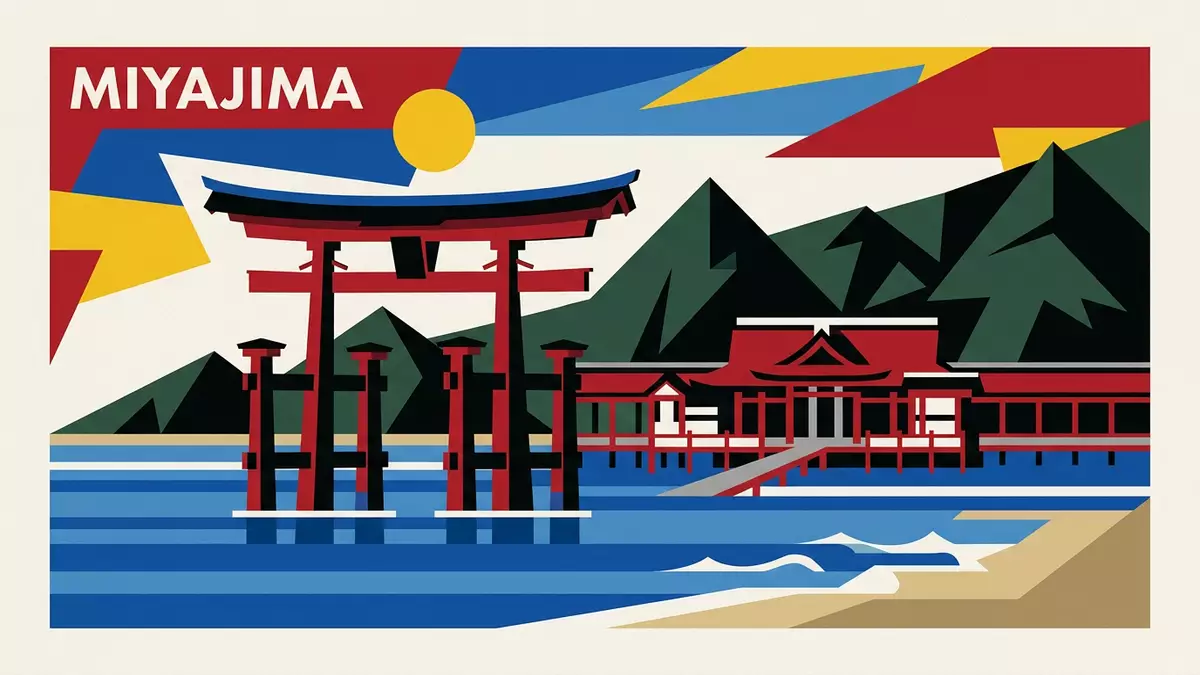
Itsukushima Jinja on Miyajima is a Shinto shrine best known for its buildings set over the sea. The present shrine dates from the twelfth and thirteenth centuries, and its form is linked with Taira no Kiyomori and the court culture of Heian Japan.
Itsukushima Jinja between sea and mountain
The shrine is placed in the Seto Inland Sea, with forested slopes rising behind it. That arrangement is part of its appeal: vermilion wood, open water and dark hills sit in one visual field.
UNESCO World Heritage recognises the shrine as a cultural site, and the listing describes its buildings as an arrangement of great artistic and technical skill. The same entry notes the shrine’s association with a scenic ideal in which nature and human craft appear together.
Taira no Kiyomori and the courtly style
The shrine’s history is tied to Taira no Kiyomori, who rebuilt it in 1168 in the shinden-zukuri style. That courtly style came from aristocratic residence design, and the shrine preserves its broad-eaved, formal character in religious form.
The same history also places the shrine in a longer religious tradition. Itsukushima Jinja is linked to an origin in 593, during the reign of Empress Suiko, and its deities are identified with Ichikishimahime-no-mikoto, Tagorihime-no-mikoto and Tagitsuhime-no-mikoto.
Buildings, pages and ceremonial space
The shrine complex includes the Main Hall, Worship Hall and Prayer Hall, together with the large torii gate and several other structures. A heritage listing for Miyajima also places the five-storied pagoda and the tahoto pagoda within the wider sacred setting.
Itsukushima Jinja’s most recognisable image comes from that composition of buildings over water. The shrine complex is part of a larger cultural landscape that includes the island’s wooded interior and the sea in front of the coast.
Visiting Itsukushima Jinja: what travellers from Western Europe should know
- The shrine stands on Miyajima, off the coast of Hatsukaichi in Hiroshima Prefecture. Ferries connect the island with the mainland, and the shrine area is reached on foot from the landing point.
- The setting is flat near the water, but the wider island rises steeply towards Mount Misen. Paths beyond the shrine move into wooded ground and climb away from the shore.
- The official language is Japanese and the currency is the Japanese yen.
- The shrine is part of a UNESCO World Heritage site, and the listed area includes buildings, the island and a stretch of sea in front of it.
Searching for Itsukushima Jinja on social platforms
These links open searches for Itsukushima Jinja on each platform.
Frequently asked questions about Itsukushima Jinja
Where is Itsukushima Jinja?
Itsukushima Jinja stands on Miyajima in the Seto Inland Sea, near Hatsukaichi in Hiroshima Prefecture. The shrine belongs to a wider island landscape rather than an isolated urban site.
What does a visit involve?
The shrine is approached by ferry and then on foot through the waterfront area. The visitor sees buildings over water, the torii gate and the wooded slopes beyond the shore.
What makes it distinctive?
Itsukushima Jinja is distinctive for the relationship between its vermilion shrine buildings, the sea and the mountains behind it. That setting is part of its UNESCO-listed cultural value and gives the place its memorable silhouette.


