
Isletas de Granada: volcanic islands across Lake Nicaragua
Published on 09/24/2026 at 04:43 | Editorial responsibility: Rafael Müller, Editor-in-Chief AD HOC NEWS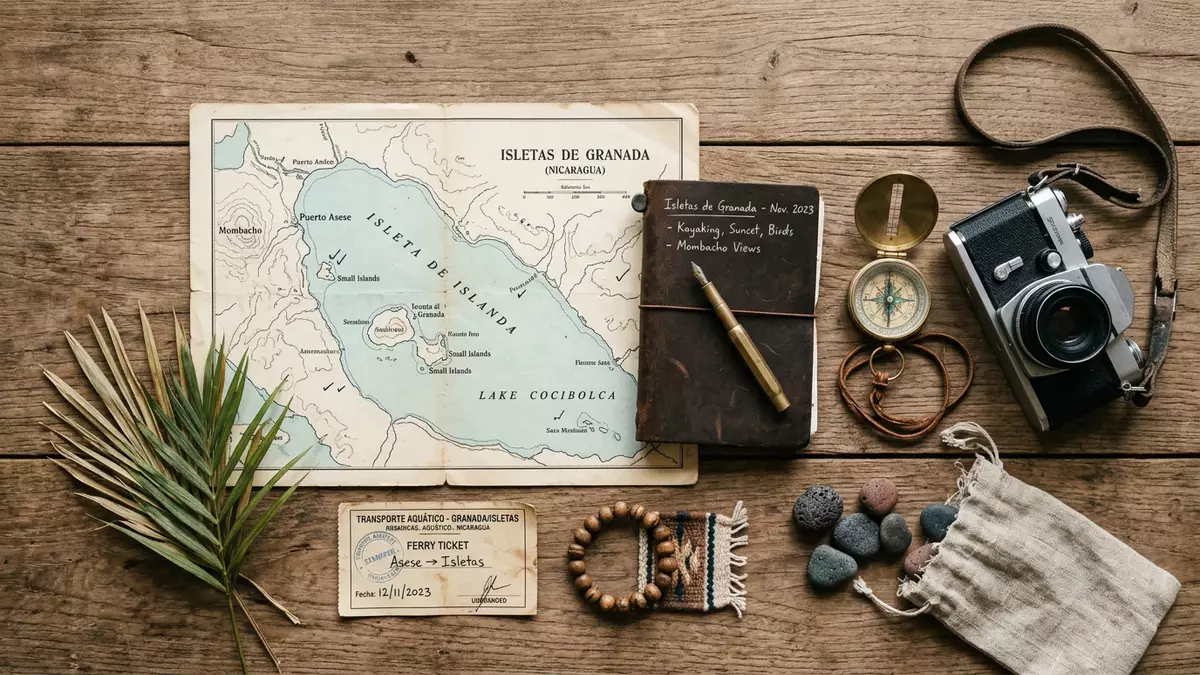
Isletas de Granada form a low archipelago on Lake Nicaragua beside Granada. Green islands, narrow waterways and open freshwater meet in a landscape shaped by nearby Mombacho volcano.
The islets are commonly associated with a traditional count of 365, while their visible character comes from volcanic ground, trees, lake channels and human settlement.
Isletas de Granada across Lake Nicaragua
The archipelago lies south-east of Granada, around the Asese peninsula on the western side of Lake Nicaragua. The city’s lakeside edge faces a broad freshwater landscape, with the islets scattered between the shore and the open lake.
Lake Nicaragua is also known as Lake Cocibolca. It is the largest freshwater lake in Central America, and the Isletas de Granada occupy the sector closest to Granada. The islands remain low against the water, while Mombacho rises behind them as the dominant volcanic landmark.
The traditional figure of 365 islands gives the archipelago an easy rhythm to remember, but the islets vary in size and character. Some are densely vegetated, while others contain houses, jetties, small facilities or cultivated ground.
Volcanic ground, green channels and Mombacho
The landforms are connected with Mombacho, the volcano south of Granada. Geological descriptions link the islets with volcanic debris and a large collapse on the volcano’s flank, which spread rock and earth towards Lake Nicaragua.
This origin gives the archipelago its scattered form. The islands do not rise as a single landmass; they appear as separate fragments divided by water, with channels passing between trees, reeds and low shorelines.
Mombacho volcanic origin belongs to the place’s central story, while the lake supplies the setting for its vegetation and wildlife.
The vegetation includes trees and shrubs close to the water, creating cover for birds. Herons, cormorants and other water birds are associated with the channels, while the combination of greenery and freshwater gives the archipelago a distinctly riparian appearance.
Homes, boats and the islands’ changing character
Isletas de Granada are not an uninhabited geological display. Houses and holiday properties occupy some islands, and other islets contain small businesses or facilities connected with life on the lake.
Boats are the practical link between the islands. From Granada’s lakeside docks, routes pass through the waterways and close to vegetated shores, private residences and small landing places.
The human landscape is unevenly distributed. A tree-covered island may sit beside a settled one, while a narrow channel can separate a domestic jetty from open vegetation. This mixture of habitation and lake ecology defines the archipelago’s appearance.
Granada adds a second historical setting nearby. Its colonial streets and buildings belong to the city, while the Isletas de Granada form a separate lakeside environment with volcanic land, freshwater channels and island settlement.
The result is a place read through contrasts that remain visible from the water: solid volcanic ground and moving lake surface, dense vegetation and built shorelines, individual homes and unoccupied green islets.
Visiting Isletas de Granada: what travellers from Western Europe should know
- Isletas de Granada lie south-east of Granada on Lake Nicaragua, around the Asese peninsula. Access is by boat from lakeside points including Puerto Asese and other docks near the city.
- The terrain is low-lying volcanic ground at lake level. Landing places include simple jetties and small piers, while the waterways form the main route between the islands.
- The official language is Spanish and the currency is the Nicaraguan córdoba.
- Entry requirements depend on your nationality; UK travellers can check the FCDO travel advice at gov.uk/foreign-travel-advice, Irish travellers the Department of Foreign Affairs at ireland.ie.
Searching for Isletas de Granada on social platforms
These links open searches for Isletas de Granada on each platform.Frequently asked questions about Isletas de Granada
Where are Isletas de Granada?
They lie in Lake Nicaragua, south-east of Granada and around the Asese peninsula. The archipelago occupies the lakeside zone closest to the city.
What can visitors expect on a visit?
Boat routes pass between low volcanic islands, vegetated shores, landing jetties, homes and open lake channels. Birdlife forms part of the landscape.
What makes Isletas de Granada distinctive?
The archipelago combines hundreds of small lake islands with a volcanic origin linked to Mombacho. Its visible character comes from water, vegetation, settlement and scattered landforms.


