
Isletas de Granada, Nicaragua’s volcanic lake archipelago
Published on 08/29/2026 at 20:43 | Editorial responsibility: Rafael Müller, Editor-in-Chief AD HOC NEWS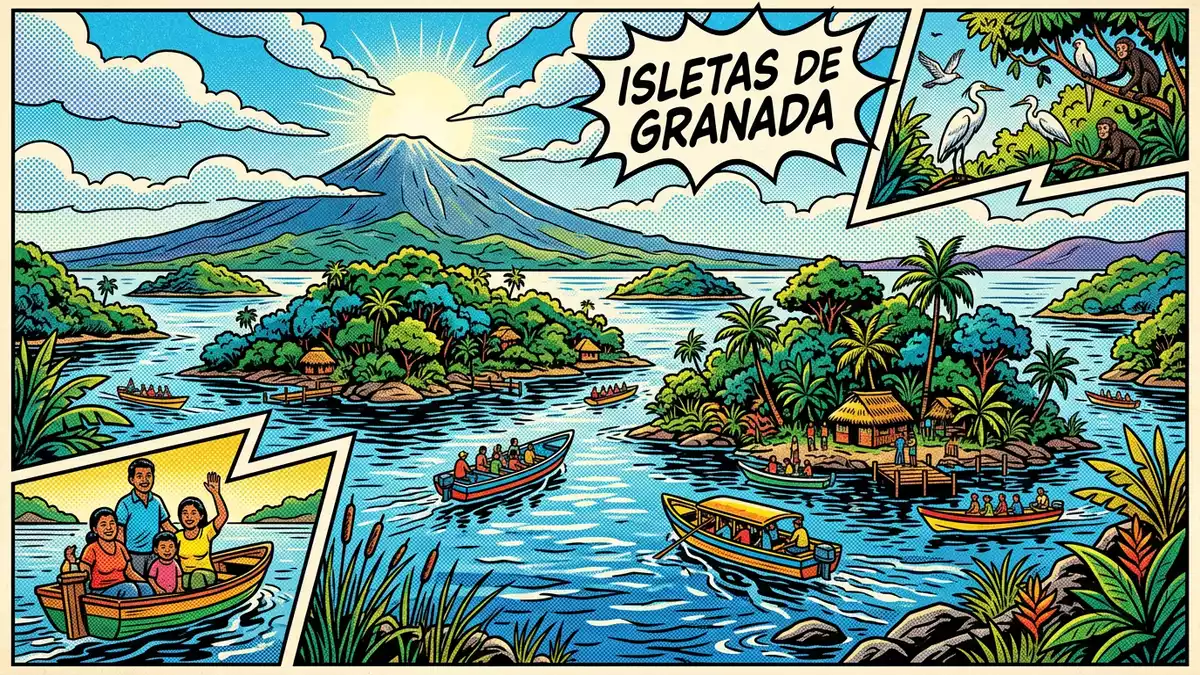
Just southeast of the colonial city of Granada in Nicaragua, the Isletas de Granada spread across the surface of Lake Nicaragua as a dense archipelago of small volcanic islands. Formed by material thrown into the lake from nearby Mombacho volcano in prehistoric times, these islets combine lake scenery, wildlife and human settlement in a compact landscape just offshore from the city’s waterfront.
A volcanic origin beside Granada’s lakefront
The Isletas de Granada are a group of small islands in Lake Nicaragua, scattered around the Asese peninsula a short distance from Granada’s urban centre.group of 365 small islands Many descriptions refer to several hundred individual islets, with a traditional figure of 365, and they sit low in the water close to the lakeshore.located in Lake Nicaragua From Granada, the islets appear as a fringe of green shapes stretching out across the lake, with the bulk of Mombacho rising behind them on the horizon.
The archipelago is of volcanic origin and was created when Mombacho erupted, sending rock and debris down towards Lake Nicaragua and into its waters.formed after an explosive eruption Over time, this material formed islands that now carry a mix of dense vegetation, shorelines edged with floating plants and small human settlements. Granada itself dates back to the sixteenth century as one of Nicaragua’s historic colonial cities, so boat trips out into the islets bring a sharp contrast between tiled roofs and plazas on land and volcanic rock and water just a short journey away.natural wonder of volcanic origin
Life among the islands: vegetation, wildlife and communities
The surfaces of the Isletas de Granada carry lush vegetation, with many islands covered in trees and shrubs that grow right down to the waterline.profuse vegetation and fauna Around the shores, floating plants and water lilies form mats of green and colour, while over the water various aquatic and shore birds move between perches, nesting sites and feeding grounds.rich birdlife The lake setting means that views from a boat pass close to trunks, branches and reed beds, giving a sense of how tightly packed the islands are.
Human life is present on many of the islets. Some islands hold small communities of fishermen and farmers, with houses set back from the shore and boats drawn up on simple jetties or beaches.home to local fishermen and farmers Others are privately owned and carry holiday houses, guest lodges or small hotels set among the trees.private islands with houses and hotels A nineteenth-century fort on San Pablo Island adds a historical structure to the landscape, with masonry rising above the water as a reminder that the archipelago has long been part of regional life and defence.fortress on the island San Pablo
Experiencing the archipelago by boat
The most common way to experience the Isletas de Granada is by boat, leaving Granada’s lakeside and entering the channels that run between the islands.boats that tour the islands Trips weave through narrow passages where vegetation on either side nearly meets overhead, and then emerge into wider stretches of lake with open views back towards the city or across to Mombacho. From the water, it is possible to see birds resting on branches or moving along the surface, small piers serving homes and guesthouses, and stretches of shoreline where rock and plants share the edge.
Several named islands within the archipelago offer particular features, from simple bars and eating places to family-friendly play areas and accommodation.Isla El Pirata and Pico de Garza For visitors interested in nature and birdwatching, the channels between the islands and the mix of open water and sheltered corners create varied environments in a compact area. For those drawn to human landscapes, views of Granada’s colonial buildings from out on the lake, framed by scattered green islands and the outline of Mombacho behind, give a clear sense of how closely the city and the archipelago sit together.
Visiting Isletas de Granada: what travellers from Western Europe should know
- The Isletas de Granada lie just southeast of Granada on the shores of Lake Nicaragua, and are reached by boat trips that depart from local docks along the lakeside.
- The terrain on the islets consists of low-lying volcanic ground at lake level, with shorelines edged by vegetation and simple jetties or small piers used for landing.
- Granada stands in western Nicaragua on the shores of Lake Nicaragua, with the Mombacho volcano rising inland from the lakeshore as a clear landmark behind the archipelago.
- The official language is Spanish and the currency is the Nicaraguan córdoba; entry requirements depend on your nationality, UK travellers can check the FCDO travel advice at gov.uk/foreign-travel-advice, Irish travellers the Department of Foreign Affairs at ireland.ie.
Searching for Isletas de Granada on social platforms
These links open searches for Isletas de Granada on each platform.
Frequently asked questions about Isletas de Granada
Where are the Isletas de Granada located?
The Isletas de Granada are in Lake Nicaragua, just southeast of the city of Granada in western Nicaragua, close to the Asese peninsula.
What can visitors expect on a trip among the islets?
Visitors travel by boat through narrow channels and open stretches of lake, passing vegetated shorelines, birdlife, small communities and occasional guesthouses or simple eating places on individual islands.
What makes the Isletas de Granada distinctive compared with the nearby mainland?
The archipelago combines volcanic islands, dense tropical vegetation and varied birdlife in a compact lake setting, with clear views back to Granada’s colonial cityscape and the outline of Mombacho volcano.


