Isletas de Granada and the volcanic islands off Granada
Published on 09/11/2026 at 08:52 | Editorial responsibility: Rafael Müller, Editor-in-Chief AD HOC NEWS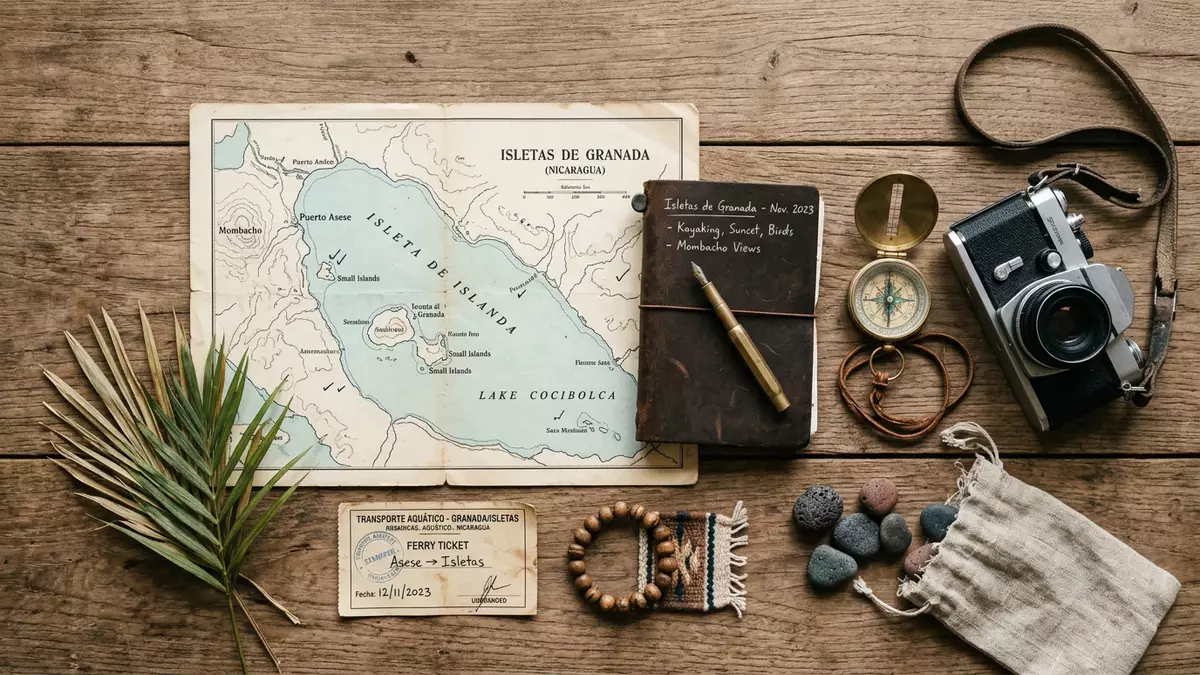
Isletas de Granada is a scatter of small volcanic islands lying just southeast of Granada on Lake Nicaragua, where hundreds of low green silhouettes turn the city’s lakeshore into a broken horizon of rock, water and vegetation.The islets of Granada sit around the Asese peninsula and form an archipelago that has become one of the most distinctive landscape features of western Nicaragua.
Volcanic origins in Lake Nicaragua
The Isletas de Granada occupy a corner of Lake Nicaragua, also known as Lake Cocibolca, immediately beside the colonial city of Granada in the country’s western lowlands.Las Isletas de Granada are widely described as a group of around 365 islands scattered off the Asese peninsula, a number that echoes the days of the year without needing exact counting on the water.Isletas de Granada landscape
The archipelago is of volcanic origin: geological studies and local tradition alike link the islands to a major collapse of the Mombacho volcano, whose bulk rises immediately behind Granada and the lake shore.Granada and the Mombacho avalanche Thousands of years ago, part of the volcano’s flanks slid or exploded into Lake Nicaragua, sending rock and debris into the water; over time these blocks have become low islands thick with tropical vegetation. Looking across the lake from Granada, the relation between the dark mass of Mombacho, the peninsulas reaching into the lake and the necklace of Isletas is clear even without knowing the precise volcanic mechanism.
An archipelago of varied islands
On the water the variety of the Isletas de Granada becomes obvious: some islands are barely larger than a patch of trees, while others cover several hectares and carry clusters of buildings and planted gardens.Isletas range in size Channels run between the islands like narrow streets of water, giving alternating views of open lake, close shorelines and the distant slopes of Mombacho. The water level and the gentle relief of the lakebed make these channels calm rather than dramatic; the appeal lies in the repeated alternation between rock, foliage and glimpses of the wider lake.
Many of the islands carry human use alongside the vegetation. There are small communities living permanently on some of the larger islets, with simple houses and local services, while others have private homes, weekend retreats or small lodges and guesthouses integrated among the trees.Isletas de Granada retreats A few hold structures such as Fort San Pablo, a historic lakeside fortification that occupies one of the islands and recalls the strategic importance of Lake Nicaragua in earlier centuries.Fort San Pablo on an islet The mix of built and natural elements means that a journey through the archipelago passes from stretches of apparently wild lakeshore to lived-in spaces with moored boats, jetties and occasional chapels.
Granada’s lakeshore and the islet experience
Granada itself is one of Nicaragua’s historic cities, founded in the sixteenth century and known for its grid of streets, churches and public squares facing the massive expanse of Lake Nicaragua.Granada city The presence of the Isletas de Granada a short distance offshore gives the lakeside an extra layer of depth: instead of an uninterrupted water surface, the view from the malecón and the lakefront parks runs across scattered treetops and rooflines on the islands, then onwards to the open lake and the line of Mombacho. This three-part horizon – city, islands, volcano – is one of the hallmarks of Granada’s setting.
Visitors commonly experience the Isletas de Granada by boat, boarding small launches from docks near the Granada Tourist Centre or from Puerto Asese to weave among the islands.Boat access from Granada The routes thread along the Asese peninsula and into the denser parts of the archipelago, passing simple fishing craft, lakeside houses and stretches of undeveloped shoreline. From the decks of these boats, the low height of the islands and their dense plant cover are more evident than any individual landmark, and the sense is less of crossing open water than of travelling through a semi-enclosed landscape where lake and land interlock.
Visiting Isletas de Granada: what travellers from Western Europe should know
- Isletas de Granada lie just southeast of Granada on the western shore of Lake Nicaragua, reached from the city’s lakefront by boat services running out toward the Asese peninsula and the surrounding islands.
- The terrain on the islands is low but uneven, with shorelines, simple jetties and paths that may include basic steps or slopes between landing points and houses or viewpoints.
- Granada is in Nicaragua, where the official language is Spanish and the currency is the córdoba.
- Entry requirements depend on your nationality; UK travellers can check the FCDO travel advice at gov.uk/foreign-travel-advice, Irish travellers the Department of Foreign Affairs at ireland.ie.
Searching for Isletas de Granada on social platforms
These links open searches for Isletas de Granada on each platform.
Frequently asked questions about Isletas de Granada
Where are the Isletas de Granada located?
Isletas de Granada are in Lake Nicaragua, just southeast of the city of Granada in western Nicaragua, scattered around the Asese peninsula close to the lakeshore.
What can visitors expect on a visit to the islands?
Visitors travel by boat through calm channels between low, green islands, passing small communities, private retreats and lakeside vegetation with Mombacho volcano rising behind the lake.
What makes Isletas de Granada distinctive among lake landscapes?
The archipelago combines volcanic origins, a high number of small islands, permanent settlement on several islets and a setting directly off a historic city, giving Granada a layered lakefront horizon.