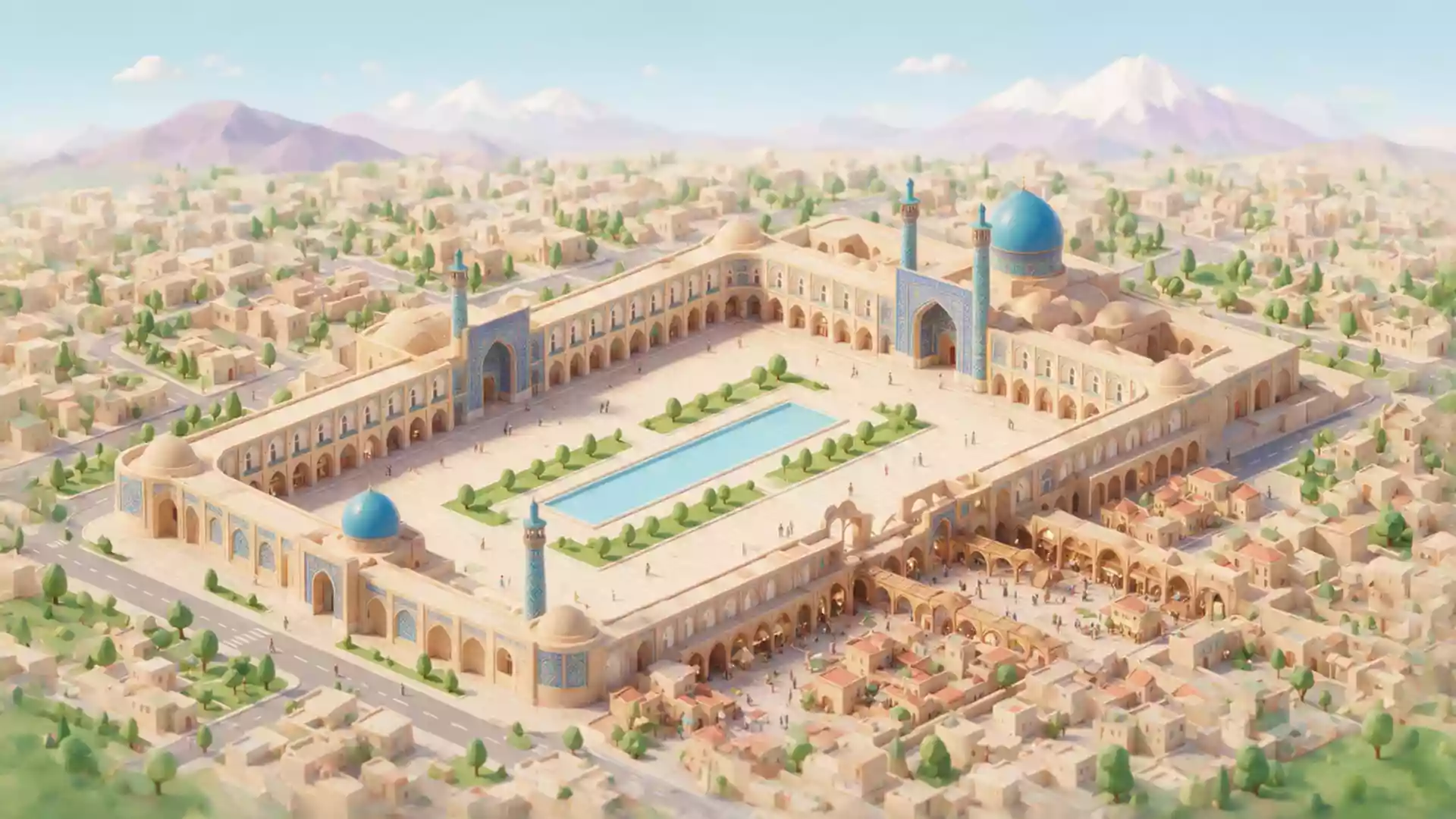
Iran sets phased reopening for Naqsh-e Jahan Square on 17 October
Published on 10/21/2026 at 21:10 | Editorial responsibility: Rafael Müller, Editor-in-Chief AD HOC NEWSReopening plan and square
- Iran's ministry included Naqsh-e Jahan Square in the first phase announced on 17 October 2026.
- The first phase limits visits to open-air heritage sites and venues without museums.
- UNESCO records the square as 560 metres long, 160 metres wide and inscribed in 1979.
- Ali Qapu, the Royal Mosque, Sheikh Lotfallah Mosque and Qeyssariyeh frame the urban ensemble.
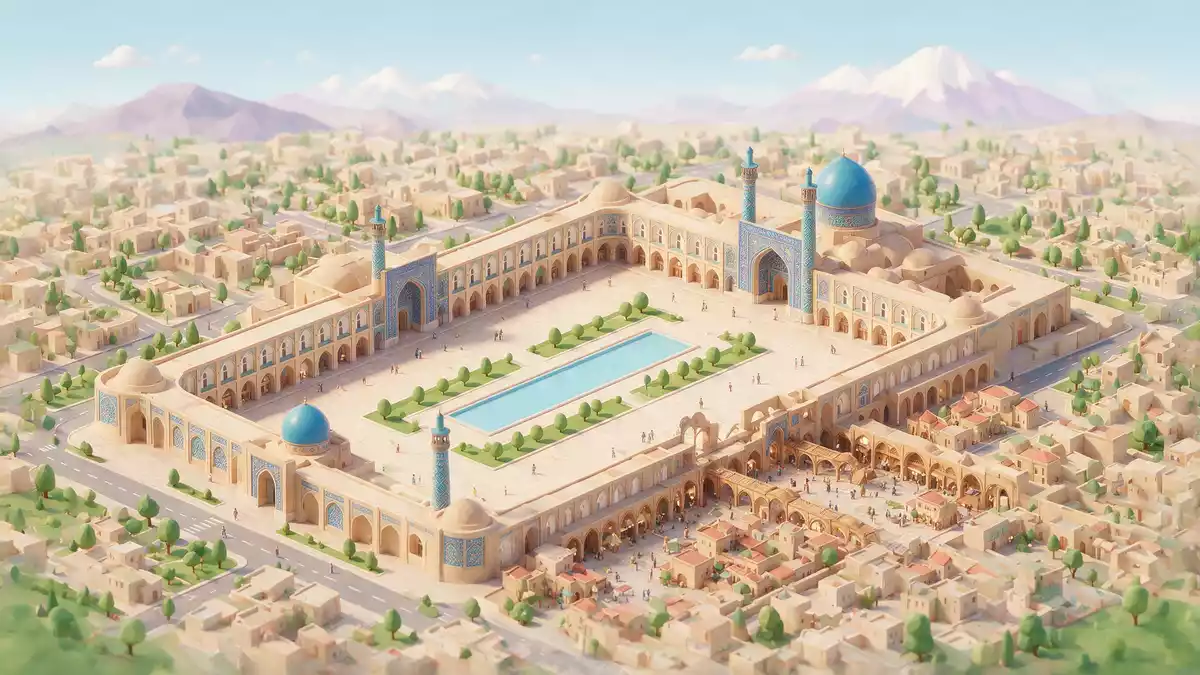
Iran's phased reopening plan includes Naqsh-e Jahan Square (Meidan Emam) in Isfahan from 17 October 2026, giving the open-air heritage site a defined place in the country's return to public visits. The decision concerns access to the square itself and not a new festival or commercial event.
Iran's phased reopening plan includes the square
Iran's Ministry of Cultural Heritage, Tourism and Handicrafts announced the three-stage plan on 17 October 2026. The first stage is a month-long, limited reopening for low-risk provinces and covers open-air archaeological sites and venues without museums, with Naqsh-e Jahan Square listed among the examples.
The plan means that visits to the square are treated differently from access to museum-based heritage venues. The ministry's roadmap says the first stage is subject to expert oversight, while a second stage is intended to widen access after another month in areas that have regained security clearance. Iran Daily's reopening plan names the square alongside other open-air heritage sites.
Naqsh-e Jahan Square's Safavid setting shapes the change
The square was built by Shah Abbas I at the beginning of the seventeenth century and is bordered by two-storey arcades. UNESCO describes the ensemble as a public urban square in central Isfahan and records its inscription on the World Heritage List in 1979.
Four major buildings define its sides: the Sheikh Lotfallah Mosque to the east, the Ali Qapu pavilion to the west, the Qeyssariyeh portico to the north and the Royal Mosque to the south. This arrangement makes the reopening plan especially relevant to travellers who come to see several connected monuments in one open urban setting, rather than a single enclosed museum. UNESCO's description of the square records its dimensions as 560 metres by 160 metres and its area as almost 9 hectares.
Visiting Naqsh-e Jahan Square: what travellers from Western Europe should know
- The reopening plan was announced on 17 October 2026, and the first phase includes Naqsh-e Jahan Square in Isfahan as an open-air heritage venue.
- Access is limited under the first phase, while the plan distinguishes open-air sites from museums and sets later expansion after further security clearance.
- The square lies in central Isfahan and is enclosed by two-storey arcades, with the Ali Qapu pavilion, Royal Mosque, Sheikh Lotfallah Mosque and Qeyssariyeh portico on its four sides.
- UNESCO records the paved urban square as 560 metres long and 160 metres wide, with arcades and monuments forming one connected ensemble.
- Entry requirements depend on your nationality; UK travellers can check the FCDO travel advice at gov.uk/foreign-travel-advice, Irish travellers the Department of Foreign Affairs at ireland.ie.
Searching for Naqsh-e Jahan Square on social platforms
These links open searches for Naqsh-e Jahan Square on each platform.
Frequently asked questions about Naqsh-e Jahan Square
When does the phased reopening take place at Naqsh-e Jahan Square?
The first phase was announced on 17 October 2026 and includes limited visits to the open-air square.
What is Naqsh-e Jahan Square?
It is a UNESCO-listed public urban square in Isfahan, built by Shah Abbas I at the beginning of the seventeenth century.
Where is Naqsh-e Jahan Square and how do you get there?
The square is in central Isfahan, Iran, and its UNESCO-listed ensemble includes four major buildings linked by two-storey arcades.