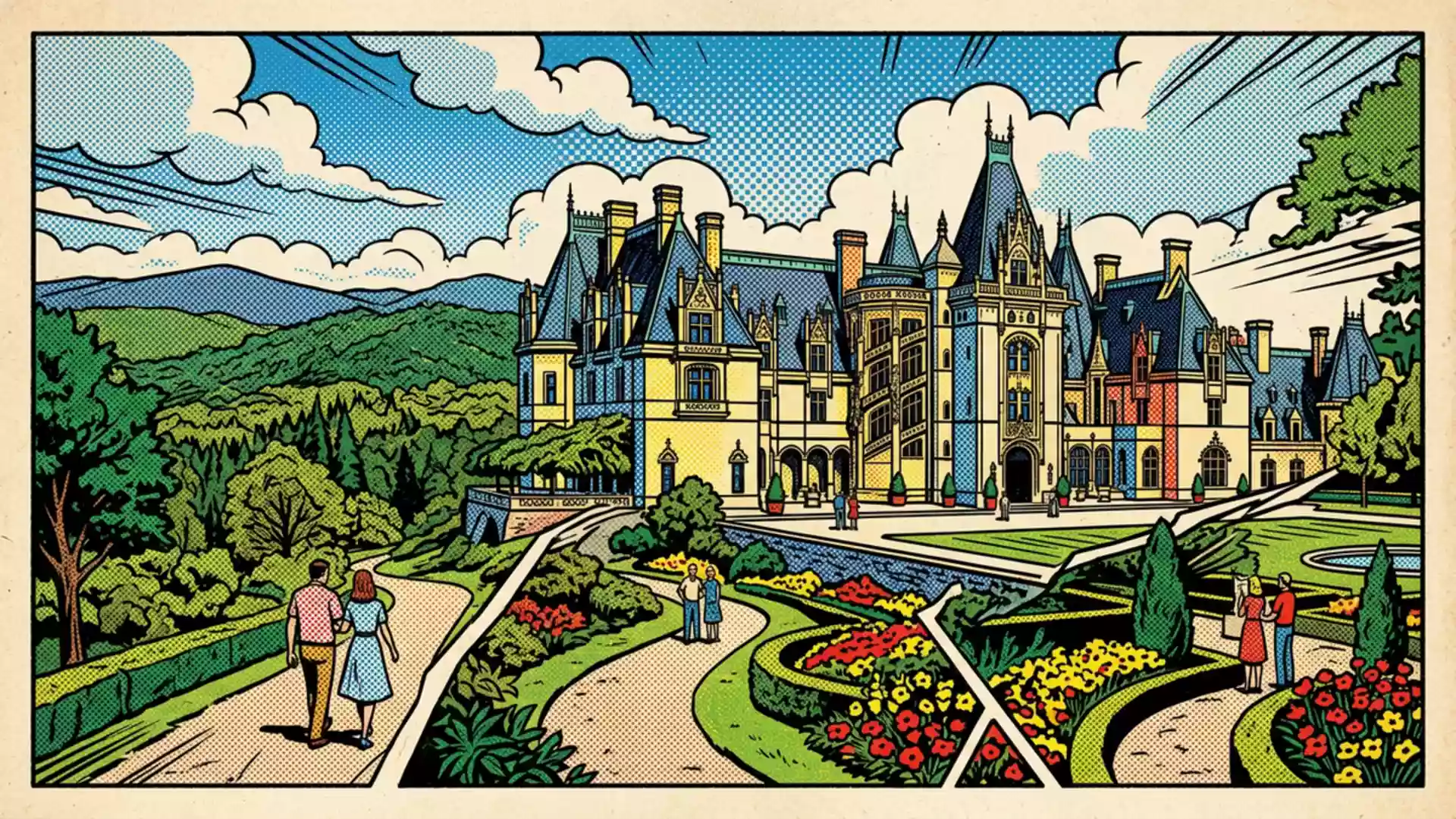
Inside Biltmore Estate, a Gilded Age château in the Blue Ridge
Published on 08/27/2026 at 15:10 | Editorial responsibility: Rafael Müller, Editor-in-Chief AD HOC NEWS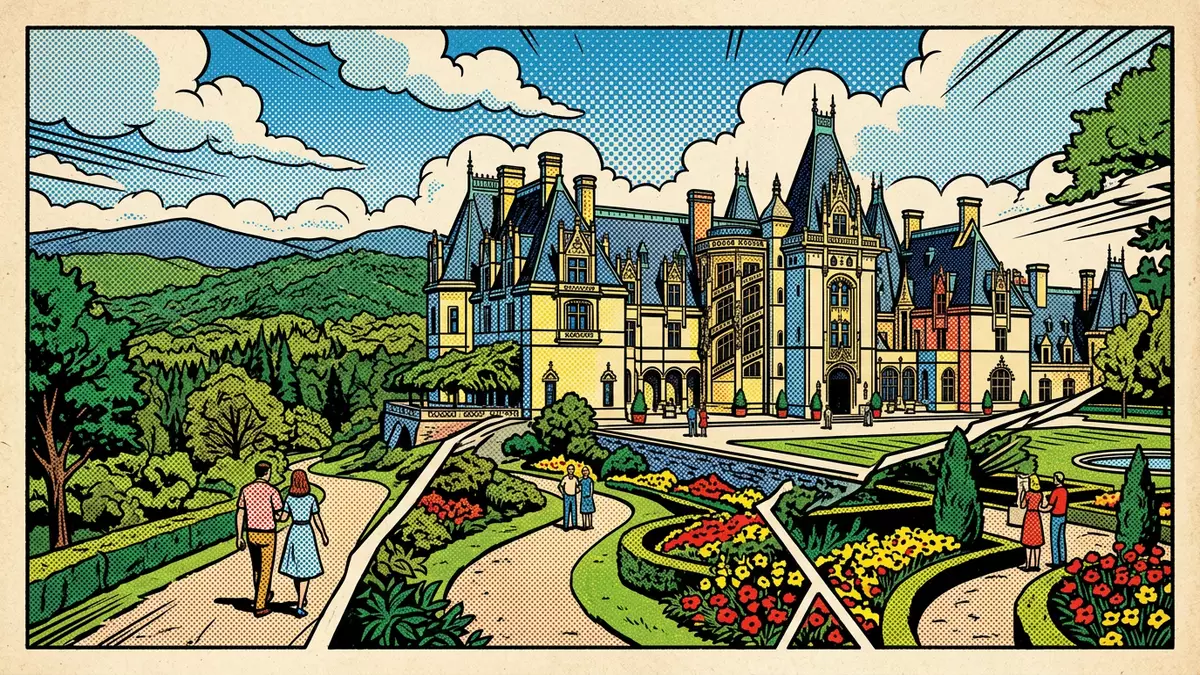
In the hills south of Asheville in North Carolina’s Blue Ridge Mountains, Biltmore Estate presents a vast French Renaissance–style country house set within extensive landscaped parkland dating from the late nineteenth century. Built for George Washington Vanderbilt II between 1889 and 1895, it anchors an estate that now extends across about 8,000 acres (around 3,200 hectares) of farmland, woodland and formal gardens.
A French Renaissance château in the American South
The main house at Biltmore is a Châteauesque mansion commissioned by George Washington Vanderbilt II, grandson of industrialist Cornelius Vanderbilt, as a country retreat away from the industrial centres of the north-east United States. Construction of the palatial residence began in 1889 and was completed in 1895, producing a residence with around 250 rooms arranged around a central courtyard and framed by elaborate stone façades and steeply pitched roofs in the French Renaissance tradition.built between 1889 and 1895 Inside, the house contains a large library of around 10,000 volumes, extensive collections of European paintings and decorative arts, and halls with stone fireplaces and sculpted timber ceilings that reflect the tastes and resources of the Gilded Age.
New York architect Richard Morris Hunt designed Biltmore House in a style influenced by French castles of the early sixteenth century, including the châteaux of Blois, Chenonceau and Chambord in the Loire Valley.French Gothic details The architecture incorporates turrets, sculpted dormers, tall chimneys and grand stair towers, all executed in finely carved limestone. Behind the ornate façades the plan includes grand entertainment spaces such as a Banquet Hall, indoor recreation rooms including a swimming pool and bowling alley, and suites of family and guest bedrooms, together forming what is regarded as the largest privately owned home in the United States by floor area.largest private residence
Gardens, managed forests and the wider estate
Landscape architect Frederick Law Olmsted, known for Central Park in New York, laid out the grounds and parkland that surround the house, combining formal gardens with extensive managed woodland. During Vanderbilt’s lifetime the estate covered around 120,000 to 125,000 acres of land in the Blue Ridge foothills, descending from the house towards the French Broad River and rising into forested ridges beyond.acquiring some 125,000 acres In the twentieth century large areas of this land were sold to form Pisgah National Forest, leaving an estate of approximately 8,000 acres that still includes pastures, vineyards, managed forest and ornamental landscapes.Biltmore’s 8,000 acres
Close to the house, visitors encounter a series of formal gardens and a glasshouse Conservatory that display seasonal planting, shrubs and collections of exotic plants. These gardens occupy around 75 acres of the core estate and include a walled garden laid out in regular beds, an azalea garden along a winding path, and areas devoted to shrubs and perennials.75 acres of landscaped gardens Beyond the ornamental core, Olmsted’s design extends into parkland with meadows, a lagoon below the house and extensive forest that was among the first large-scale managed forests in the United States, shaped through the work of foresters such as Gifford Pinchot and Carl Schenck.cradle of U.S. forestry
Gilded Age history and later preservation
George Washington Vanderbilt II first visited the Asheville area in 1888 and began purchasing land for his estate soon afterwards, assembling a property in the closing decades of the nineteenth century that reflected the economic and social landscape of the Gilded Age in the United States.first visited Asheville in 1888 Biltmore House opened to invited guests on Christmas Eve 1895, establishing it as a major country residence of that era set within a deliberately rural landscape. After Vanderbilt’s death in 1914, the estate passed to his family, who sold tens of thousands of acres of land to the federal government for the creation of Pisgah National Forest, reshaping the property into the form seen today.sold some 87,000 acres
Biltmore House opened to paying visitors in the early twentieth century and has long functioned as a historic house museum, presenting the architecture, interiors and landscape of a late nineteenth-century American estate. It has been recognised as a National Historic Landmark and is listed on the National Register of Historic Places, reflecting both its architectural significance and its role in the history of American landscape design and forestry.National Historic Landmark Alongside the main house and gardens, the estate incorporates converted farm buildings, vineyards and accommodation, all set within the rolling topography of the Blue Ridge foothills.
Visiting Biltmore Estate: what travellers from Western Europe should know
- Biltmore Estate lies to the south of central Asheville in North Carolina, with the main entrance reached by road and internal drives leading through woodland to the house and gardens.
- The estate covers undulating ground above the French Broad River, and a visit commonly involves walking on sloping paths and navigating staircases within the historic house.
- English is the official language and the currency is the United States dollar.
- Entry requirements depend on your nationality; UK travellers can check the FCDO travel advice at gov.uk/foreign-travel-advice, Irish travellers the Department of Foreign Affairs at ireland.ie.
Searching for Biltmore Estate on social platforms
These links open searches for Biltmore Estate on each platform.
Frequently asked questions about Biltmore Estate
Where is Biltmore Estate located?
Biltmore Estate stands in the countryside south of Asheville in western North Carolina, on rising ground above the French Broad River in the Blue Ridge foothills.
What can visitors expect during a visit?
A visit typically centres on touring the Châteauesque main house with its grand interiors and then exploring the surrounding formal gardens, parkland and woodland on foot.
What makes Biltmore Estate distinctive?
The combination of a vast late nineteenth-century French Renaissance–style mansion by Richard Morris Hunt and extensive grounds laid out by Frederick Law Olmsted gives Biltmore an unusual scale and coherence as a Gilded Age estate.