
Inle Lake and its life on the water
Published on 09/24/2026 at 05:22 | Editorial responsibility: Rafael Müller, Editor-in-Chief AD HOC NEWS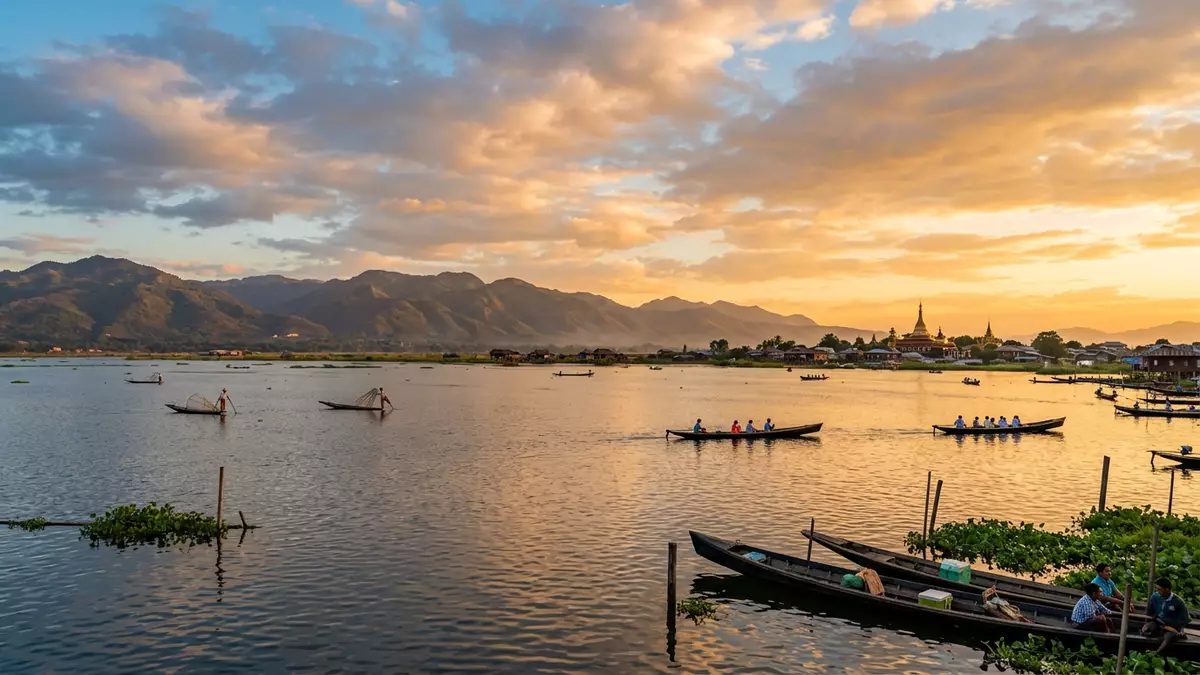
Inle Lake is a highland freshwater lake in Myanmar’s Shan State, south of Nyaungshwe. Its open water, reedbeds, stilt houses and cultivated floating gardens form a landscape where settlement and wetland exist together.
Inle Lake: a highland lake shaped by water
Inle Lake lies in the Shan Hills at about 880 m (2,900 ft) above sea level. The lake covers roughly 116 square kilometres and extends through a long basin surrounded by green hills.
The water is linked by channels and bordered by reeds, marshes and floating vegetation. Houses stand above the lake on timber stilts, while narrow wooden boats connect villages, gardens and working areas across the water. Inle Lake’s elevation and area provide its geographical scale.
Stilt villages and the Intha way of life
The Intha communities of Inle Lake have developed livelihoods closely connected with the lake. Fishing, boat building, weaving and cultivation remain associated with settlements on the water and along its shores.
The lake’s best-known boat technique is leg rowing. A fisherman balances at the stern and wraps one leg around the oar, leaving both hands available for nets or fish traps. The movement is visible from a distance as boats pass between reeds and open water.
Floating gardens add another working landscape. Vegetation and lake sediment are gathered into long cultivated plots, which are secured with bamboo poles. Vegetables, including tomatoes, grow on these platforms above the lakebed. Intha life on the lake links farming, transport and settlement within one wetland setting.
Pagodas, markets and the lake’s cultural landscape
Inle Lake’s villages contain monasteries, pagodas, workshops and houses built above the water. Nyaungshwe serves as the principal town near the lake’s northern end and connects the water landscape with the surrounding Shan region.
Phaung Daw Oo Pagoda is a major religious site on the lake. Its central shrine contains Buddha images covered in gold leaf, while the annual Phaung Daw Oo festival brings sacred images through lakeside communities in a ceremonial boat procession.
Indein, on the western side of the lake, is known for its groups of weathered stupas and its approach through a narrow waterway. The ruins and active religious sites show how Buddhist architecture forms part of the same landscape as gardens, waterways and stilt villages. Myanmar’s highland lake is also described through its surrounding communities and Shan Plateau setting.
Inle Lake is a UNESCO Biosphere Reserve, a designation connected with its wetland habitats and the relationship between local culture and the natural basin. The reserve includes the lake and a much wider surrounding area, rather than only the open water.
Visiting Inle Lake: what travellers from Western Europe should know
- Nyaungshwe lies at the northern end of the lake and is the main access point. Boat routes begin through canals leading from the town towards the open water.
- Travel across Inle Lake takes place in narrow wooden boats. Reeds, floating vegetation and channels form part of the route between villages and gardens.
- The lake is elevated in the Shan Hills, at about 880 m (2,900 ft). Surrounding hills remain visible beyond the water and wetland vegetation.
- The official language is Burmese and the currency is the Myanmar kyat.
- Entry requirements depend on your nationality; UK travellers can check the FCDO travel advice at gov.uk/foreign-travel-advice, Irish travellers the Department of Foreign Affairs at ireland.ie.
Searching for Inle Lake on social platforms
These links open searches for Inle Lake on each platform.Frequently asked questions about Inle Lake
Where is Inle Lake?
Inle Lake lies in Nyaungshwe Township in Shan State, Myanmar. It occupies a highland basin in the Shan Hills.
What can visitors expect at Inle Lake?
Visitors encounter boat routes, stilt villages, floating gardens, religious sites, workshops and wetland vegetation. Nyaungshwe provides the main town connection.
What makes Inle Lake distinctive?
Its distinctive character comes from the combination of open water, stilt settlements, floating agriculture and Intha leg rowing. These features form a living cultural landscape at about 880 m above sea level.


